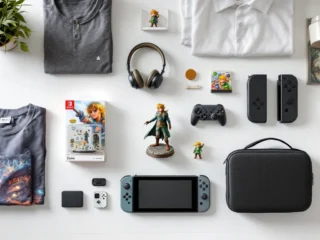
Palworld has quietly become one of the most interesting creature-collection games to launch in recent years, and if you’ve been considering picking it up on Nintendo Switch, there’s a lot to understand before you immerse. Released as an early access title that exploded in popularity across PC and other platforms, Palworld brings a fresh take on the creature-catching formula that feels familiar yet distinctly different from Pokémon. The Switch version gives portable gamers access to this phenomenon, but like any port, it comes with specific considerations, performance trade-offs, multiplayer features, and gameplay mechanics that warrant a closer look. Whether you’re a casual gamer curious about the hype or a dedicated creature-collector looking for your next obsession, this guide breaks down everything about Palworld on Nintendo Switch in 2026, from core mechanics to endgame strategies and the latest multiplayer features.
Key Takeaways
- Palworld on Nintendo Switch features real-time action combat and base-building mechanics that differentiate it from traditional Pokémon games, offering both casual exploration and competitive endgame raiding.
- The Switch version runs at dynamic resolution (720p docked, 540p handheld) targeting 30 FPS with approximately 20GB storage requirements, making docked mode the superior experience for boss battles and extended play.
- Early progression focuses on capturing diverse Pals with complementary abilities while balancing base resource management and leveling two parallel progression tracks simultaneously.
- Breeding and team composition in Palworld require strategic planning with balanced roles—burst DPS, AoE support, and tanky defenders—to optimize performance across different boss encounters and raid scenarios.
- Nintendo Switch online multiplayer supports up to 4 players with local co-op and cross-save functionality, while monthly updates introduce new Pals, story regions, and endgame Mythic raid tiers throughout 2026.
What Is Palworld And Why It Matters For Nintendo Players
Core Gameplay Mechanics And Appeal
Palworld is a creature-collection action RPG where you capture, train, and battle “Pals”, adorable yet sometimes unsettling creatures that function differently than traditional Pokémon. Unlike turn-based battles, Palworld features real-time combat where you directly control your character and actively aim attacks, making it feel closer to an action game than a traditional JRPG. The twist? You can also assign Pals to automate tasks at your base, farming, crafting, mining, adding a management layer that transforms the typical “catch and battle” loop.
The core loop involves exploration, Pal capture using spheres, base building, and progression through increasingly difficult bosses and raid encounters. You’re not just collecting for the Pokédex: your Pals serve practical purposes. A Pal with harvesting traits can maintain your crops while you’re away. A Pal with building traits accelerates construction. This functional variety encourages strategic team composition beyond just optimizing DPS for battles.
The appeal lies in its accessibility mixed with depth. Casual players can enjoy the exploration and base-building without min-maxing breeding rolls. Competitive players obsess over Pal IV stats, ability inheritance, and optimal raid compositions. There’s genuine freedom in how you progress, you can tackle the story bosses in nearly any order, allowing playstyles to differ significantly between players.
How Palworld Compares To Traditional Pokémon Games
Palworld and Pokémon occupy the same genre space but diverge significantly in execution. Pokémon emphasizes turn-based tactical depth and role-playing progression through gyms and a linear story. Palworld prioritizes real-time action, player skill expression, and sandbox-style freedom. Your aim and positioning matter in Palworld: in Pokémon, it doesn’t.
The base-building mechanic in Palworld is entirely unique to the franchise. Pokémon doesn’t offer equivalent depth in resource management or automation systems. You’re managing worker Pals, crafting supplies, and maintaining facilities, tasks that consume time and resources but feel rewarding rather than tedious.
Combat philosophy differs too. Palworld’s real-time battles mean AI opponents can pose genuine difficulty based on positioning and timing, not just type matchups and stat spreads. Boss encounters feel cinematic and demanding, requiring mechanical skill alongside preparation. Pokémon’s turn-based system is more approachable but less visceral.
That said, Palworld isn’t trying to replace Pokémon. It exists in the same space as games like Temtem or Nexo, spiritual successors that innovate rather than replicate. For Nintendo players specifically, this means an alternative to Pokémon Scarlet/Violet that offers a different flavor of creature collection without the controversial technical issues those games launched with.
Palworld On Nintendo Switch: Availability And Performance
Official Release Status And Launch Details
As of early 2026, Palworld is available on Nintendo Switch after its transition from exclusive early access on PC and Xbox Game Pass. The Switch version launched following successful ports to other platforms and represents a significant technical achievement given the game’s demanding graphics and real-time action gameplay. The release came without major launch window exclusivity announcements, making it accessible to anyone with a Switch and eShop account.
The game supports both single-player and multiplayer modes on Switch, with cross-platform connectivity available depending on your specific play mode. Unlike some ports that arrive with feature parity issues, the Switch version maintains most mechanics from other platforms, though with compromises typical of handheld hardware.
Technical Performance And System Requirements
The Nintendo Switch version runs at a dynamic resolution, typically hovering between 720p docked and 540p handheld, with frame rate targeting 30 FPS in most scenarios. This isn’t competitive-FPS territory, the real-time combat doesn’t require 60 FPS to feel responsive, but it’s a noticeable step down from the PC version’s 4K/120 FPS potential. Match that with Draw Distance adjustments and reduced environmental detail compared to other platforms, and you’re looking at a recognizable but visually simplified version of Palworld.
Storage requirements are substantial. The game demands approximately 20GB free space on your microSD card, so plan accordingly if your Switch is already stuffed with titles. Load times are acceptable for a handheld port, generally falling between 10-20 seconds when fast-traveling between areas.
The Switch itself doesn’t have official minimum requirements, the game runs on both standard and OLED models, and Switch Lite functionality is confirmed, though the smaller screen makes base-building menus slightly cramped. Handheld mode’s performance is stable for casual play, but intensive late-game raids may see frame drops, particularly with multiple players or Pals with complex visual effects active.
Docked Vs Handheld Mode Gameplay Experience
Docked mode is definitively the superior experience. On a TV screen, the visual simplifications become less noticeable, and button controls feel more comfortable during extended play sessions. Docked performance is more stable, maintaining closer to 30 FPS consistently, making boss battles slightly less frustrating than handheld equivalents where occasional stutters occur during enemy telegraphs.
Handheld mode trades presentation for portability. The action gameplay remains playable, aiming and combat mechanics function correctly on handheld, but the screen real estate makes navigating menus and base-building UI a chore. The reduced Draw Distance becomes more apparent when playing on the Switch’s 6.2-inch screen, with pop-in occurring closer to the camera. For grinding resources or exploring, handheld mode works fine. For boss battles requiring precision aiming, docked mode is recommended.
Battery drain is moderate. Full docked play cycles through 4.5-5 hours of battery life, meaning longer sessions require docking. This isn’t exceptional, but it’s standard for Switch action games with this visual complexity.
Essential Beginner Tips And Getting Started Guide
Creating Your First Pal Team And Early Progression
Your first decision, selecting your starter Pal, matters less than you’d think. Early game encounters don’t punish type disadvantages heavily, so choose whichever starter appeals to you. Possible starters include Grass-type, Fire-type, and Water-type variants, each viable for the opening hours.
Focus your early captures on Pals with complementary abilities. Here’s the core principle: assign task specialists to your base and battle specialists to your active team. A Cattiva works excellently for early leveling and harvesting. A Lambat provides decent defense. A Foxparks gives you ranged DPS. Diversity matters more than rarity early on.
Progression happens in two parallel tracks. First, tackle story bosses when your team reaches approximate level parity, underleveled teams can still win through repositioning and dodging. Second, expand your base and unlock new crafting recipes simultaneously. Don’t ignore leveling just because you’re base-building, and vice versa. Early-game pacing depends on balancing both systems.
Capture early and often. Duplicate Pals aren’t wasted, lower-rarity duplicates serve breeding stock or base worker roles. You’ll need multiples of utility Pals like Lambat for different base specializations anyway.
Resource Management And Base Building Fundamentals
Bases generate resources passively through assigned worker Pals. Your very first priority is establishing a base near a water source and building a Palbox (your Pal storage unit) and a Breeding Farm once unlocked. These two facilities enable your long-term progression.
Resource bottlenecks arrive predictably. Wood and stone dominate the early game, then shift to ore and ingots mid-game, finally trending toward rare drops and processed materials late-game. Assign Pals specializing in these resources to relevant facilities immediately upon arrival in new biomes. A Killamari with mining affinity should station at your ore processor from the moment you unlock it.
Crafting benches multiply your efficiency exponentially. Early game, you’ll craft food and basic supplies manually. Mid-game, automated crafting stations handle resource processing while you focus on exploration and battles. Don’t rush construction, build facilities as you need them, not all at once, since upkeep consumes resources and Pal capacity.
Pal food is essential. Your active team requires feeding to maintain happiness and combat performance. Cooking stations produce food from gathered ingredients. Prioritize building one immediately, not mid-game. Unhappy Pals level slower and occasionally refuse to fight, preventable with basic meal preparation.
Base defense becomes relevant at mid-game when enemy raids occur. Upgrade walls and construct defensive towers only after establishing primary production facilities. A base that loses 20% efficiency to defensive structures is inefficient, prioritize output first, defense second.
Advanced Strategies For Mid And Late Game Success
Optimal Pal Breeding And Team Composition Tactics
Breeding is endgame-tier optimization, not early-game necessity. Mid-game, as you accumulate duplicate Pals, breeding becomes viable. The system works like Pokémon: two compatible Pals produce offspring inheriting traits and potentially superior IV rolls. Specifically, aim for perfect-IV offspring, Pals with max stats in their most important attributes. A damage-focused Infernape-equivalent needs max Attack IV. A bulky tank needs max HP and Defense.
Breeding efficiency requires understanding trait inheritance. Each Pal has personality traits affecting battle performance. Aggressive traits boost damage but reduce defense. Calm traits reduce action speed but increase defense and Sp.Def. A balanced team needs Pals with complementary traits, don’t stack three Aggressive Pals expecting a functional team.
Optimal late-game team composition balances three roles:
- Burst DPS: High Attack stat Pal with single-target damage skills. Examples: Paladius (Fire-type), Kingpaca (Ice-type). These handle priority targets or burst down boss phases.
- AoE Support: Lower damage but area-effect skills that control crowds or apply status effects. Castaway (Electric-type) provides group paralysis. Toxiquill (Poison-type) spreads poison clouds.
- Tanky Defender: High HP and Defense with threat-generation capabilities. Hangyu soaks damage and interrupts enemy casts.
Diversify your Pals’ stat spreads. Three Pals with identical sets become useless against teams that counter one playstyle. If you’re running three Pals specialized against Electric-type bosses, you’ve over-specialized, you’ll struggle against Fire-type encounters.
Abilities matter significantly. A Pal with a mediocre move pool becomes viable if its passive ability synergizes with team strategy. Blazamut‘s passive that triggers extra damage on consecutive Fire-type attacks becomes powerful on a mono-Fire team. Build synergy intentionally.
Boss Battles, Raids, And Endgame Content
Boss encounters follow learnable patterns. Each story boss has 2-3 attack phases telegraphed by animation tells. The first playthrough teaches the pattern. Subsequent victories come from optimizing damage output while minimizing Pal casualties. Don’t rush bosses with underleveled teams hoping to cheese through: prepare appropriately.
Raids represent endgame multiplayer content. These 1-4 player encounters pit your team against legendary-tier Pals requiring coordinated strategy and high-level rosters. Raid difficulty scales with participant count, so solo raids aren’t necessarily easier than 4-player variants, they’re tuned differently.
Raid preparation demands specific counter-teams. An Ice-type raid boss requires Fire-type Pals for type advantage. But type advantage alone won’t carry you. You’ll need Pals with interrupting abilities (moves that stun or disrupt boss attacks), damage amplification (passive abilities or moves that boost your damage), and survival tools (healing moves, defensive support).
Legendary Pals represent the true endgame goal. These ultra-rare creatures appear only in specific raid encounters or late-story sequences. Capturing and training Legendaries isn’t mandatory, the game remains completable without them, but they become meta staples in competitive raiding and PvP. Their stat distributions exceed standard Pals by meaningful margins.
Endgame grind comes in forms: farming raid attempts for rare drops (evolutionary shards, specific item materials), breeding perfect-IV Pals for team optimization, or speedrunning late-game bosses for leaderboard placement in community rankings. Choose your grind based on what actually interests you. If competitive raiding excites you, commit to raid optimization. If collection interests you, farm Legendary captures instead.
Recent patch changes in early 2026 adjusted raid difficulty significantly. Community-discovered tactics become outdated when balance patches ship. Check patch notes before attempting new raid tiers.
Multiplayer Features And Community Integration
Local And Online Multiplayer Options On Switch
Local co-op supports up to 4 players using multiple controllers on a single Switch, though this mode performs noticeably worse than solo play, frame rates drop to compensate for multiple players rendering simultaneously. Local co-op pairs well for casual base-building and exploration but becomes problematic during boss battles where frame stability matters.
Online multiplayer through Nintendo Switch Online (required subscription) supports up to 4 players in shared worlds. Your world becomes accessible to friends who can drop in for co-op raids, base events, or free-roaming exploration. You can toggle raid participation, defending against incoming raids from other players’ worlds (asynchronously) or forming teams with friends for coordinated assault on legendary bosses.
Cross-platform play functions through cross-save functionality if enabled. Switch saves transfer to PC or Xbox versions, letting you maintain progress across devices. But, simultaneous cross-platform gameplay (playing together on different platforms) isn’t currently supported on Switch specifically, you’ll need Switch players paired with other Switch players for online sessions.
Raid matchmaking automatically finds appropriate difficulty groups if you open your raid to strangers. A solo player trying to tackle 4-player raid content can request public assistance, and matchmaking pairs them with similarly-leveled players. Success rates vary based on the random composition, but the system prevents catastrophic mismatches like pairing level 20 players against level 80 raids.
Cross Platform Play And Nintendo Network Features
Cross-platform features are limited compared to PC versions. The Switch won’t directly compete in cross-platform PvP, Palworld’s competitive raiding remains separate between Switch and other platforms to maintain balance given the performance differences. This prevents scenarios where PC players with 60+ FPS aiming advantage could dominate Switch players at 30 FPS.
Guild systems exist for community organization. Your Switch account joins guilds through in-game menus, grouping you with players for shared progression, raid coordination, and resource-sharing. Guilds enable collective breeding projects, coordinating which Pals guild members breed to consolidate effort toward perfect teams. They’re optional but become increasingly valuable at endgame when raid coordination matters.
Leaderboards track various metrics: fastest boss clear times, raid completion counts, Pokédex completion percentages, base building scores. These rankings exist separately for Switch versus PC/Xbox populations, acknowledging performance differences. There’s no shame in being “slower” on Switch, the hardware acknowledges its limitations, and rankings reflect that.
Event participation through in-game events running weekly or monthly provides limited-time raid opportunities and exclusive Pal encounters. Nintendo Life regularly covers Palworld events and provides timelines for upcoming limited-time content, making it worth checking if you want to participate in time-locked raids.
Community Discord servers and Reddit communities maintain separate Switch-specific channels where players discuss Switch-exclusive issues, hardware-related optimizations, and strategies accounting for the hardware’s specific performance characteristics. These communities are valuable for finding raid partners at your experience level rather than relying on random matchmaking.
Common Issues, Bugs, And How To Troubleshoot
Frame rate inconsistency remains the most reported issue on Switch. If your docked gameplay stutters excessively during raids, try reducing graphics settings (available in-game) or ensuring sufficient free storage space, a nearly-full microSD card degrades performance noticeably. Closing background applications before playing eliminates competing hardware load.
Network-related issues typically involve multiplayer disconnections. The Switch’s WiFi chipset occasionally drops connections under heavy load. Move closer to your router, or consider using a USB-to-Ethernet adapter if your Switch model supports it (OLED and later). Wired connections eliminate WiFi interference-related disconnects.
Ball-clipping bugs occur occasionally where Pals you’ve captured disappear from your Palbox. This is rare but happens during save corruption scenarios. Always maintain backup saves, switch to cloud saves and ensure they synchronize properly before extended play sessions. If a Pal goes missing, reloading from an earlier save point recovers it.
Base building occasionally bugs where constructed facilities don’t function until you manually rebuild them. This resolves by demolishing and reconstructing affected facilities. It’s tedious but not game-breaking, typically occurring after patch updates that shift underlying building logic.
Battle exploits do exist but are increasingly patched. Previous exploits allowing infinite resource generation or AI manipulation have been fixed in recent updates. Avoid attempting dated exploit tutorials, they’ll either be fixed or result in character rollback if detected by anti-cheat systems.
Contact official support if issues persist beyond basic troubleshooting. The Palworld community managers are responsive on official forums and occasionally roll back problematic patches when widespread bugs emerge. Document your issue with video evidence if possible, it accelerates support responses.
Game Informer’s technical deep-dives occasionally cover Switch port-specific issues when they arise, providing verified information from the publication’s technical analysis team.
Palworld Future Updates And What’s Coming To Nintendo Switch
The development roadmap for Palworld extends through 2026 and beyond, with regular monthly updates already established. Upcoming content includes new Pal species (approximately 20+ confirmed for Q2-Q3 2026), new story regions expanding the current map by 30-40%, and gameplay systems addressing community feedback about base automation depth.
Multiplayer expansion dominates the 2026 roadmap. Guilds are receiving substantial QoL improvements including shared warehouses (collective storage between guild members), raid battle pass systems (cosmetic rewards tracked across seasons), and guild-specific raid events where your guild collectively progresses toward milestone rewards.
New raid tiers arrive in planned waves. Late 2026 introduces “Mythic” raid difficulty, scaling above current “Legend” tier, requiring perfect optimization to clear. This genuinely endgame content targets players who’ve mastered current raiding. Mythic raids reward exclusive cosmetics, unique ability variants unavailable elsewhere, and prestigious leaderboard positions.
Balance patches ship monthly, adjusting underperforming Pals and occasionally nerfing dominant meta picks. As of March 2026, Blazamut and Kingpaca dominate raid teams, expect balancing adjustments that redistribute power. The meta shifts predictably after each patch, so your current perfect team might become sub-optimal within months.
Switch-specific enhancements are planned, including potential visual adjustments bringing docked mode closer to other platform fidelity and possible performance improvements through engine optimization. Performance patches are less likely to dramatically elevate the Switch version’s ceiling but may smooth existing frame rate inconsistencies.
Seasonal events rotate approximately every 6 weeks, rotating between returning events with new cosmetics and entirely new event raids. Participation remains optional but event-exclusive Pals appear exclusively during event windows, creating urgency to participate if specific creatures interest you.
Crossover content occasionally appears, though developer statements indicate it’s low-priority compared to original content. Don’t expect major third-party collaboration events soon, but smaller cosmetic crossovers remain possible.
Community voting sometimes influences development priorities. Devs publicly asked which features players want most, several community-voted features already appear in recent patches. Participating in official polls gives your preference voice in development direction.
Conclusion
Palworld on Nintendo Switch delivers a surprisingly capable version of a genuinely innovative creature-collection game. It’s not visually identical to PC or competitive in frame rate, but it’s mechanically complete and entirely functional for hundreds of hours of gameplay. The real-time action gameplay, base-building depth, and raid endgame content create engaging hooks for different player types.
The game respects your time more than traditional Pokémon titles. You’re not forced into linear progression, tackle story bosses in any order, ignore competitive raiding entirely, or go all-in on breeding optimization. This flexibility means Palworld accommodates casual players perfectly while providing legitimate endgame challenges for optimization-focused competitors.
If you’re choosing between Palworld and Pokémon on Switch, both occupy similar niches but serve different playstyles. Pokémon offers the proven RPG formula with 30+ years of design refinement. Palworld offers mechanical innovation and action-oriented gameplay. Neither is objectively “better”, they’re genuinely different experiences that appeal to different preferences.
As 2026 progresses, Palworld’s Switch version will evolve with monthly updates, new Pals, and expanded endgame content. Whether you’re boarding the train now or waiting for continued refinement, the foundation is solid. The creature-collection market has room for two major players, and Palworld earned its space through genuine innovation rather than cloning the established formula.
About The Author