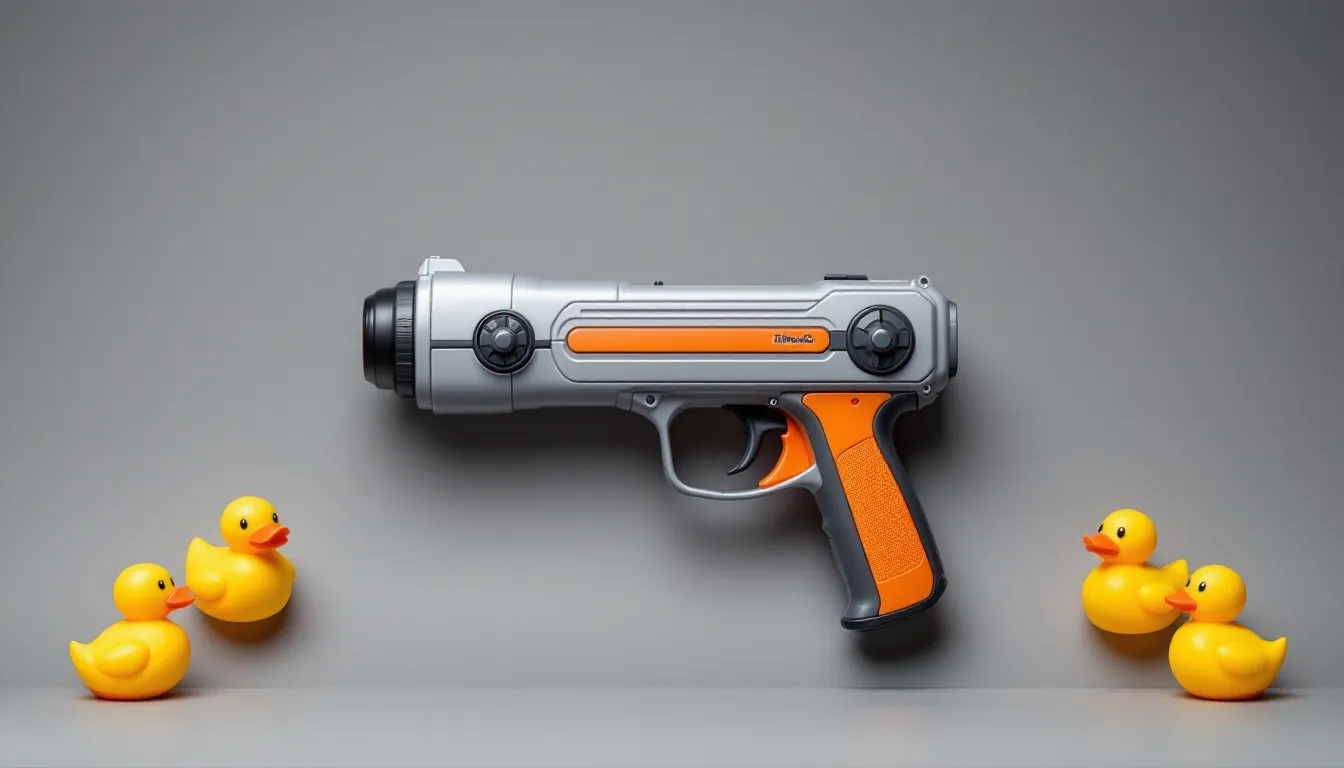
Before there were motion controllers, haptic feedback vests, or virtual reality headsets, there was the Nintendo Zapper, a light gun peripheral that fundamentally changed how people thought about video game input. Released alongside the Nintendo Entertainment System (NES) in North America in 1985, this unassuming gray and orange plastic gun did something revolutionary: it made pulling a trigger feel like actually shooting at your TV. For millions of gamers, the Zapper became the gateway to interactive gaming, turning passive television watching into active, immersive experiences. Yet even though its cultural impact and iconic status in gaming history, most modern gamers have never held one. This guide explores what made the Zapper special, how it actually worked, and why it remains one of the most fascinating pieces of gaming hardware ever created.
Key Takeaways
- The Nintendo Zapper, released with the NES in 1985, revolutionized home gaming by using light detection technology to create an immersive shooting experience that made arcade gaming accessible to families.
- The Zapper’s ingenious design relied on synchronized screen flashing and a photosensor to detect hits, requiring no cameras or advanced tracking technology—a brilliant workaround that worked perfectly with CRT televisions.
- Duck Hunt, bundled with most NES consoles, became the definitive Zapper game by demonstrating how simple and intuitive light gun gaming could be, making it the first interactive gaming experience for millions of players.
- The Nintendo Zapper proved that alternative input methods could achieve mainstream success when paired with accessibility, affordability, and compelling game design—establishing Nintendo’s reputation for thoughtful hardware innovation.
- Modern LCD and LED displays are incompatible with the original Zapper because they lack the rapid screen flickering that CRT televisions provided, turning the peripheral into a collector’s item valued for its historical significance rather than functionality.
- While light gun peripherals like the PlayStation Guncon and Wii Remote evolved the concept, none matched the Zapper’s cultural impact, demonstrating that technical advancement alone cannot replicate the perfect combination of timing, design, and entertainment value.
What Was The Nintendo Zapper?
The Nintendo Zapper was a light gun peripheral designed to work exclusively with the NES. It was a gun-shaped controller that players pointed at their television screen, pulled the trigger to “shoot,” and the on-screen action responded in real-time. The Zapper wasn’t just a gimmick, it was a fully functional input device that tracked where on the screen the player aimed and registered hits or misses based on light detection.
The device came in two primary color schemes: the iconic gray and orange version bundled with most NES consoles, and a black variant released later. It connected to the NES via a cable plugged into the controller port, making it a wired peripheral rather than wireless. The Zapper had a single trigger button and no other controls, making it dead simple to use.
What made the Zapper genuinely special was its democratization of gaming. Light guns existed before the Zapper, arcade cabinets had used them for years, but Nintendo made the technology affordable and accessible for home use. It transformed shooting games from something you’d pump quarters into at an arcade into something you could play from your living room. For many gamers in the mid-to-late 1980s, the Zapper represented their first exposure to interactive gaming as more than just moving a joystick around.
The History And Evolution Of The Zapper
Original Release And Early Adoption
The Nintendo Zapper didn’t actually debut with the NES in 1985. Its origins trace back further, to Nintendo’s earlier Famicom console in Japan, released in 1983. The Japanese version was called the Beam Gun, and it launched with a title called Hogan’s Alley, a shooting game that proved the concept had real appeal. When Nintendo brought the NES to North America in 1985, they bundled the Zapper (their Western name for the light gun) with Duck Hunt, a game specifically designed to showcase the peripheral’s capabilities.
This bundling strategy was genius. Rather than forcing gamers to buy a Zapper separately, Nintendo included it in many console packages, ensuring almost every NES owner had access to light gun games. The decision accelerated adoption dramatically. By the late 1980s, the Zapper had become as synonymous with the NES as the standard controller.
Design Iterations And Color Variants
While the gray and orange Zapper remains the most recognizable, Nintendo released several variants over the NES’s lifespan. The black Zapper appeared in later bundles and appealed to players who wanted a less toy-like aesthetic. Both versions used identical internal technology, the color difference was purely cosmetic, a response to different regional preferences and market positioning.
Nintendo also released the Zapper in other colors for different regions and special editions. Japanese Famicom releases sometimes featured different colorways, though these were far less common than the North American variants. The design itself remained remarkably consistent: a pistol grip, trigger, and simple construction. There was no need to reinvent the wheel.
The NES Zapper Era
The Zapper reached peak relevance between 1985 and 1992, during the NES’s golden age. Over 65 million NES consoles sold worldwide, and a significant portion included a Zapper. The peripheral spawned an entire genre of games, light gun titles, that dominated arcade-style gaming on home consoles.
The Zapper’s success led to numerous clones and third-party variants. Companies like Galoob and other unlicensed manufacturers created their own light guns compatible with the NES, though quality varied wildly. Some were nearly identical to Nintendo’s official Zapper, while others were cheaply made and often unreliable.
By the early 1990s, as the SNES launched and gaming moved toward more complex controllers with multiple buttons, the Zapper’s relevance began declining. The 16-bit generation demanded more sophisticated input methods, and light gun games became niche rather than mainstream.
How The Zapper Technology Actually Worked
Light Gun Mechanics Explained
The Nintendo Zapper operated on a principle that seems almost impossibly simple by modern standards: it detected light from the television screen. Inside the Zapper’s barrel was a photosensor, essentially a light detector, that received signals from your TV. When you pointed the gun at the screen and pulled the trigger, the Zapper sent a signal to the NES console, which then told your TV what to do next.
The crucial detail is that the Zapper didn’t actually “see” where you were pointing in the way a modern camera would. It didn’t have a camera, laser, or any advanced tracking technology. Instead, the system relied on a brilliant workaround: screen flashing.
Screen Flashing Detection System
This is where the magic happened. When you pulled the Zapper’s trigger, here’s exactly what occurred in rapid succession:
- The Zapper sent a signal to the NES console
- The console told the TV to flash a specific area of the screen white (or inverted colors)
- The photosensor in the Zapper’s barrel detected this flash
- If the sensor detected light, the game registered a “hit”
- If no flash was detected at the Zapper’s position, it registered a “miss”
The entire process happened faster than your eye could perceive. From the player’s perspective, pulling the trigger was instantaneous, but behind the scenes, a synchronized dance between the Zapper, the console, and the TV was happening in milliseconds.
This design had important implications. The Zapper worked only with CRT (cathode ray tube) televisions, the bulky, heavy TV sets that dominated homes in the 1980s and early 1990s. CRT screens refreshed at specific intervals, creating the flashing effect the photosensor could detect. Modern LCD and LED screens refresh differently and don’t create the same light patterns, which is why Zappers stopped working on contemporary televisions.
Accuracy depended on several factors: the brightness of your TV, the distance from the screen, and the cleanliness of the photosensor lens. Many players instinctively blew on the Zapper’s barrel (similar to blowing on NES cartridges) when it wasn’t working properly, a habit that sometimes actually helped by clearing dust from the sensor. The system wasn’t perfect, missed shots and registration issues were common complaints, but for the era, it was genuinely impressive technology.
Iconic Zapper Games And Titles
Duck Hunt And Gaming Stardom
Duck Hunt (1984 in Japan, 1985 in North America) is the undisputed king of Zapper games. The premise was absurdly simple: ducks fly across the screen, you shoot them, and a dog laughs at you if you miss. That’s it. No complex plot, no power-ups, no hidden mechanics. Just you, a gun, and some animated ducks.
Yet the game became a cultural phenomenon. Duck Hunt was bundled with the NES in most North American packages, making it the first Zapper game millions of players experienced. The satisfying feedback of pulling the trigger and watching a duck fall from the sky created an immediate sense of impact that joystick-based games couldn’t replicate. The notorious laughing dog, which triggered every time you missed, became one of gaming’s most famous (and meme-worthy) audio cues.
What made Duck Hunt brilliant was how well it demonstrated the Zapper’s capabilities without overwhelming players. The game required no complex button combinations or menu navigation. Point, shoot, watch the result happen in real-time. For casual gamers and non-gamers alike, it was the perfect introduction to what interactive gaming could be.
Other Noteworthy Zapper Games
Beyond Duck Hunt, several strong Zapper titles captured attention during the NES era:
Hogan’s Alley (1984/1985) predated Duck Hunt in arcades and appeared on NES shortly after. It featured a shooting gallery where players targeted criminals while avoiding innocent bystanders, a primitive but effective mechanical challenge.
Ghouls ‘n Ghosts had a Zapper-compatible mode, though the main game used traditional controllers. The Zapper mode offered a different, arcade-like experience.
Lethal Enforcers appeared on SNES with its own light gun peripheral. The game featured digitized sprites of criminals and delivered visceral, action-packed gameplay that felt closer to modern light gun arcade games.
The Shooting Range was a simple target practice game that came bundled with certain Zapper packages, allowing players to calibrate and practice with the peripheral.
Laser Invasion combined Zapper controls with a science fiction theme, though it was less popular than the marquee titles.
Barker Bill’s Trick Shooting featured target practice with a duck hunting theme similar to Duck Hunt but with more variety in targets and scenarios.
While Duck Hunt absolutely dominates the cultural memory of Zapper games, these titles collectively demonstrated the range of what light gun gaming could offer. The genre proved there was genuine demand for shooting-focused games, influencing game design for decades. According to gaming industry coverage, light gun peripherals continued to appear on subsequent console generations, showing that the appeal Nintendo pioneered with the Zapper never truly disappeared.
Cultural Impact And Legacy In Gaming
Why The Zapper Mattered To The Industry
The Nintendo Zapper represents a pivotal moment in gaming history: the moment when gaming peripherals became aspirational rather than purely functional. Before the Zapper, controllers were tools, joysticks, buttons, knobs. The Zapper was a toy that made you feel like you were doing something, not just controlling something.
This shift had enormous implications. It proved that players would embrace alternative input methods if the experience was compelling. It demonstrated that gaming could appeal to audiences beyond traditional joystick enthusiasts. The Zapper helped legitimize home gaming as entertainment for families, not just arcade addicts.
From a technical standpoint, the Zapper showed that innovative hardware solutions didn’t require cutting-edge technology. The light detection method was elegant, using the television itself as part of the input system rather than fighting against it. This kind of creative engineering influenced how Nintendo approached peripheral design for decades.
The Zapper also established Nintendo’s reputation for thoughtful hardware design. The company didn’t just drop the Zapper on the market and hope people figured it out. They bundled it with the perfect showcase game (Duck Hunt), marketed it effectively, and made it affordable. This holistic approach to hardware releases became a Nintendo trademark.
Modern Nostalgia And Collector Appeal
Today, the Nintendo Zapper is experiencing a significant nostalgia resurgence. Original Zapper units are highly sought-after by retro gaming collectors, with working examples commanding premium prices depending on condition. The iconic gray and orange design has become a recognizable symbol of 1980s gaming culture, appearing in museums, documentaries, and retrospectives about video game history.
Collectors value original Zapper units not just for functionality but as artifacts of gaming’s past. A pristine, working Zapper with its original box can fetch $50-$150 or more, depending on condition and variant. Black Zappers, being less common, sometimes command higher prices. Third-party variants and rare color editions are prized by serious enthusiasts.
The nostalgia extends beyond physical hardware. The Zapper frequently appears in gaming documentaries and retrospectives exploring the NES era and light gun gaming history. References to the Zapper and Duck Hunt show up constantly in gaming media, from retrospective articles to anniversary celebrations of classic titles. Resources like Nintendo Life frequently cover retro gaming hardware, including deep dives into the history and legacy of peripherals like the Zapper.
Modern fan communities have also worked to keep light gun gaming alive. Emulation communities have created workarounds to make Zapper games playable on modern systems, though the experience necessarily differs from the original. Some retro gaming enthusiasts have invested in CRT televisions specifically to use original Zapper hardware as intended, representing a dedicated subset of collectors unwilling to let the technology fade entirely.
The Zapper’s influence extends to modern gaming as well. Nintendo has referenced the Zapper multiple times in subsequent generations, from motion-controlled games on the Wii to integrated peripheral designs on the Switch. While direct successors never achieved the Zapper’s cultural dominance, the peripheral’s legacy as an innovative, player-friendly input device remains influential in how developers think about motion controls and alternative input methods.
Why The Zapper Stopped Working On Modern Screens
The Nintendo Zapper works perfectly on CRT televisions but is essentially useless on any modern display. This isn’t a limitation of the Zapper itself but rather a fundamental incompatibility with how modern screens refresh.
CRT televisions used electron beams to draw images line by line, creating a consistent flicker at refresh rates around 60Hz. This predictable, rapid refresh created the perfect conditions for the Zapper’s photosensor to detect synchronized screen flashes. When the NES told the TV to flash white at a specific screen position, the Zapper’s sensor could reliably detect that flash.
Modern LCD and LED displays work completely differently. They don’t flicker in the same way, instead, they maintain a constant image with static backlighting or pixel-level illumination. The rapid, synchronized flashing pattern that the Zapper depended on doesn’t exist on modern screens. When you aim a Zapper at an LCD television and pull the trigger, the photosensor receives no meaningful signal difference from the screen, so it can’t register hits or misses.
This technological shift happened gradually through the 1990s and 2000s as CRT televisions became obsolete. By the early 2010s, CRT TVs had almost completely disappeared from consumer homes, making Zapper gaming virtually impossible for anyone with a modern television.
Some manufacturers created workarounds and new light gun peripherals designed for modern screens, but these required significant technological advances (infrared sensors, motion tracking) and never achieved the Zapper’s accessibility or cultural penetration. The original Zapper’s incompatibility with modern technology is one reason it’s now purely a collector’s item rather than something you can simply plug in and use with contemporary hardware.
Zapper Alternatives And Modern Light Gun Peripherals
While the original Nintendo Zapper doesn’t work on modern screens, the light gun peripheral concept never completely disappeared. Several alternatives and successors have attempted to recapture the appeal of light gun gaming.
SNES Light Gun: Nintendo released a light gun peripheral for the Super Nintendo Entertainment System, which worked similarly to the Zapper but used updated technology. It had a more ergonomic design than the Zapper and came with games like Super Scope 6. Even though being technically superior, it never achieved the cultural dominance of its predecessor.
PlayStation 1 & 2 Guncon: The original PlayStation and PS2 featured the Guncon light gun, which used infrared technology and worked with LCD displays far better than the original Zapper. Games like Time Crisis and Point Blank became iconic light gun experiences on PlayStation hardware. GameSpot frequently features retrospectives on PlayStation-era light gun games, highlighting how the genre evolved during that console generation.
Wii Remote & Motion Controls: Nintendo’s approach to gesture-based input on the Wii deliberately recalled the spirit of the Zapper, allowing players to “point” at the screen and “shoot” using motion tracking. Games like Wii Sports: Resort and The House of the Dead: Overkill recreated some of that immediate, gun-like gameplay feeling, though using different underlying technology.
Arcade1Up Light Gun Cabinet: Modern retro gaming companies have created cabinet systems that can play classic light gun games on modern screens using internal emulation and sensor technology. These machines are expensive but allow players to experience games like Duck Hunt on modern hardware.
Sinden Lightgun: A newer indie solution using a specially designed light gun compatible with modern displays through HDMI input and computer processing. It’s designed primarily for enthusiasts and retro gaming communities rather than mainstream consumers.
Mobile Light Gun Apps: Some mobile games have attempted to recreate the light gun experience using a phone’s camera, though these implementations are generally limited compared to dedicated hardware.
None of these alternatives have achieved the Zapper’s cultural impact or widespread adoption. The Zapper succeeded partly because of perfect timing (bundled with the NES during gaming’s mainstream breakthrough), perfect game design (Duck Hunt), and hardware simplicity. Modern light gun solutions tend to be niche products for enthusiasts rather than mass-market peripherals.
The lesson from light gun gaming’s evolution is that input innovation doesn’t guarantee mainstream success. The Zapper worked because it was accessible, affordable, and paired with undeniable entertainment value. Most light gun successors, while technically more advanced, lacked that perfect combination of factors.
Conclusion
The Nintendo Zapper stands as one of gaming’s most important peripherals even though being laughably simple by modern standards. A light gun that detected screen flashes shouldn’t have mattered this much, but it did, because Nintendo understood that great gaming is about more than raw power or technical sophistication.
The Zapper succeeded because it felt intuitive. Pointing a gun at a screen and pulling a trigger requires zero learning curve. It succeeded because Nintendo bundled it with the perfect game and made it affordable for mainstream audiences. It succeeded because the technology, while elegant, actually worked reliably when used with the right equipment.
Today, the Zapper represents a specific moment in gaming history: the mainstream breakthrough of home gaming. It’s an artifact of 1980s culture and a testament to Nintendo’s design philosophy. While modern light gun solutions offer technical improvements, they’ve never captured the same magic or cultural significance.
For retro gaming enthusiasts, collectors, and anyone curious about gaming’s history, the Zapper remains essential knowledge. It’s not just a piece of plastic and circuitry, it’s the gun that changed home entertainment, made arcade gaming accessible to families, and proved that gaming peripherals could become iconic cultural objects. That’s a legacy worth understanding and remembering.
About The Author