Nintendo cartridges are more than just a nostalgic relic, they’re the foundation of gaming as we know it. From the bleeping chiptunes of the NES to the dynamic loading systems of the Switch, cartridges have powered some of the most legendary titles in gaming history. Whether you’re a collector hunting for sealed copies of rare games, a retro enthusiast dusting off your old hardware, or someone curious about why cartridges still matter in 2026, understanding these physical formats reveals why Nintendo’s approach to gaming hardware has endured for over four decades. This guide digs into what Nintendo cartridges are, their evolution, the types still in use today, and why they remain relevant to both casual and hardcore gamers.
Key Takeaways
- Nintendo cartridges are self-contained hardware modules containing ROM chips that provide instant, server-independent gameplay without licensing concerns or digital delisting risks.
- The Nintendo cartridge format has evolved significantly from 256-kilobit NES cartridges to 128-gigabyte Switch game cards, demonstrating decades of technological refinement while maintaining backward compatibility and durability.
- Authentic cartridge collecting requires examining label quality, shell appearance, circuitry details, and manufacturing stamps to avoid counterfeit reproductions, with sealed graded copies commanding premium prices—sometimes exceeding $30,000 for classic titles.
- Proper maintenance of Nintendo cartridges includes cleaning connectors with isopropyl alcohol, storing in cool dry conditions (60–75°F, 40–50% humidity), replacing battery-backed save systems, and avoiding harsh chemicals or UV exposure to preserve playability decades into the future.
- Switch game cards and rumors of cartridge-based successors confirm that Nintendo cartridges remain strategically important for portable gaming, offering no-latency loading, mechanical durability, and permanent ownership advantages over purely digital distribution.
What Are Nintendo Cartridges?
A Nintendo cartridge is a self-contained piece of hardware designed to connect directly to a gaming console, holding all the data needed to run a specific game. Unlike discs or digital downloads, cartridges operate through physical circuitry, they contain ROM chips (read-only memory) that store the game code, graphics, and audio. When you insert a cartridge into a compatible console, it makes direct electrical contact with the system’s motherboard, allowing the processor to read and execute the game instantly.
The Hardware Behind the Magic
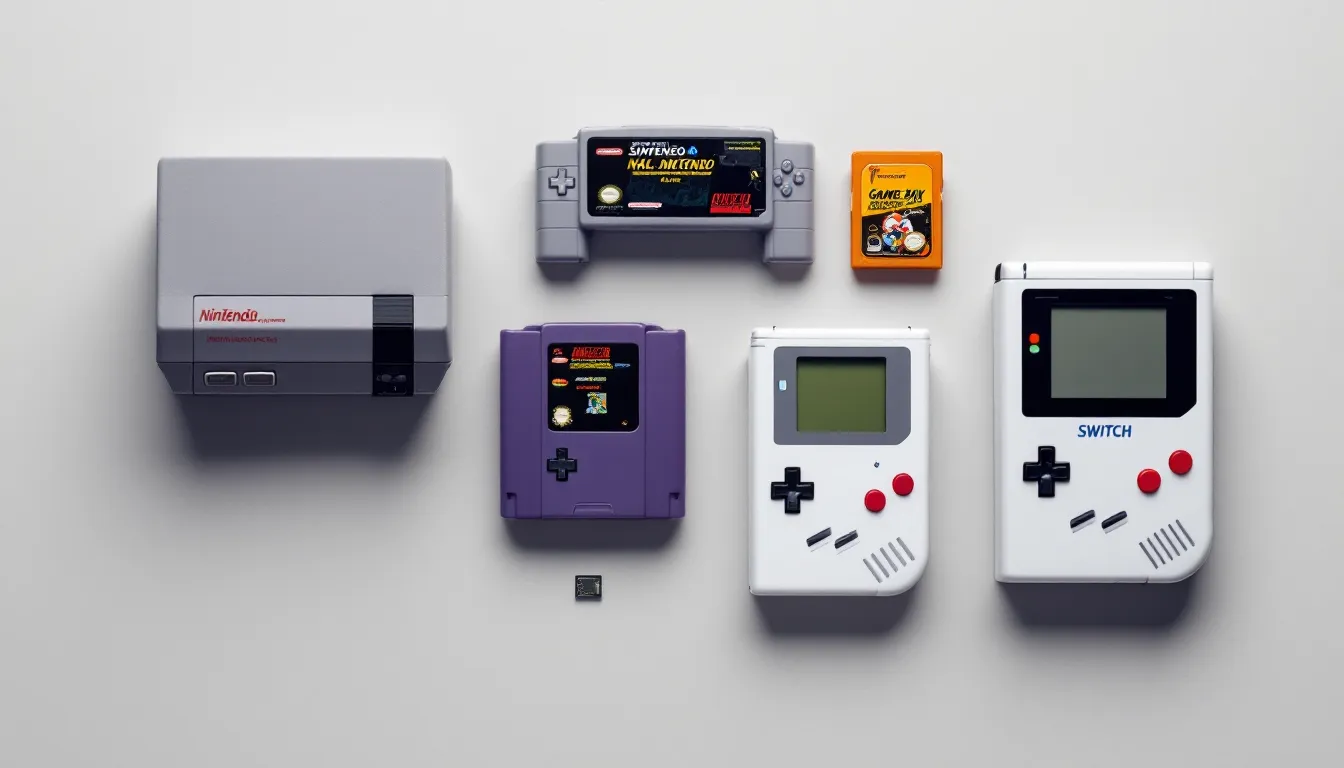
Each Nintendo cartridge is built around a printed circuit board (PCB) containing one or more ROM chips, a power connector, and a plastic shell designed to fit snugly into a console’s slot. The cartridge’s physical design is crucial, the size, pin configuration, and shell shape vary across generations. For example, NES cartridges are larger and rectangular with a distinctive gray shell, while Game Boy cartridges are compact and rectangular, and Switch game cards are thin and almost credit-card-like.
The ROM chips inside store everything: game code, sprite data, tile maps, and audio samples. Some cartridges also include additional hardware. The Sega Genesis competed with cartridges, but Nintendo’s implementations often featured coprocessors (like the Super FX chip in the SNES) that enhanced graphics capabilities beyond what the base console could handle alone. Battery-backed RAM is another common addition, letting games save progress directly on the cartridge without needing cloud storage.
How They Differ From Digital Games
Digital games, the industry standard since the 2010s, require internet connectivity for download and exist only as data on a device’s storage. Once deleted, they’re gone until redownloaded. Cartridges, by contrast, are permanent physical objects. Pop an old cartridge into a console decades later, and it works, no server dependencies, no licensing servers, no worries about delisted titles.
This permanence carries real value for preservation and accessibility. A gamer with a SNES cartridge of The Legend of Zelda: A Link to the Past can play it on original hardware in 2026 just as they could in 1992. A digital copy of a game, stored on a console hard drive or linked to an account, is subject to terms of service changes and server availability. Cartridges also provide instant loading, no waiting for data streaming from a disc or storage device. That snappiness is why the Switch continues to use game cards instead of purely digital distribution, even as download speeds improve.
A Brief History of Nintendo Cartridges
Nintendo didn’t invent the cartridge, arcade boards and earlier consoles used cartridges before Nintendo’s explosion onto the scene, but Nintendo refined and perfected the format, making it the backbone of home gaming for decades.
The NES Revolution and the 8-Bit Era
The Nintendo Entertainment System (NES), released in North America in 1985, didn’t just save the video game industry from the 1983 crash: it established cartridges as the standard home gaming format for an entire generation. The NES cartridge, a gray, rectangular module featuring the iconic Nintendo gold dust, became synonymous with gaming itself. Inside, a single ROM chip held games as simple as Donkey Kong or as feature-rich as The Legend of Zelda.
The genius of the NES was as much about the cartridge’s reliability as its simplicity. The system’s lockout chip prevented unauthorized games from running, ensuring Nintendo’s quality control and creating a lucrative licensing business. By 1986, the NES was flying off shelves, and third-party developers lined up to create cartridges for the platform. Games like Super Mario Bros., Metroid, and Castlevania proved that cartridges could deliver engaging, replayable experiences.
Evolution Through the SNES, N64, and GameCube
The Super Nintendo Entertainment System (SNES), launched in 1990 in Japan and 1991 in North America, upgraded to 16-bit hardware while sticking with cartridges. SNES cartridges were physically larger and held ROM chips with significantly more storage, typically 2-4 megabits, compared to the NES’s typical 256 kilobits. The Super FX chip, introduced for games like Star Fox, allowed cartridge-level processing that pushed the SNES’s graphical capabilities well beyond its base hardware specifications.
The Nintendo 64 (1996) took a harder stance on cartridges. While competitors like Sony and Sega had shifted to optical media (CDs and DVDs), Nintendo doubled down on cartridges, using 64-megabit ROM chips that could hold three-dimensional game data. Games like Super Mario 64 and The Legend of Zelda: Ocarina of Time demonstrated that 3D gaming worked phenomenally well on cartridge-based hardware, even though cartridges’ higher production costs and physical size limitations compared to discs.
The GameCube (2001) marked Nintendo’s only major deviation: it used proprietary optical discs called GCNs (GameCube Network discs). Even so, Nintendo released the Game Boy Advance the same year, bringing cartridges back to handheld gaming with impressive results.
Modern Cartridges: The Nintendo Switch Era
When the Nintendo Switch launched in 2017, it returned to cartridges in a refreshed form: game cards, which look like oversized SD cards but function as ROM-based cartridges. These cards are smaller, faster, and more durable than anything Nintendo produced before. They use NAND flash memory instead of traditional ROM chips, allowing for significantly greater storage capacity, up to 128 gigabytes, though most retail games use 8-32 GB.
The Switch’s adoption of game cards has proven prophetic. In 2026, the Switch remains one of the industry’s best-selling consoles, and its game card format has become the de facto standard for Nintendo’s portable gaming ecosystem. The upcoming Nintendo Switch successor is rumored to use a similar cartridge-based system, confirming that the format has earned another decade of life in the gaming landscape.
Types of Nintendo Cartridges
Nintendo cartridges vary significantly across hardware generations. Understanding the differences is essential for collectors, restorers, and anyone wanting to build a retro gaming setup.
Original NES and SNES Cartridges
NES cartridges are instantly recognizable: gray, rectangular modules roughly 5 inches long and 3 inches wide, with a distinctive shape that prevents accidental orientation errors. The top features a depressed area (the famous Nintendo seal of approval zone) and two small ventilation holes. The bottom houses the edge connector, a strip of parallel metal pins that transmit power and data to the console.
NES games ranged from 256 kilobits (32 KB) for early titles to 1 megabit (128 KB) for later releases. Storage constraints meant developers had to be incredibly efficient with assets and code. Iconic titles like Super Mario Bros., The Legend of Zelda, and Metroid still packed surprising depth into these tiny cartridges.
SNES cartridges are larger, roughly 6 inches long and 4 inches wide, with purple and black coloring on North American releases (Japanese Famicom cartridges came in various colors). They use a similar pin-based connector but support much higher ROM capacity: 2-6 megabits for standard games, with some later releases reaching 8 megabits or more. Special cartridges, like Star Fox (which included the Super FX chip), contained additional processors that boosted performance beyond the base SNES hardware.
Nintendo 64 Cartridges
N64 cartridges are immediately distinctive: gray, black, or color-varying modules roughly 4.5 inches wide and 3 inches tall, resembling a stubby trapezoid. They feature a durable plastic shell designed to withstand years of insertion and removal. The ROM capacity jumped to 4-32 megabits, allowing for full 3D game worlds with relatively detailed textures and animations.
One quirk of N64 cartridges: they’re incredibly durable but susceptible to dust and oxidation inside the pin connectors. Many users report that aging N64 cartridges occasionally require cleaning of the edge connector with isopropyl alcohol to restore full functionality. Games like Super Mario 64, The Legend of Zelda: Ocarina of Time, and GoldenEye 007 are among the most sought-after N64 cartridges in the collector’s market.
Game Boy and Handheld Cartridges
Game Boy cartridges are compact and rectangular, ranging from roughly 2.5 inches wide and 1.5 inches tall for original Game Boy cartridges to slightly smaller dimensions for Game Boy Color and Game Boy Advance cartridges. The Game Boy Color cartridges use a different connector than original Game Boy cartridges, but Game Boy Advance cartridges have a distinctive stepped design that prevents them from being inserted into older Game Boy hardware.
Game Boy ROM chips were modest, typical cartridges held 256 kilobits to 2 megabits, but the handheld’s iconic games proved that technical limitations weren’t a barrier to fun. Tetris, The Legend of Zelda: Link’s Awakening, and Pokémon Red and Blue defined handheld gaming for a generation.
Nintendo Switch Game Cards
Switch game cards are the most modern cartridge format: tiny, flat modules roughly 3.5 inches long and 2.1 inches wide, looking more like a premium SD card than a traditional cartridge. They’re made of white plastic (with occasional colored variants for special releases) and feature a simplified connector at the base. There’s no pins visible to the user, the electrical contact happens through gold pads on the card’s underside.
Switch cards use NAND flash memory, allowing massive storage jumps: The Legend of Zelda: Breath of the Wild (120 GB install, card-based at 32 GB), NBA 2K24 (32-64 GB depending on region), and Final Fantasy XV fit on a single card. The format also allows for instant-on loading, which is why digital games on Switch often launch at the same time as physical cartridge releases, unlike previous Nintendo eras where cartridge manufacturing caused release delays.
Switch game cards also support various ROM sizes. Larger games require larger cards, but they’re all compatible with any Switch model. This standardization is part of why the Switch has sold over 140 million units, there’s no fragmentation between hardware revisions.
Collecting Nintendo Cartridges: Tips and Value
Collecting Nintendo cartridges is a thriving hobby, driven by nostalgia, investment potential, and the satisfaction of owning tangible gaming history. The collector’s market is complex, with prices fluctuating based on rarity, condition, and demand.
Finding Authentic Cartridges
Counterfeit Nintendo cartridges exist, particularly for NES, SNES, and Game Boy games. The most common fakes are reproductions, games copied onto new cartridges using ROM dumps. While reproduction cartridges can be fun for playing obscure games that never saw official release, they have zero collector value and misrepresent themselves as original hardware.
To identify authentic cartridges:
- Label quality: Authentic labels are sharp, colorful, and use period-accurate printing techniques. Fakes often have pixelated, low-resolution artwork or uneven coloring.
- Shell appearance: Original cartridges use specific plastic formulations and manufacturing processes. Shells should feel substantial, with uniform coloring (no obvious discoloration or sun fading unless the cartridge has aged naturally).
- Circuitry: Counterfeit ROM chips are often visibly different, wrong part numbers, different manufacturing dates, or obvious soldering inconsistencies.
- Weight and feel: Genuine cartridges have a specific heft and tactile quality. Fakes are sometimes noticeably lighter or heavier.
- Manufacturing stamps: Original cartridges include manufacturing stamps with Nintendo’s logo, country of origin, and part numbers. Fakes may have incorrect or entirely absent stamps.
Recent Nintendo Life coverage has highlighted the growing counterfeit problem in the Switch game card market, with unauthorized sellers listing reproduction games on major platforms. Always buy from reputable dealers, and verify authenticity before purchasing expensive cartridges.
Condition and Grading Standards
Cartridge condition dramatically affects value. The Video Game Grading System (VGS) and similar services grade cartridges on a scale:
- Mint (9.0-10.0): Virtually pristine, no visible wear, original packaging intact
- Near Mint (8.0-8.9): Minimal visible wear, slight creases on label or shell, fully functional
- Excellent (7.0-7.9): Light wear visible, label slightly faded, fully functional
- Good (6.0-6.9): Moderate wear, visible label damage or fading, fully functional
- Fair (5.0-5.9): Heavy wear, significant label damage, fully functional
- Poor (Below 5.0): Significant wear and damage, functionality questionable
For collectors, a sealed, graded copy of a classic game can fetch multiples of a loose cartridge’s value. Super Mario Bros. on NES ranges from $50-150 loose to $30,000+ for a sealed, graded copy in top condition. A loose copy is still valuable, it’s fully playable and lets you experience the game authentically, but carries fraction of the investment appeal.
Most Valuable Nintendo Cartridges
Several factors drive cartridge value: rarity, demand, condition, and cultural significance. The most expensive Nintendo cartridges include:
- Super Mario Bros. (NES, 1985): The single best-selling NES game, making loose copies common ($30-80) but sealed graded copies extremely valuable ($30,000+) due to rarity of sealed copies with perfect condition.
- The Legend of Zelda (NES, 1986): Gold cartridge variant is rarer than standard gray, with sealed copies commanding $15,000-40,000.
- Metroid (NES, 1986): High demand and lower production numbers than SMB, sealed copies fetch $10,000-25,000.
- Pokémon Red and Blue (Game Boy, 1996-1998): Early-run cartridges, especially signed or rare variant copies, reach $5,000-15,000 sealed.
- Chrono Trigger (SNES, 1995): Limited production in North America, complex cartridge featuring two ROM chips, values $200-600 loose and $5,000+ sealed.
- EarthBound (SNES, 1994): Low print run and cult classic status, commanding $400-1,200 loose and $10,000+ sealed.
- Nintendo World Championships 1990 (NES, 1990): Only 116 copies produced for a Nintendo competition, making sealed copies ultra-rare. Values exceed $100,000.
Prices fluctuate constantly, influenced by comparable sales, graded inventory, and collector demand. Resources like Nintendo Life track current pricing and historical data for collectors researching investments.
Maintaining and Preserving Your Collection
Owning Nintendo cartridges comes with responsibility. Unlike digital games, physical cartridges degrade over time. Proper maintenance extends their lifespan and preserves playability for future decades.
Cleaning and Storage Best Practices
For the cartridge exterior: Dust accumulation is inevitable. Use a soft, dry cloth to gently wipe the shell and label. For stubborn grime, use a lightly dampened microfiber cloth (with distilled water only, avoid chemicals that can damage the label or plastic). Never use harsh cleaning products: they’ll strip colors and wear labels.
For the connector pins: Over decades, oxidation builds up on the metal edge connector, causing intermittent connection failures. The solution is gentle: use 90%+ isopropyl alcohol and a soft brush (like an old toothbrush) to carefully clean the pins. Many collectors swear by the “blowing game cartridge” method popularized in the NES era, but modern consensus favors alcohol cleaning for better results without risking saliva corrosion. Let the cartridge air-dry completely (at least 30 minutes) before inserting it into a console.
For battery-backed cartridges: Games that save progress using a battery (common on SNES, Game Boy, and N64) have a limited lifespan. NiCd and alkaline batteries inside cartridges typically fail after 20-30 years. Some collectors replace the battery with a new one using a soldering iron, effectively restoring full functionality. This is a delicate operation, soldering near ROM chips risks permanent damage, so consider professional battery replacement services if you’re uncomfortable with electronics work.
Storage conditions are critical:
- Temperature: Keep cartridges in a cool environment (60-75°F). Extreme heat warps plastic and damages ROM chips: extreme cold can cause condensation and corrosion when cartridges warm up.
- Humidity: Store in dry conditions (40-50% relative humidity). High humidity promotes corrosion and mold: low humidity causes static buildup. Avoid basements (which flood) and attics (which experience temperature swings).
- Light exposure: UV light degrades labels and plastic over time. Store cartridges in opaque boxes or shelving away from direct sunlight.
- Packaging: Original boxes provide excellent protection. If original boxes are unavailable, use acid-free boxes to prevent label deterioration. Avoid plastic sleeves that trap moisture.
Troubleshooting Common Issues
Cartridge not recognized by console: This is the most common issue, usually caused by dirty pins. Clean the edge connector with isopropyl alcohol (as described above). Try reinserting the cartridge firmly, sometimes the connection just needs reseating.
Intermittent glitching during gameplay: Dirty pins or a failing ROM chip cause this. Try cleaning first. If glitches persist after cleaning, the ROM may be degrading, indicating the cartridge’s lifespan is ending. Unfortunately, there’s no reliable home fix for internal chip failure, professional restoration is the only option.
Save file corruption or loss: Battery failure in SNES, Game Boy, and N64 cartridges causes save data loss. Replace the battery (or have it professionally replaced) to restore functionality. Switch game cards use flash memory and don’t require batteries, so this isn’t an issue for modern cartridges.
Visible label damage or fading: Once a label is damaged, it can’t be perfectly restored. Minor touch-ups using archival markers might improve appearance marginally, but collectors generally accept that aged cartridges show their age. For valuable cartridges, professional label restoration is available but expensive and controversial in the collector community, some collectors view restoration as losing originality.
Maintaining a cartridge collection requires patience and attention to detail, but the payoff is tangible: games that work perfectly after 30+ years, preserving gaming history for future generations. Recent coverage on The Verge has explored preservation efforts in the gaming industry, highlighting why collectors’ maintenance practices contribute to broader cultural preservation.
Why Nintendo Cartridges Still Matter for Gamers
In 2026, when digital distribution dominates, Nintendo cartridges remain relevant for reasons that go beyond nostalgia. They represent a fundamentally different approach to gaming that solves real problems.
Preservation and ownership: A cartridge you own is yours indefinitely. You don’t depend on company servers, account systems, or licensing agreements. Games delisted from digital stores disappear entirely for new users, but cartridges persist. For games like Flappy Bird, PT, or various licensed sports titles that were removed from digital platforms, physical cartridges are the only legal way to own and play them.
No latency or streaming dependency: Cartridges load data instantly from onboard memory. The Switch’s game cards provide near-zero load times compared to games requiring data streaming from storage or the internet. For portable gaming, this matters tremendously, you’re not waiting for data to ferry between a console’s storage and RAM.
Accessibility across console generations: A cartridge doesn’t require the latest hardware. Someone with an original NES from 1983 can play brand-new NES cartridges today (assuming the cartridge is genuinely compatible). Digital games, by contrast, often require specific hardware versions or online services that eventually shut down.
The collector’s appeal: Cartridges are tactile objects with intrinsic value. The act of inserting a cartridge, holding a box with original artwork, and reading the manual creates a ritual that digital downloads don’t replicate. Recent industry analysis on Siliconera has noted that Nintendo’s continued emphasis on game cards (rather than pure digital) reflects the company’s understanding that physical media satisfies core gamers’ preferences.
Competitive advantages in reliability: Game cards have no moving parts. A disc-based system (like Xbox or PlayStation) relies on mechanical drives that eventually fail. A cartridge has no mechanical components, it’s purely electronic. This makes it significantly more durable over decades.
Nintendo’s decision to return to cartridges with the Switch, and rumors that the Switch successor will continue the format, suggest the company believes cartridges are a permanent feature of gaming’s future. That’s a powerful statement in an industry obsessed with digital distribution.
Conclusion
Nintendo cartridges are far more than a relic of 8-bit gaming. They’re a proven, durable format that has powered every major Nintendo console since 1983 and continues to power the industry’s best-selling handheld system today. Whether you’re collecting sealed copies of classics, restoring a worn NES, playing the latest Switch releases on game cards, or simply appreciating gaming’s history, understanding cartridges reveals why Nintendo’s approach to hardware has endured.
The journey from gray NES cartridges to sleek Switch game cards reflects decades of hardware refinement, but the core principle remains unchanged: physical media that works, lasts, and puts ownership directly in your hands. As digital distribution dominates the industry, that tangibility makes cartridges increasingly valuable to gamers who want permanence, control, and reliability. If you’re building a collection or maintaining one you already own, the principles of authentication, condition evaluation, and proper care outlined here will serve you well. The cartridges you preserve today might be the games future generations discover and appreciate tomorrow.
About The Author