No, Nintendo does not own Sega, and that’s a question that shouldn’t need asking in 2026, yet it still pops up regularly in gaming forums and casual conversations. The confusion is understandable given the long, interconnected history between these two companies. They’ve competed fiercely, collaborated unexpectedly, and shaped the entire gaming landscape together. But ownership-wise, they remain completely separate entities. Nintendo is primarily owned by Nintendo shareholders and governed by its own board, while Sega operates as part of Sega Sammy Holdings, a Japanese entertainment conglomerate. Understanding the distinction isn’t just trivia, it explains why these companies operate so differently today and why any potential merger would be a seismic industry event. Let’s untangle the actual relationship between Nintendo and Sega, and clear up why people keep asking if one owns the other.
Key Takeaways
- Nintendo does not own Sega; they remain completely separate publicly traded companies with distinct ownership structures and business models.
- Sega operates as a subsidiary of Sega Sammy Holdings, a diversified Japanese entertainment conglomerate, giving it strategic independence in multi-platform game publishing decisions.
- The confusion about ownership stems from their deeply intertwined history as fierce competitors in the 1990s console wars and their modern business partnerships, not from any corporate ties.
- Nintendo focuses on hardware manufacturing and exclusive first-party games, while Sega abandoned hardware in 2001 to become a multi-platform software publisher, reflecting fundamentally different strategic approaches.
- A potential Nintendo-Sega acquisition would face astronomical costs ($8-15 billion+), intense regulatory scrutiny from Japanese and international authorities, and remain strategically questionable for both companies.
The Relationship Between Nintendo And Sega: A Brief Overview
Nintendo and Sega’s relationship is complicated. They’re not rivals anymore in the traditional sense, not like in the 1990s when Mega Drive faced off against SNES. They’re also not enemies. Instead, they exist as separate businesses with entirely different strategic focuses and ownership structures.
Nintendo focuses on hardware, first-party game development, and a carefully curated ecosystem. Sega, on the other hand, became a software and publishing giant after exiting the hardware market in 2001. They now develop and publish games across multiple platforms, some for Nintendo systems, some for PlayStation, some for PC, and some for mobile.
The misconception about ownership likely stems from how often these companies’ names get mentioned together in gaming history and culture. When you’ve defined console generations together and spent decades in direct competition, people naturally assume there’s some ownership tie or corporate merger lurking in the background. But there isn’t. They’re just two companies that shaped gaming in fundamentally different ways and happened to collide repeatedly while doing so.
Sega’s Current Ownership Structure
Who Actually Owns Sega Today
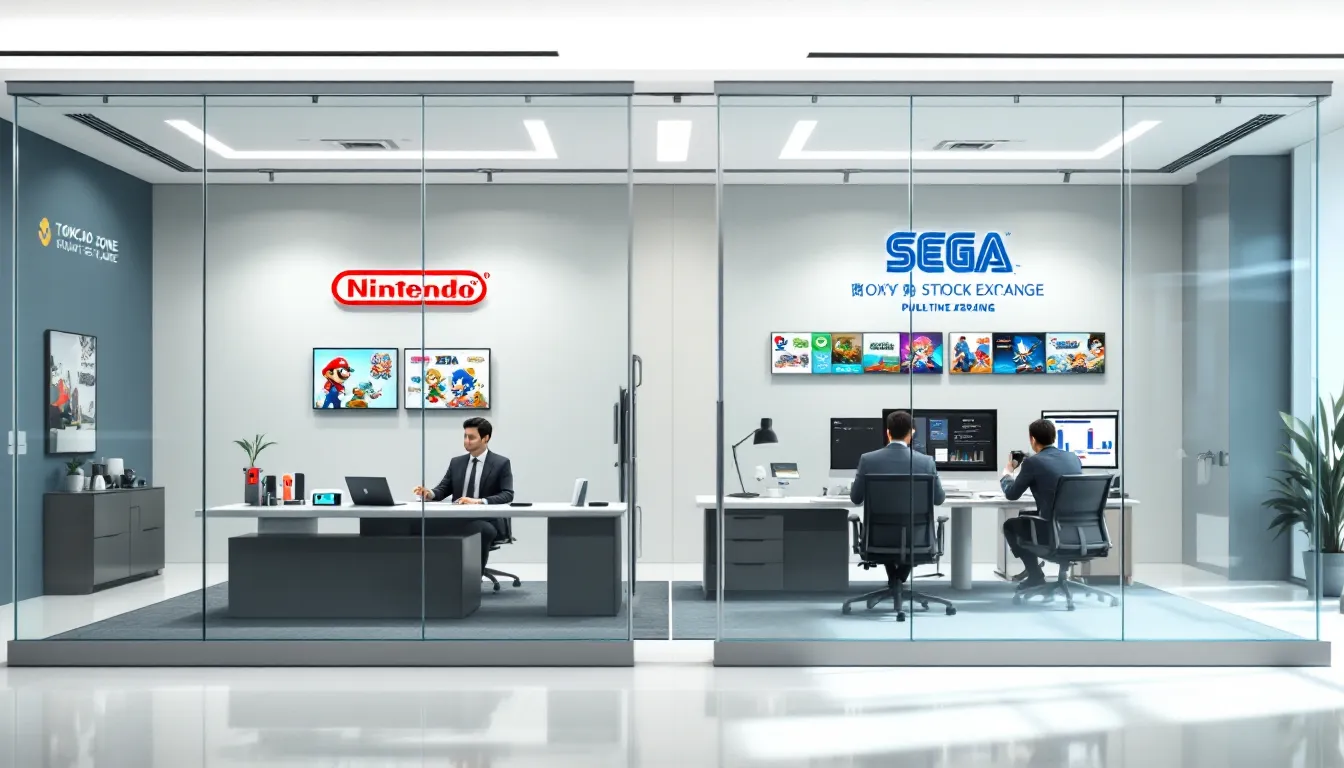
Sega operates as a subsidiary of Sega Sammy Holdings, a publicly traded Japanese company listed on the Tokyo Stock Exchange. Sega Sammy was formed in 2004 through the merger of Sega Corporation and Sammy Corporation, a pachinko machine manufacturer. This is crucial context: Sega isn’t an independent company anymore. It’s part of a larger entertainment holding company with diverse business interests.
Sega Sammy Holdings’ major shareholders include Japanese institutional investors, global investment funds, and individual shareholders, just like most publicly traded companies. No single person owns Sega outright, and Nintendo has zero stake in the company. Sega’s board of directors reports to Sega Sammy’s corporate governance structure, not to Nintendo’s leadership in any way.
Haruo Hasedera served as CEO of Sega Sammy Holdings until recently, with leadership focused on expanding Sega’s gaming portfolio while maintaining the pachinko and amusement arcade business. The company’s diversified approach means Sega gaming is just one part of a much larger corporate machine.
Sega’s Business Operations And Leadership
Sega’s gaming division, known as Ryu Ga Gotoku Studio and other development labels, operates with significant autonomy within Sega Sammy. The company publishes major franchises including Sonic, Total War, Persona, Yakuza, and Two Point games. Sega also manages its own publishing label, which handles distribution across PlayStation, Xbox, Nintendo Switch, PC, and mobile platforms.
Key decision-making at Sega happens internally. When Sega releases a new Sonic game on Switch, that’s a publishing and development decision made by Sega’s teams. When they port Persona games to new platforms, that’s Sega choosing how to maximize their IPs. None of this requires approval from Nintendo because Nintendo isn’t Sega’s parent company, Sega Sammy is.
Sega’s recent leadership and strategic moves reflect a company focused on diversifying its revenue through multiple platforms and licensing deals. Games like Sonic Superstars, Persona 5 Royal ports, and Total War Warhammer sequels show a strategy built on multi-platform releases and franchise extensions. This independence in decision-making is only possible because Sega remains a separate company from Nintendo.
The History Of Nintendo And Sega Rivalry
The Console Wars Era
The 1990s defined the relationship between Nintendo and Sega in ways that still echo today. The Sega Genesis (Mega Drive) launched in 1989, directly challenging Nintendo’s SNES dominance. For the first time in console history, Nintendo faced a legitimate competitor with comparable hardware, aggressive marketing, and strong third-party support.
This period created the console wars mentality that gaming culture still references constantly. Sega’s “Blast Processing” marketing campaign, the rise of Sonic the Hedgehog as Nintendo’s first real competitor to Mario, and the shift toward older teens gravitating toward Sega’s library created genuine market competition. These weren’t companies trying to own each other, they were fighting for market share with every tool available.
The stakes felt existential at the time. Gamers had to pick sides. You were a Nintendo kid or a Sega kid. The divide shaped entire childhoods and influenced which gaming franchises people still prefer today. That emotional connection to the rivalry is why people still reference it decades later.
Key Moments That Defined Their Competition
Several moments crystallized the Nintendo-Sega rivalry:
The Genesis/SNES Split (1990-1996): Sega captured meaningful market share with the Genesis, particularly in North America. Nintendo still dominated overall, but Sega proved consoles could succeed against Nintendo, a first.
Sonic vs. Mario (1991 onwards): Sonic the Hedgehog’s debut made him Sega’s mascot and Mario’s first legitimate rival. These two characters became symbols of the larger console war, appearing in advertising, merchandise, and gaming culture simultaneously.
Sega Saturn’s Surprise Announcement (1994): Sega revealed the Saturn at E3 without warning, shocking retailers and competitors. This aggressive move showcased Sega’s confidence and willingness to disrupt the market.
Dreamcast’s Last Stand (1998-2001): Sega’s final console push came with the Dreamcast, which launched with genuine innovation and strong games. Even though critical success, the PlayStation’s DVD drive advantage and Sega’s mounting financial losses forced the company to exit hardware. This wasn’t Nintendo destroying Sega, it was market forces and business decisions that changed everything.
These moments matter because they established Sega as a major player, not a subsidiary or owned entity. Sega made independent strategic choices, won in some markets, lost in others, and eventually left the hardware business on its own terms. That’s the trajectory of a separate company, not one owned by a competitor.
Why People Might Confuse Ownership Of These Companies
Nintendo And Sega’s Business Partnerships
Post-Dreamcast, Sega and Nintendo started collaborating more openly. Sonic appeared on Nintendo platforms starting with Sonic Adventure 2 on GameCube in 2001 (technically released on the Dreamcast first, but the GameCube version mattered for Nintendo’s ecosystem). This partnership might seem like ownership, but it’s actually just smart business.
When Sega realized console hardware wasn’t their future, they pivoted to becoming a software publisher. Putting Sonic games on Nintendo Switch made financial sense, millions of potential customers, a dedicated handheld/home console audience, and proven success with Mario fans who also grew up with Sonic. Nintendo benefited from having iconic Sega franchises on their platform.
Partnership deals create the illusion of deeper corporate ties. Licensing agreements, exclusive content, and cross-promotional activities make companies look intertwined. But partnership isn’t ownership. Microsoft partnered with Sega on exclusive games during the original Xbox era, that didn’t mean Microsoft owned Sega. Similarly, Nintendo’s partnerships with Sega represent smart publishing strategy, not acquisition.
Cross-Platform Gaming And Collaborations
Recent years show how much Sega and Nintendo collaborate without any ownership structure:
Sonic Games on Switch: Multiple Sonic titles launched on Switch with Nintendo’s platform support. Sonic Superstars (2023) released across Switch, PlayStation, Xbox, and PC. Sega made independent publishing decisions about which platforms to support.
Super Smash Bros. Appearances: Sonic has been a playable character in Smash Bros. Ultimate since launch (December 2018), and Sega provided support for additional Sonic content like Sephiroth’s alternate skins and crossover events. This is licensing content from Sega to enhance Nintendo’s game, straightforward business, not ownership.
Mario + Rabbids Crossovers: While not directly Nintendo-Sega, Ubisoft’s willingness to collaborate with Nintendo on third-party crossovers shows how modern gaming thrives on partnerships rather than corporate consolidation.
These collaborations actually prove Nintendo doesn’t own Sega. If Nintendo owned Sega, Sega would be obligated to make Switch exclusives rather than multi-platform releases. Sega would develop games exclusively for Nintendo hardware. Instead, Sega independently decides which platforms get which games based on market opportunity, development resources, and business strategy. That independence is the clearest indicator that these companies remain separate entities.
References to gaming industry analysis at outlets like Kotaku often cover these publishing deals and strategic partnerships, helping clarify the business relationships between major gaming companies.
What Separates Nintendo And Sega Today
Different Business Models And Strategies
Nintendo and Sega operate fundamentally different businesses, which itself proves they’re not under the same ownership.
Nintendo is a hardware manufacturer first. They design and produce the Switch, manage the Nintendo eShop, and carefully control which games appear on their platform. Their business model depends on controlling the entire ecosystem, hardware, software, peripherals, and services. Profitability comes from selling hardware at decent margins, taking a cut from digital sales, and maintaining high attach rates for first-party games.
Sega abandoned hardware in 2001 and became a multi-platform software publisher. They develop games, publish games made by external studios, manage IP licensing, and generate revenue through game sales, merchandise, and licensing deals across every platform. Sega doesn’t manufacture anything. They sell software and IP rights.
These different models require different leadership, different strategies, and different priorities. Nintendo’s CEO makes decisions about hardware specs, production capacity, and ecosystem management. Sega’s leadership makes decisions about which studios to acquire, which franchises to revive, and which platforms to prioritize. These are completely different jobs requiring completely different expertise.
Companies under shared ownership would coordinate these strategies. If Nintendo owned Sega, we’d see Sega game announcements timed to Nintendo’s press events, exclusive content for Switch, and strategic decisions made collaboratively. Instead, Sega announces games independently, releases on all platforms, and operates their business calendar separately from Nintendo’s. That autonomy is definitive proof of separate ownership.
Gaming Libraries And Intellectual Properties
Nintendo and Sega own completely different game libraries and franchises.
Nintendo owns Mario, Zelda, Donkey Kong, Pokémon (alongside The Pokémon Company), Fire Emblem, Metroid, Kirby, Animal Crossing, Splatoon, and dozens of other major franchises. These are locked to Nintendo platforms (with occasional spin-offs elsewhere) because Nintendo owns them outright. Their entire business strategy revolves around creating games with these IPs for Nintendo hardware.
Sega owns Sonic, Total War, Persona, Yakuza, Two Point (Two Point Hospital, Two Point Campus), Bayonetta (partially shared with PlatinumGames), and numerous arcade-era franchises. Sonic appears on Nintendo Switch because Sega chooses to publish there, not because Nintendo has any ownership claim. Total War games release on PC and PlayStation because that’s where strategy game audiences exist, not because any corporate mandate requires multi-platform releases.
The different IP portfolios reflect different market strategies. Nintendo’s IPs are built for console-exclusive experiences that sell hardware. Sega’s modern IPs are designed for maximum platform flexibility. You see this in how Persona games get ported to multiple platforms while Mario games typically stay exclusive to Nintendo hardware.
Crossover content like Sonic in Smash Bros. or Nintendo characters potentially appearing in Sega games would require licensing agreements between separate companies. If one owned the other, there’d be no negotiation, just internal development decisions. The fact that these appearances involve contracts, timing coordination, and mutual benefit discussions proves both companies maintain independent ownership and decision-making authority.
According to recent industry reporting from Video Games Chronicle, major franchise deals and licensing arrangements between major publishers require formal agreements, exactly what you’d expect between separate companies, not between a parent and subsidiary.
Could Nintendo Ever Acquire Sega?
Speculation And Industry Analysis
Speculation about Nintendo acquiring Sega pops up every few years, usually when one company has a successful release or when stock prices fluctuate. Gaming communities love the idea, imagine Nintendo’s first-party development combined with Sega’s diverse franchises. It’s fantasy fuel for franchise fans.
But acquisition is unlikely for several reasons. Sega Sammy is a publicly traded company on the Tokyo Stock Exchange. Acquiring Sega would mean Nintendo buying a significant stake (potentially majority control) from thousands of shareholders at market rates. The price tag would be astronomical, potentially tens of billions of dollars. Even a company as profitable as Nintendo would struggle to justify that expenditure to its own shareholders.
Sega Sammy’s board would need to approve any acquisition, and they’d want fair market value or better. Shareholders would demand premium pricing. This isn’t a startup that might accept acquisition as an exit strategy, Sega is an established, profitable entertainment company generating consistent revenue. They have no reason to sell.
Industry analysts periodically discuss potential acquisitions in the gaming space, with outlets like The Verge covering major corporate moves in gaming. Most conclude that major acquisitions face increasing regulatory scrutiny. Nintendo acquiring Sega would draw intense antitrust scrutiny from Japanese regulators, US FTC, UK regulators, and EU authorities. The combined market power would be massive, potentially triggering regulatory intervention and blocking the deal entirely.
Regulatory And Financial Considerations
Regulatory approval would be the biggest hurdle. Nintendo is already one of the largest gaming companies in the world. Sega is still significant in strategy games (Total War), arcade-style games (Sonic), and Japanese RPGs (Persona). Combining these two would create an entertainment powerhouse that could theoretically limit consumer choice and competition.
Regulators care about anti-competitive behavior. An Nintendo-Sega merger would likely trigger investigation because:
- Combined market share in specific genres would be massive
- Exclusive content agreements could lock competitors out of key franchises
- Synergies might involve raising prices or reducing investment in competitive titles
- Japanese regulatory bodies would scrutinize any mega-merger involving two major domestic companies
The financial side is equally thorny. Sega Sammy’s market capitalization fluctuates, but acquiring the entire company could cost $8-15 billion+ in today’s market. That’s an enormous expenditure that would require board approval, shareholder votes, and strategic justification. Nintendo would need to explain why spending that much capital on Sega makes better business sense than investing in internal development, acquiring smaller studios, or returning capital to shareholders.
For context on major gaming industry acquisitions and their regulatory paths, Sega Sammy, A Leading shows how Sega Sammy diversifies business portfolios independently from Nintendo, proving they operate as a separate strategic entity with distinct revenue streams and corporate objectives.
The Bottom Line: Separate Companies, Intertwined Legacy
Nintendo does not own Sega. They never have. Sega operates as a subsidiary of Sega Sammy Holdings, a publicly traded Japanese entertainment conglomerate. Nintendo is a separate publicly traded company with its own ownership structure, strategic goals, and business model.
The confusion exists because these companies’ histories are so deeply connected. They defined the 1990s console wars together. They shaped what modern gaming culture looks like. They’ve collaborated on licensing deals and cross-promotional content. But history and collaboration don’t equal ownership.
Today, they occupy completely different positions in the gaming industry. Nintendo manufactures hardware and develops exclusive games to drive console sales. Sega publishes software across multiple platforms, focusing on franchises that work best on PC, PlayStation, and mobile, while also bringing select titles to Nintendo’s platforms when it makes business sense.
These different business models require separate ownership and independent decision-making. An acquisition would be financially prohibitive, regulatory nightmare, and strategically questionable for Nintendo. Neither company needs the other to succeed. They’re doing fine as separate entities.
The legacy of their rivalry and their history of competition makes people want to connect them deeper than they actually are. But the gaming industry is big enough for both companies to thrive independently while occasionally collaborating when their interests align. That’s not evidence of ownership, that’s just how mature businesses operate.
Conclusion
The answer to “Does Nintendo own Sega?” is a straightforward no. Sega Sammy Holdings owns Sega. Nintendo owns Nintendo. These are distinct, publicly traded companies with different strategies, different IPs, and different long-term visions for gaming.
Understanding this distinction matters beyond just trivia. It explains why Sonic appears on Switch but Mario doesn’t appear on PlayStation. It clarifies why Sega can release games day-one on Game Pass while Nintendo maintains Switch exclusivity. It shows why these companies make different decisions about platforms, pricing, and game design, they’re answering to different leadership, different shareholders, and different business objectives.
The misconception is understandable given their entwined history. But in 2026, they’re as separate as any two major gaming companies can be. Their occasional collaborations prove they work well together as business partners. Their independence proves they work even better as distinct, competing entities in a healthy gaming market.
For anyone still curious about gaming industry ownership structures, corporate consolidation, or the future of major publishers, keep watching how these companies evolve. The answer to whether they’ll ever merge probably remains no, but the gaming industry changes faster than anyone expects.
About The Author