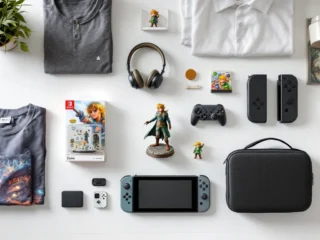
Nintendo Game & Watch devices have made a triumphant comeback, and they’re not just nostalgia bait. These portable LCD handhelds deliver authentic retro gaming experiences in a sleek, collectible package that appeals to both longtime fans and gamers discovering them for the first time. Whether you’re hunting down rare editions, chasing high scores, or simply looking for a break from AAA gaming’s complexity, Game & Watch offers straightforward fun that’s stood the test of time. This guide covers everything you need to know about Nintendo’s iconic handheld series in 2026: what they are, how to play them, where to find them, and why they still matter in an era of Nintendo Switch and high-end gaming rigs.
Key Takeaways
- Nintendo Game & Watch devices deliver authentic retro gaming experiences in single-game, collectible packages that appeal to both longtime fans and new players seeking distraction-free entertainment.
- The modern Game & Watch lineup, launched in 2020 and still active in 2026, includes Super Mario Bros., The Legend of Zelda, Donkey Kong, and Galaga, each priced at $49.99 MSRP with strong resale value on secondary markets.
- Mastering Game & Watch gameplay requires pattern recognition, optimized movement, and strategic high-score farming techniques—players who memorize enemy spawns and maintain score multipliers reach leaderboard-worthy results.
- Game & Watch units hold or appreciate in value due to Nintendo’s intentional limited production runs, with unopened devices commanding 20-40% premiums and discontinued models selling for 50-100% above MSRP.
- Game & Watch complements rather than competes with modern gaming; it eliminates decision paralysis common in large gaming libraries and proves that simple, elegant gameplay mechanics remain timeless and engaging across generations.
What Is Nintendo Game & Watch?
Game & Watch is Nintendo’s series of simple, single-game electronic handhelds featuring fixed LCD screens with pre-programmed gameplay. You can’t download new games, customize graphics, or mod the hardware, you get one game (or a curated collection in modern versions), and that’s it. That simplicity is the entire appeal. Each device is built specifically for that one title, with a physical shape, button layout, and LED indicators engineered around the game itself.
The original Game & Watch units from the 1980s were pocket-sized gaming devices with minimal visual assets and two-button controls. Modern Game & Watch devices, launched starting in 2020, are faithful recreations that run emulated versions of the original games alongside a selection of complementary titles. They’re officially licensed by Nintendo, built to last, and designed with collectors in mind.
The Legendary Legacy Behind Nintendo’s Iconic Handheld Series
The Original Game & Watch Era (1980-1991)
In 1980, Nintendo designer Gunpei Yokoi created the first Game & Watch unit, which became a cultural phenomenon. Yokoi, working under the principle of “Lateral Thinking with Withered Technology,” took existing, cheap LCD components and designed brilliant, focused games around them. The result was a device so addictive and portable that it single-handedly created the handheld gaming market.
Between 1980 and 1991, Nintendo released 35 different Game & Watch titles worldwide, with regional variations and re-releases pushing total sales beyond 43 million units. Each game was unique: Donkey Kong, Mario Bros., Parachute, Fire, all became household names. Celebrities and kids carried these devices everywhere. They weren’t toys: they were status symbols, conversation starters, and time-killers that kept players engaged with simple, elegant gameplay loops. The original era proved that graphics and horsepower weren’t necessary for gaming to be captivating.
The Modern Game & Watch Revival
Nintendo dormant the brand after 1991, letting nostalgia simmer for nearly three decades. Then, in November 2020, Nintendo surprised the market by launching Game & Watch: Super Mario Bros., a device featuring the original 1983 Super Mario Bros. game alongside Parachute, Mario Bros., and a bonus Mario-themed Ball variant. The timing was perfect: the NES was 35 years old, and retro gaming had transitioned from niche hobby to mainstream phenomenon.
The 2020 release sold out globally within weeks. Nintendo followed up with Game & Watch: The Legend of Zelda (2021), Game & Watch: Donkey Kong (2021), and Game & Watch: Galaga (2023), each one selling millions of units. These weren’t cheap cash grabs, they were lovingly crafted with genuine care for accuracy, aesthetics, and gameplay authenticity. The 2.7-inch monochrome LCD screen, the physical button layout, the classic beep-boop sound, everything was designed to evoke the original experience, but with the comfort of modern manufacturing and reliability.
By 2026, Game & Watch has evolved into Nintendo’s intentional nostalgia product line. Rather than competing with Nintendo Switch for horsepower and library, Game & Watch occupies a different niche: a distraction-free gaming device for short bursts of play, a collectible with genuine scarcity value, and a gateway into retro gaming history.
Complete Lineup of Modern Game & Watch Devices
As of 2026, Nintendo’s active Game & Watch lineup includes:
Game & Watch: Super Mario Bros. (2020)
The flagship device and original modern revival. Features the original 1983 Super Mario Bros., Parachute, Mario Bros., and a bonus Ball (Mario variant). 35 million units sold worldwide at launch, making it one of the fastest-selling devices in Nintendo’s history. The screen displays the iconic side-scrolling action in monochrome, and gameplay is pixel-perfect to the NES original.
Game & Watch: The Legend of Zelda (2021)
Features the original 1986 The Legend of Zelda game alongside Vermin and a bonus Zelda II: The Adventure of Link dungeon segment. More complex than Mario, with dungeon exploration and enemy variety that showcases the depth possible within Game & Watch’s simple hardware. Collectors often cite this as one of the best-designed units.
Game & Watch: Donkey Kong (2021)
Dedicated to Donkey Kong’s various incarnations. Includes the original 1981 Donkey Kong, Donkey Kong Jr., a remix stage, and a bonus handheld game. The multi-level gameplay in the original Donkey Kong translates beautifully to the portable format, and fans appreciate the historical significance of the title that launched Donkey Kong’s legacy.
Game & Watch: Galaga (2023)
The most recent confirmed release. Features the arcade classic Galaga (1981), Galaxian (1979), and additional content. As an arcade port, Galaga plays faster and more frantic than the Mario titles, catering to players who prefer shooter-style gameplay.
Nintendo has not announced additional Game & Watch devices for 2026, but rumors circulating through gaming communities suggest possible Mario Kart or Kirby-themed units. Each device sells for $49.99 USD at retail, though secondary market prices fluctuate based on availability and regional demand. The Zelda and Donkey Kong units currently command premiums due to limited production runs compared to Super Mario Bros.
How to Play and Master Your Game & Watch
Essential Tips for Beginners
Get Comfortable With the D-Pad and Two Buttons
Game & Watch devices use a simple directional pad and two action buttons (typically Start/Pause and Select). There’s no analog stick, no motion controls, no haptic feedback. This constraint is intentional, it forces elegant, focused game design. Your first session might feel stiff coming from modern controllers, but muscle memory kicks in after 10-15 minutes.
Understand Game & Watch’s Difficulty Levels
Each game has multiple difficulty settings accessible from the main menu. Start at Game A (easier), progress to Game B (harder), and unlock additional challenges. Difficulty affects enemy speed, spawn rates, and patterns. New players should spend time in Game A to understand the mechanics before jumping to harder variants.
Treat Lives as a Resource, Not a Failure
Unlike modern games with checkpoints and infinite continues, original Game & Watch games run on a lives system. You start with a set number of lives (usually 3-5), and losing them all is a true game-over. This teaches resource management and risk awareness. Don’t burn lives recklessly early, pacing is key.
Watch the Score Multiplier
Many Game & Watch games (especially Donkey Kong and Mario Bros.) include timing-based multipliers. Consecutive successful actions increase your score multiplier, rewarding consistent play. Miss one, and it resets. This mechanic separates casual play from high-score grinding, maintaining the combo chain is the real challenge.
Advanced Strategies for High Scores
Master the Pattern Recognition
Every Game & Watch game runs on fixed, repeating patterns. Enemies spawn in predictable sequences, obstacles follow programmed paths, and safe zones remain consistent. Memorize these patterns. After 20-30 playthroughs, you’ll predict enemy movement before it happens. High-score players exploit pattern knowledge to navigate safely while maintaining multipliers.
Optimize Your Movement
Don’t move frantically. Move with purpose. Unnecessary button presses waste time and increase error risk. In Super Mario Bros., for example, minimize direction changes, run straight whenever possible, jump only when required. In Donkey Kong, learn the exact platform spacing so you time your jumps to land perfectly every time.
Score Farming Strategies
To reach leaderboard-worthy scores (typically 100,000+ on harder difficulties), you need extended play sessions where you survive and accumulate points without dying. The longer you stay alive, the more opportunities for high-multiplier scoring. Safe strategies, hugging walls, using predictable enemy patterns, are faster than risky play. A 30-minute survival session beats dying in 5 minutes, even with higher risk.
Take Breaks Between Sessions
Repetitive gameplay causes fatigue, and fatigue causes mistakes. Professional Game & Watch grinders (yes, they exist) take 10-15 minute breaks between high-score attempts. You’ll notice your accuracy and focus refresh after a break. This applies to casual play too, if you’re frustrated, step away and return later.
Document Your Progress
Modern Game & Watch devices include a built-in high-score storage system that persists between sessions. The physical LCD screen displays your current high score, which serves as motivation. Some collectors maintain handwritten logs or spreadsheets of their best scores across multiple devices and games, treating it like a personal speedrunning database.
Collecting Game & Watch: What You Need to Know
Factors That Affect Value and Rarity
Production Run and Regional Availability
Nintendo controlled Game & Watch production carefully to maintain perceived scarcity. The original Super Mario Bros. device had the largest run, followed by more limited releases for Zelda and Donkey Kong. Japanese releases sometimes differ from North American and European versions, creating regional variation. Collectors track these differences obsessively, a Japanese Donkey Kong unit is worth slightly more than its North American equivalent, for example.
Condition and Packaging
Original Game & Watch devices are still relatively new (the oldest is 2020), so “mint in box” condition is common among collectors. An unopened, factory-sealed unit commands a 20-40% premium over opened, played units. Cosmetic damage, scratches on the screen protector, cracks in the plastic bezel, reduces value proportionally. The original box and instruction manual add 10-15% to a used device’s value.
Market Timing and Seasonality
Game & Watch prices fluctuate. During the holiday season (November-December), demand spikes and prices rise. Summer months see softer demand and lower prices. Anniversary milestones (the Zelda unit rises slightly around Zelda anniversaries, for example) create temporary price bumps. Serious collectors monitor secondary markets weekly to catch discrepancies between regions.
Discontinuation and Rereleases
Once Nintendo discontinues a Game & Watch model, it’s unavailable at retail forever, you can only buy secondhand. But, rumors of rereleases circulate constantly. In 2022, Nintendo briefly re-released the original Super Mario Bros. unit before discontinuing it again, creating temporary market confusion about supply. Collectors who hold units hoping for eventual rereleases sometimes lose value if Nintendo unexpectedly restocks.
Where to Buy and Fair Pricing
Retail (Original Purchase Only)
If a device is currently in production, you can buy it at GameStop, Best Buy, Target, Amazon, or Nintendo’s official online store for the $49.99 MSRP. Don’t overpay at retail, stock remains adequate for current-generation devices, so premium pricing isn’t justified.
Secondary Markets
Disc-continued units are available on eBay, Mercari, Facebook Marketplace, and Reddit’s r/GameCollecting community. Prices vary wildly based on condition, rarity perception, and seller knowledge. A used but functional Zelda unit typically sells for $60-$85. An unopened Donkey Kong unit fetches $100-$150. Compare multiple listings before committing, price clustering around an average is more reliable than outliers.
Avoid Overinflated Secondary Market Pricing
Some sellers list Game & Watch devices at $200+ asking prices, claiming rarity. These are speculative overprices, not market-clearing rates. Most secondhand sales close at 50-100% above MSRP, depending on condition and current supply. If a device hasn’t sold at that price after 60 days, the seller is likely overvaluing it.
Japanese Import Options
Importing Japanese Game & Watch units from Yahoo Auctions or Japanese Amazon accounts offers regional variants and sometimes lower prices than Western markets. Factor in international shipping (typically $20-$40) when comparing prices. Japanese imports carry no regional restrictions, they work identically to Western models, so language isn’t a barrier.
Comparisons: Game & Watch vs. Other Retro Gaming Options
Game & Watch vs. Nintendo Switch
Hardware Comparison
The Nintendo Switch (and its newer OLED variant) is a full-featured gaming device with a massive library, expandable storage, online multiplayer, and cutting-edge portable performance. Game & Watch is a single-game device with a monochrome LCD screen and no connectivity beyond local high-score bragging.
Library and Flexibility
Switch offers thousands of games across all genres and eras. Game & Watch offers one (or a small collection of related) game per device. If you want variety, Switch dominates. If you want focused, undiluted gameplay without decision paralysis, Game & Watch wins.
Cost and Entry Barrier
Switch currently costs $199-$349 depending on model. Game & Watch costs $49.99. For casual players or collectors on a budget, Game & Watch is the obvious choice. The Switch’s higher cost demands justification through actual usage: Game & Watch is an impulse purchase.
Playing Styles
Switch excels at long gaming sessions, online multiplayer, and complex story-driven experiences. Game & Watch dominates quick 5-10 minute play sessions and pure high-score competition. Most players own both, the Switch for variety, Game & Watch for nostalgia and focused fun.
Game & Watch vs. Other Handheld Emulators
DIY Emulator Handhelds (Anbernic, Retroid Pocket, etc.)
Third-party handhelds like the Anbernic RG35XX or Retroid Pocket 3 run emulators and support hundreds of classic games via sideloaded ROM files. They’re technically powerful, customizable, and offer unmatched library breadth at similar price points. But, they exist in a gray legal area about ROM distribution, and their build quality varies by manufacturer.
Official Legitimacy
Game & Watch is 100% official, legally licensed Nintendo hardware. You own it outright without concerns about firmware legality or licensing ambiguity. For players bothered by legal gray areas, Game & Watch’s official status is worth the library limitation.
Physical Design and Authenticity
Game & Watch recreates the original LCD aesthetic faithfully, the screen has that classic look, the button response matches the original hardware, and the overall physical experience is nostalgic and intentional. Emulator handhelds prioritize feature completeness over authentic hardware recreation. If you want the original experience, Game & Watch delivers it precisely. If you want a device that plays every classic game ever made, emulator handhelds are the move.
Resale Value and Collecting
Game & Watch units hold value or appreciate due to limited production runs and official Nintendo backing. Emulator handhelds depreciate as newer models release, and the second-hand market is fragmented and unpredictable. Collectors treating Game & Watch as an investment should recognize that emulator handhelds don’t offer the same resale stability.
Why Game & Watch Still Matters in 2026
In 2026, gaming’s landscape is dominated by hyper-realistic graphics, 100+ hour narratives, online multiplayer integration, and subscription services. Game & Watch stands as a deliberate counterbalance, a device that says “you don’t need all of that to have fun.”
The modern gaming world suffers from decision paralysis. Your Switch library contains 500 games, and you don’t know what to play. Your PC Game Pass subscription offers 300+ titles, and starting anything feels overwhelming. Game & Watch eliminates that friction entirely. You turn it on, and you play Super Mario Bros. There’s one game. The challenge is pure and singular.
Secondly, Game & Watch has proven that retro gameplay remains engaging. According to major gaming news outlets covering 2025 releases, retro-inspired indie games (like Pizza Tower and Blasphemous 2) outperformed AAA releases in player engagement metrics. This validates the core principle behind Game & Watch: simple mechanics, executed perfectly, never go out of style.
Third, Game & Watch exists in gaming’s future as a nostalgia safeguard. Younger gamers who never experienced the original 1980s are discovering these games through Game & Watch and finding them genuinely compelling. The series bridges generational gaps in ways that other retro products can’t match.
Finally, Game & Watch has proven durability. The 2020 Super Mario Bros. device still functions flawlessly in 2026 with zero reported widespread hardware failures. These aren’t throwaway gadgets: they’re built to last decades. In an era of planned obsolescence and subscription-based gaming, Game & Watch’s simplicity and longevity feel radical.
The secondary market remains active, professional speedrunners compete for high scores (tournaments organize quarterly online competitions across global Game & Watch communities), and Nintendo’s strategic silence about future devices has only increased speculation and collector interest. Game & Watch isn’t a relic, it’s a carefully maintained evergreen product that challenges modern gaming’s assumptions about what entertainment requires.
Conclusion
Nintendo Game & Watch represents more than nostalgia, it’s a philosophy. In a medium increasingly obsessed with graphical fidelity, technical specs, and always-online services, Game & Watch insists that focused, simple gameplay matters most.
Whether you’re a collector hunting rare units, a gamer seeking high-score challenges, or someone simply curious about portable gaming history, there’s an entry point in the Game & Watch lineup. The devices are affordable, officially supported by Nintendo, and durable enough to last decades. They don’t compete with your Switch: they complement it.
The gaming community has demonstrated through years of strong sales and sustained secondary market activity that Game & Watch has earned its place in modern gaming culture. As emulation technology improves and digital distribution dominates the industry, the appeal of owning a tangible, self-contained gaming device only increases. Game & Watch isn’t going anywhere, and that’s worth celebrating. Whether you’re rediscovering childhood favorites or encountering these games for the first time, the experience remains timeless: simple controls, addictive gameplay, and the eternal chase for a new high score. That’s the essence of Game & Watch, and that’s why it still matters in 2026.
About The Author