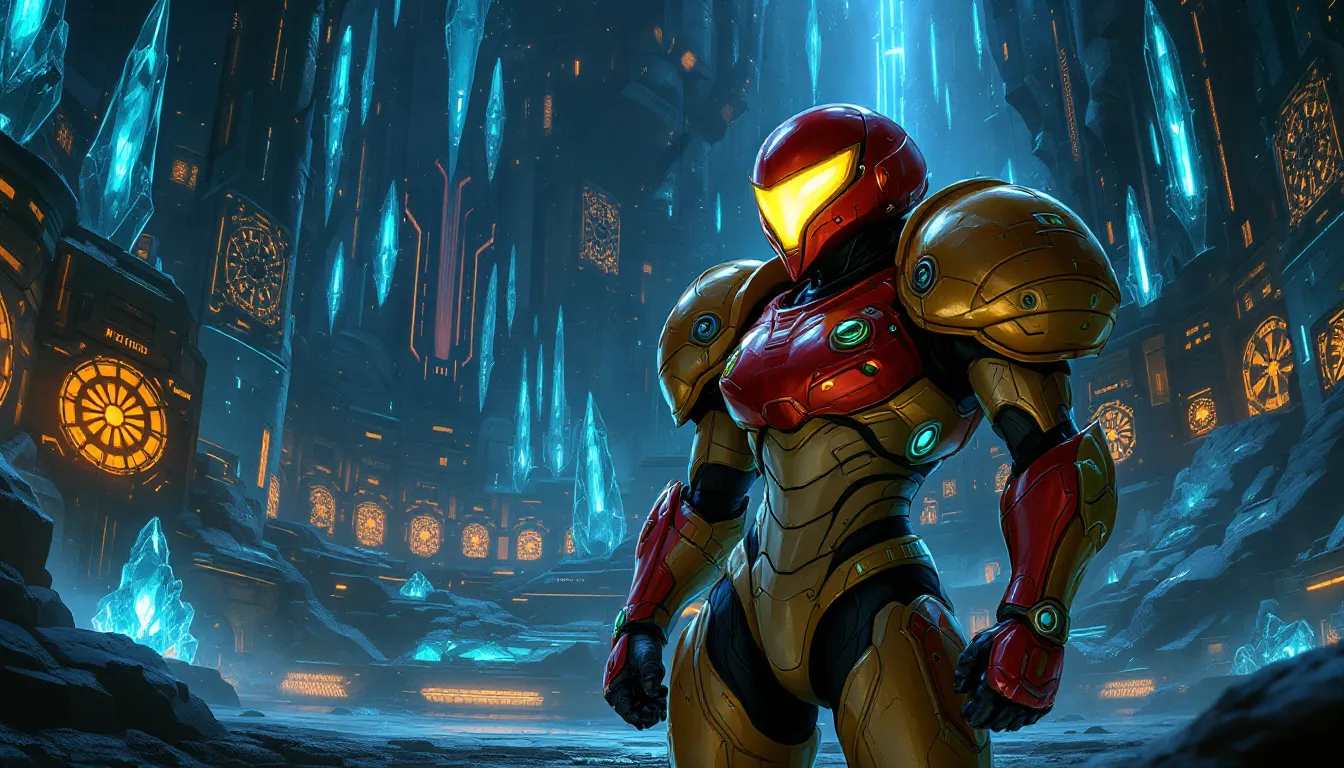
Nintendo‘s Metroid Prime 4 is shaping up to be one of the biggest releases of 2026, and it’s been a long time coming. After the original announcement in 2017 and subsequent retooling in 2019, fans have been starving for concrete details about what this first-person adventure will actually deliver. Whether you’re a longtime franchise devotee who remembers the GameCube original or someone jumping into Samus’ universe for the first time, this is the game that could redefine what a modern Metroid experience looks like. Let’s break down everything we know so far, the gameplay mechanics, the development saga, the technical specs, and what’s actually worth getting hyped about.
Key Takeaways
- Metroid Prime 4 is a first-person action-adventure exclusive to Nintendo Switch launching in 2026, combining exploration, puzzle-solving, and methodical combat from Samus’ perspective.
- The game was completely retooled by Nintendo’s internal teams in 2019 after initial development by Bandai Namco proved unsatisfactory, demonstrating Nintendo’s commitment to delivering quality.
- Suit upgrades and new abilities fundamentally change how you interact with Metroid Prime 4’s interconnected world, rewarding exploration and backtracking as you unlock previously inaccessible areas.
- Environmental storytelling and the scanning mechanic guide narrative discovery rather than cutscenes, letting players piece together the mystery of alien worlds through observation and data logs.
- Metroid Prime 4 targets 1080p docked at 30 FPS, prioritizing visual quality and atmospheric depth over higher framerates, appropriate for exploration-focused rather than twitch-based gameplay.
- The game capitalizes on renewed Metroid franchise interest sparked by Metroid: Dread (2021), positioning itself as a must-watch title that reinforces Nintendo’s ability to deliver ambitious experiences.
What Is Metroid Prime 4?
Metroid Prime 4 is a first-person action-adventure game that continues the Metroid Prime subseries, which launched on Nintendo GameCube in 2002. Unlike the traditional 2D side-scrolling Metroid games, the Prime subseries puts you directly into Samus Aran’s helmet, seeing the world through her visor as she explores alien planets and fights off hostile threats.
The game combines first-person shooting mechanics with exploration, puzzle-solving, and environmental storytelling. You’re not just blasting enemies, you’re piecing together the mysteries of each location, scanning objects to learn about the world, and using Samus’ expanding arsenal of weapons and tools to access new areas. It’s methodical, rewarding, and genuinely atmospheric in a way that few shooters achieve.
Metroid Prime 4 will be exclusive to Nintendo Switch, making it a major tentpole title for the platform. This is the numbered sequel fans have been waiting nearly a decade and a half for, since Metroid Prime 3: Corruption released on Wii in 2007.
Development History And Announcement Timeline
Original Announcement And Retooling
Nintendo first announced Metroid Prime 4 during E3 2017, right at the height of Switch hype. The company confirmed the game was in development but offered almost no details. That was the last fans heard for two years, until June 2019, when Nintendo dropped a bombshell: the game was being completely retooled.
Super Smash Bros. and Kirby developer Bandai Namco had been working on it originally, but Nintendo wasn’t happy with the direction. Rather than let a half-baked version ship, Nintendo made the bold decision to restart production and bring the project in-house to their own internal development teams. This kind of transparency, admitting things weren’t working and pivoting, actually earned respect from the community, even though it meant another long wait.
Developer Change And Production Updates
After the developer switch, information became scarce. Nintendo held its cards close, releasing only occasional updates and artwork to remind players the game still existed. This wasn’t unusual for Nintendo, but for a franchise as beloved as Metroid Prime, the radio silence felt brutal.
Throughout 2023 and 2024, Nintendo gradually ramped up reveals. Official screenshots and gameplay footage began surfacing, showcasing improved visuals and refined mechanics. By late 2025, the company committed to a 2026 release window, finally giving fans a concrete target. The rebooted development appears to have been worth the wait, early footage suggests a polished, ambitious entry that justifies the extended production timeline.
Gameplay Mechanics And Features
First-Person Exploration And Combat
Metroid Prime 4 keeps the first-person perspective that made the original Prime trilogy distinctive. You explore sprawling environments from Samus’ point of view, using her arm cannon and various beam weapons to solve puzzles and defeat enemies. The combat feels deliberate rather than frantic, this isn’t a run-and-gun shooter.
Locking onto targets is core to the experience. Once you lock, you can circle-strafe around enemies while maintaining aim, a mechanic that feels like a spiritual cousin to classic third-person action but adapted for first-person play. Different enemy types require different approaches, and the game rewards pattern recognition and tactical thinking.
Exploratory traversal ties directly into combat and puzzle-solving. You’ll use your beam weapons not just for damage but to interact with the environment, freezing platforms, burning obstacles, or activating switches with energy blasts.
Suit Upgrades And Power-Ups
Samus’ suit expands throughout the game, granting new abilities that unlock previously inaccessible areas. These aren’t just stat boosts, they fundamentally change how you interact with the world. The Morph Ball allows you to squeeze through tight tunnels and reach hidden passages. The Grapple Beam lets you swing across chasms. The Ice Beam freezes enemies and creates platforms. Each upgrade feels impactful.
The progression mirrors classic Metroid games: find a new suit module or weapon, suddenly three previously-blocked corridors become accessible. This design loop creates genuine “aha” moments where the world suddenly opens up. Backtracking isn’t tedious, it’s about revisiting areas with fresh tools and discovering secrets you couldn’t access before.
Puzzle-Solving And Backtracking
Puzzles range from environmental challenges (manipulating objects with your beam weapons) to logic-based locks that require scanning and understanding the lore scattered throughout each world. The scanning mechanic is crucial, you scan everything, and the data reveals hints about how to proceed.
Backtracking is purposeful, not padding. As your arsenal grows, you can access shortcuts and hidden rooms, making return trips faster. The level design emphasizes interconnectedness, so revisiting areas feels like an organic part of progression rather than forced busywork. This design philosophy separates Metroid Prime from games that just lock doors arbitrarily.
What We Know About The Story And Setting
Details about the narrative remain deliberately vague, but we know Metroid Prime 4 follows Samus as she investigates a new threat in familiar Metroid locales. The game features multiple distinct biomes with their own visual identity and lore. Based on artwork and footage, expect eerie alien worlds, ancient ruins, and technological installations, classic Metroid aesthetics elevated with modern lighting and environmental detail.
The storytelling approach leans into environmental narrative. You’re not sitting through cutscenes explaining the plot. Instead, you piece together what happened through scanning objects, reading data logs, and observing your surroundings. This method respects player agency and creates a sense of discovery that dialogue-heavy narratives often lack.
Samus herself remains largely silent, which reinforces the solitary, isolated feeling of exploring hostile worlds. You’re in her suit, experiencing her perspective, solving the mystery alongside her. Nintendo has suggested the story ties back to previous Metroid Prime games, so franchise knowledge will reward longtime fans, but newcomers won’t feel lost.
Graphics, Performance, And Technical Details
Metroid Prime 4 is pushing Nintendo Switch hardware to its limits. The visuals represent a significant leap over prior Switch games, with detailed environments, complex lighting systems, and smooth enemy animations. Screenshots reveal impressive atmospheric effects, foggy alien landscapes, particle effects from weapon blasts, and dynamic reflections on visor glass.
Performance targets have been officially confirmed at 1080p docked and 720p handheld, maintaining a consistent 30 FPS across both modes. This is a deliberate choice by Nintendo, the team prioritized visual quality and environmental complexity over higher framerates. For a game focused on exploration and deliberate combat rather than twitch reflexes, 30 FPS is a reasonable tradeoff.
The game is optimized for Nintendo Switch only. There are no current plans for ports to PS5, Xbox Series X/S, or PC. This is a Nintendo exclusive, which makes sense given the company’s desire to have flagship franchises drive hardware sales.
But, discussions at gaming outlets like IGN have speculated about potential future releases on a successor console. Nothing’s been announced, but it’s worth monitoring Nintendo’s roadmap if you’re on other platforms.
Release Date And Availability
Metroid Prime 4 launches exclusively on Nintendo Switch in 2026. Nintendo hasn’t narrowed down the release window beyond that year, though rumors from industry insiders suggest a Q3 or Q4 2026 timeframe. That’s still several months away, but at least we finally have a concrete year.
The game will be available as a physical cartridge and digital download on the Nintendo eShop. Pricing hasn’t been officially announced, but expect the standard $60 USD price point that Nintendo charges for major Switch releases like Zelda and Mario.
Pre-order information will likely roll out closer to launch. Nintendo typically opens pre-orders 2-3 months before release, so watch their official website and major retailers for announcements in mid-2026.
For those on other platforms, there’s unfortunately no announcement about versions for PlayStation, Xbox, or PC. The Switch exclusivity is real, at least for now.
What Fans Are Expecting And Hoping For
The Metroid Prime community has built up specific expectations after years of waiting. Fans want a game that respects the exploration-focused design philosophy of the originals while incorporating modern level design sensibilities. They want challenging but fair combat encounters and puzzles that require lateral thinking, not just trial-and-error.
Many players are hoping for expanded replayability features, maybe a hard mode that remixes enemy placements, or a speedrun mode for players interested in sequence-breaking. The community has generated thousands of speedrun routes and sequence breaks for the original Prime trilogy, and Metroid Prime 4’s design could either help or shut down this kind of gameplay.
There’s also speculation about online features, though nothing’s been confirmed. Some fans want asynchronous multiplayer or leaderboards for speedruns. Others just want robust accessibility options to make the game enjoyable for players with different needs.
Tone-wise, players expect the game to maintain Metroid’s isolating, atmospheric tone. Not everything has to be a bombastic action moment. Some of the best memories players have are from quietly exploring a new area, scanning lore entries, and slowly understanding the world around them. Metroid Prime 4 needs to nail that contemplative pacing alongside its combat moments.
According to discussions on Twinfinite and other gaming sites, there’s genuine excitement rather than cynicism, which is refreshing given how long fans have waited. The consensus is cautious optimism: the game looks promising, but only launch will tell if Nintendo delivered.
How Metroid Prime 4 Fits Into The Larger Metroid Franchise
The Metroid Prime subseries exists alongside traditional 2D Metroid games. While the Prime games take a first-person approach, 2D entries like Samus Returns (2017) and Metroid: Dread (2021) maintain the classic side-scrolling perspective. Both styles coexist and appeal to different player preferences.
Nintendo has been refreshing the Metroid franchise over the past five years. Metroid: Dread’s 2021 release introduced millions of newer players to Samus’ story, showing that demand for Metroid content was very real. Metroid Prime 4 capitalizes on that renewed interest.
The relationship between 2D and 3D Metroid games is interesting to consider. The 2D games focus on tight platforming, weapon variety, and interconnected map design. The Prime games emphasize environmental storytelling, atmospheric exploration, and lock-and-key level progression. A player who loves one style might not automatically love the other, which is why having both alive in the franchise strengthens Nintendo’s overall portfolio.
For lore purposes, Metroid Prime 4 continues the timeline established by the Prime trilogy. It’s set in the same universe as Metroid Prime, Metroid Prime 2: Echoes, and Metroid Prime 3: Corruption, though possibly much later chronologically. Fans of the series’ lore will find connections and callbacks to previous games. Those unfamiliar with Prime lore won’t be completely lost, the game stands on its own narratively while rewarding series knowledge.
Looking at the broader picture, GameSpot and other major outlets have pointed out that Metroid Prime 4 is crucial for Nintendo. It’s one of the few remaining major franchises without a current-generation entry. Getting it right matters not just for fan satisfaction but for Nintendo’s credibility as a publisher willing to commit to legacy franchises in meaningful ways. The weight of expectation is real, but so is the confidence that Nintendo’s internal teams can deliver.
Conclusion
Metroid Prime 4 represents the culmination of years of development, refinement, and a bold decision by Nintendo to restart the project rather than ship something mediocre. Everything we’ve seen suggests the wait has been justified. The gameplay mechanics honor what made the original Prime trilogy special, first-person exploration, methodical combat, meaningful progression, while the technical polish and level design appear to meet modern standards.
This is a game built for fans who crave deliberate, atmospheric experiences where every puzzle solved and every secret found feels earned. It’s not designed to compete with fast-paced shooters or action games. It’s designed to make you feel like you’re truly exploring an alien world, one visor scan at a time.
For Nintendo Switch owners, Metroid Prime 4 is a must-watch title heading into 2026. For the broader gaming audience, it’s a reminder that Nintendo still knows how to craft thoughtful, ambitious experiences that stick with players long after the credits roll. The franchise has a shot at reclaiming its place in the gaming conversation, and all signs suggest Nintendo’s ready to deliver.
About The Author