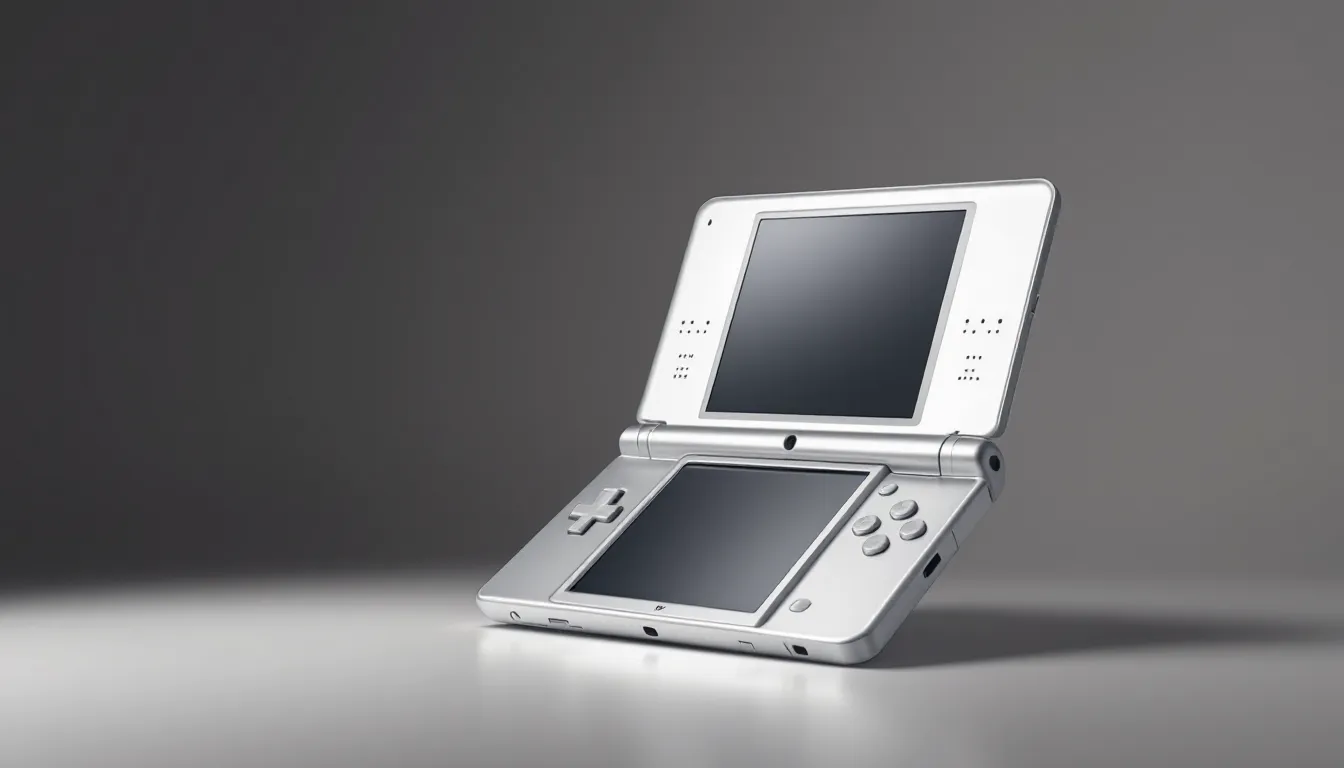
The Nintendo DS wasn’t just another handheld console. When it hit shelves in 2004, it fundamentally altered how millions of people thought about portable gaming. With its dual screens and innovative touch functionality, the DS proved that you didn’t need cutting-edge graphics or raw processing power to create something genuinely revolutionary. It outsold the competition, spawned some of gaming’s most beloved franchises, and created a library so vast that collectors and nostalgia-driven gamers still hunt down cartridges today. Whether you’re a seasoned gamer curious about handheld history or someone who grew up blowing into DS cartridges, understanding the Nintendo DS is essential to understanding modern gaming.
Key Takeaways
- The Nintendo DS revolutionized portable gaming with its dual-screen design and touch-sensitive stylus, enabling intuitive controls that fundamentally changed how developers approached handheld game design.
- Launched in November 2004 at $199, the Nintendo DS outsold competitors like the PSP and sold over 154 million units worldwide, becoming the second best-selling console of all time behind the PlayStation 2.
- Landmark titles including New Super Mario Bros., Pokémon Diamond/Pearl, and Brain Age defined the DS era, with Brain Age alone selling over 36 million copies and bringing gaming to demographics that had never played before.
- Built-in Wi-Fi connectivity through Nintendo Wi-Fi Connection enabled seamless online multiplayer and trading features that fundamentally changed competitive gaming, particularly for Pokémon and Mario Kart titles.
- In 2026, the Nintendo DS remains valuable to collectors due to hardware scarcity, game price inflation, and the lack of official digital preservation, with pristine systems commanding $150-250 and rare titles fetching $200 or more.
- The DS’s legacy endures through modern emulation achieving 98%+ compatibility and the system’s influence on game design principles like touch-screen integration and accessibility that shaped all gaming platforms that followed.
What Made The Nintendo DS A Gaming Revolution
Dual Screens And Touch Technology That Redefined Portable Gaming
The Nintendo DS’s defining feature was its dual-screen setup, but what made it genuinely game-changing was how developers actually used it. The top screen handled traditional visuals while the bottom touch-sensitive LCD screen opened entirely new possibilities for interaction. Instead of cramped buttons simulating fine motor control, players could write, drag, and tap their way through games in ways that felt instinctive.
Take Stylus input as an example. Instead of menus buried behind button combinations, games like Brain Age let you write numbers directly on the screen. The Legend of Zelda: Phantom Hourglass transformed the entire Zelda formula by letting players draw bomb paths and guide items with the stylus. This wasn’t a gimmick, it was a fundamental rethinking of how portable gaming could work.
The DS also introduced the Slot-1 and Slot-2 cartridge slots, allowing backward compatibility with Game Boy Advance games. This immediate software library gave the system instant credibility during its launch window when original DS titles were still ramping up.
The Launch That Exceeded All Expectations
Nintendo’s DS launched in North America on November 21, 2004, with a modest lineup but massive momentum. The system shipped at $199 USD, competitive pricing that positioned it as an alternative to the PlayStation Portable, which wouldn’t arrive until late 2004 in Japan.
The early titles weren’t all winners, but they proved the concept worked. Super Mario 64 DS showed that beloved N64 games could transition to handheld without losing their soul. Metroid Prime: Hunters demonstrated that the stylus could handle first-person controls. Kirby: Canvas Curse proved that touch controls could define an entire game’s mechanics brilliantly.
Within its first month, the DS sold over 2 million units worldwide, an astonishing figure that silenced early skeptics who thought the gimmicky dual screen was a mistake. By the end of 2005, the DS had already outsold the PSP in most markets, a lead it would never relinquish. The momentum was undeniable, and developers suddenly wanted in on what Nintendo was building.
The Nintendo DS Hardware: Design, Features, And Models
Original And Lite Models: Accessibility And Refinement
The original Nintendo DS, released November 2004, was a chunky device with a metallic gray finish and a distinctive clam-shell design. It weighed 275 grams and had a 3-inch top screen and 3-inch bottom touch screen at 256 × 192 resolution. Battery life hovered around 10 hours with continuous play, and it came with a rechargeable lithium-ion battery, a standard that would define handheld gaming for the next decade.
In March 2006, Nintendo released the DS Lite, which addressed nearly every criticism of the original. It was 20% lighter, featured a brighter screen with adjustable brightness settings, and had a more ergonomic design. The DS Lite became the definitive version for most players, eventually selling over 208 million units across all regions. Its sleek finish and improved build quality made it feel like a premium product, even at the same $199 price point.
One critical difference between the original and Lite: the original DS could play Game Boy Advance games via Slot-2, while the DS Lite removed this functionality entirely. This is why collectors sometimes seek original DS units, they’re the only way to play certain GBA titles on official Nintendo hardware without hunting down the original Game Boy Advance.
DSi And DSi XL: Enhanced Features And Expanded Audiences
In 2008, Nintendo released the DSi, introducing built-in cameras (0.3 megapixels on the inside, 3.0 on the back), double the internal storage, and removed Game Boy Advance compatibility entirely. It also added the DSiWare digital store, foreshadowing how Nintendo’s digital distribution strategy would evolve. The DSi launched at $199 in North America but cost more in Japan due to regional pricing.
That same year, the DSi XL followed, featuring a 4.2-inch top screen and 3.7-inch bottom screen, 25% larger than the DS Lite. At $189, it targeted older players and those with vision concerns. The XL maintained the core DSi features but added volume and stylus improvements, plus a stylus storage slot on the hinge.
These later iterations fractured the install base slightly. Games released late in the DS lifecycle occasionally required DSiWare or exclusive DSi functionality, which original DS and DS Lite owners couldn’t access. But, this also drove adoption of the newer models, by the time the DS was phased out in 2012, the DSi and DSi XL represented a significant portion of active users.
Across all variants, the Nintendo DS sold 154.02 million units worldwide, making it the second best-selling console of all time behind the PlayStation 2.
The Game Library That Defined A Generation
Landmark Titles That Shaped The DS Legacy
The Nintendo DS boasted 3,189 officially released games across all regions, an incomprehensibly vast library that makes cataloging it nearly impossible. But certain titles defined what the system could do and why it mattered.
New Super Mario Bros. (2006) revitalized 2D Mario after a decade focused on 3D platformers. It sold over 30 million copies and proved there was massive demand for retro-style gameplay on modern hardware. The game’s tight controls and clever level design made it an instant classic that still holds up today.
Pokémon Diamond/Pearl (2006) arrived at the perfect moment. The franchise’s fourth generation on the DS created a cultural phenomenon, players weren’t just collecting creatures, they were connecting via the Wireless Adapter feature. The ability to trade and battle without cables was revolutionary for handheld gaming, and it drove sales across the entire system.
Brain Age (2005) deserves its own paragraph. This seemingly simple collection of mini-games became Nintendo’s golden goose, selling over 36 million copies by introducing gaming to demographics that had never picked up a controller before. Casual players and retirees suddenly wanted a DS. It democratized gaming in a way few titles ever have.
The Legend of Zelda: Phantom Hourglass (2007) and Spirit Tracks (2009) proved that stylus-based controls could carry an entire Zelda game. While divisive among hardcore fans due to control decisions, they showed that innovation wasn’t limited to gimmicks, it was legitimate game design.
Relevant discussion of Japanese releases appears often across gaming news outlets that specialize in regional coverage.
Grand Theft Auto: Chinatown Wars (2009) brought open-world crime gaming to a handheld for the first time. The stylus integration felt forced at times, but the sheer scope proved the DS could handle ambitious, console-quality game design.
Ace Attorney series, Professor Layton series, Fire Emblem, and Disgaea all found spiritual homes on the DS, creating franchises that still thrive today. The system became a haven for Japanese RPGs and visual novels, it was arguably the platform for JRPG enthusiasts.
Hidden Gems And Cult Classics Worth Playing Today
Beyond the blockbuster franchises, the DS harbored an incredible depth of lesser-known titles that deserve rediscovery. Many of these games aged beautifully because they prioritized creativity over raw technical achievement.
Etrian Odyssey (2007) created an entire subgenre of dungeon crawlers that influenced gaming for two decades. Its grid-based mapping system using the stylus felt natural and engaging.
Advance Wars: Dual Strike (2003) perfected turn-based strategy on a handheld, featuring multiple campaigns and excellent multiplayer. The competitive scene around DS strategy games was underrated.
Contact (2006) was an experimental action-RPG with exceptional writing and unique mechanics. It’s remained relatively unknown, making it a hidden gem for collectors exploring deep catalog cuts.
Wario: Master of Disguise (2007) leaned into the ridiculous potential of stylus controls, delivering quirky puzzle-platforming that few games attempted.
Lock’s Quest (2008) blended tower defense with action elements in ways that felt fresh even now.
The World Ends With You (2007) was a real-time action game that used both screens simultaneously, the kind of ambitious design that only worked on the DS’s unique hardware. Its style, music, and storytelling remain exceptional.
Current collector communities discussing DS games and acquiring authentic cartridges often reference historical information available through dedicated Nintendo coverage sources, which maintain comprehensive DS databases and pricing guides for collectors. Many of these titles command high resale prices today, with original versions of Contact, Earthbound, and Radiant Historia fetching $150+ for complete-in-box copies.
The depth of this library explains why the DS remains relevant in 2026. There’s genuinely years worth of excellent content to explore, and new players discovering these games for the first time continue the cycle.
Online Play And Wireless Connectivity Innovation
Before the DS, wireless multiplayer on handhelds meant close proximity and specific hardware. The Nintendo DS changed this equation fundamentally.
The system’s built-in Nintendo Wi-Fi Connection allowed games to connect to the internet without additional adapters, a massive quality-of-life improvement over Game Boy Advance’s clunky link cables. Launched in 2005 with Mario Kart DS, the service allowed players worldwide to compete in races, battles, and cooperative modes.
Mario Kart DS became a phenomenon because of this accessibility. Players could hop online instantly and race against strangers or friends without explaining router setups or network adapters. The game’s 150cc and mirror modes provided difficulty scaling, and its track design made every race engaging. The online functionality drove millions of DS sales on its own.
Pokémon utilized the service brilliantly. Trading and battling moved beyond local wireless to global audiences. Players could register “Pokémon Dream” friends and receive gifts or Pokémon through the GTS (Global Trade Station) in later games. This fundamentally changed how competitive Pokémon functioned, suddenly, you weren’t locked into your region’s players.
*WFC evolved across the DS’s lifespan. Early titles had basic implementations, but by 2010, games like Monster Hunter Portable 2nd G (Japan) and New Super Mario Bros. offered refined online infrastructure with friend codes, lobbies, and matchmaking.
The Slot-1 Wireless Adapter (2005) enabled this connectivity, though Nintendo eventually removed the need for a separate peripheral as Wi-Fi became standard. The transition was smooth, and adoption skyrocketed.
When Nintendo shut down WFC in 2014, it was genuinely devastating. Suddenly, entire online components of DS games became unplayable. This is why emulation communities developed workarounds, players wanted to experience these online features in their original form, even years later.
Today, communities like WiFi Redo have recreated functional WFC servers, allowing players to access online features through modified ROM play. This technical feat restored what Nintendo killed, proving the enduring value these online communities hold for DS gaming.
Why Collectors Still Value The Nintendo DS In 2026
Nostalgia, Rarity, And Investment Potential
In 2026, finding a pristine Nintendo DS Lite in its original packaging is genuinely difficult, and valuable. Collectors actively hunt for these systems, driving prices upward for complete-in-box (CIB) examples.
Original DS units from 2004 are becoming rare as aging hardware develops issues. Hinge deterioration is common, the clamshell design, while iconic, put stress on that central pivot point. A DS Lite with a functioning hinge, original stylus, and no screen scratches commands $150-250 depending on condition. The DSi XL, being the “premium” model, often sells for even more among certain collector circles.
Game prices have inflated dramatically. Common titles like Mario Kart DS or New Super Mario Bros. hold at $20-40 CIB. Rarer releases, Japanese imports like the Mother series entry Earthbound Beginnings or cult RPGs, fetch $200+. Collectors actively invest in DS games, viewing them as appreciating assets similar to vintage console games.
This is driven by several factors: the system is no longer manufactured, digital preservation remains uncertain (particularly after WFC shutdown), and nostalgia from millennials with disposable income has created real demand. Forums and Discord communities dedicated to DS collecting remain active, trading cartridges and discussing rarity.
The Pokéwalker peripheral (released 2009 with Pokémon HeartGold/SoulSilver) represents a different collecting angle. This pedometer-connected device is genuinely rare in complete condition, with working units selling for $100-150.
Playing Classic DS Games In The Modern Era
Even though being 22 years old, playing DS games is relatively straightforward in 2026. The hardware is backward-compatible enough that original systems and games still function, with caveats.
Hardware preservation requires care. Battery contacts corrode, screens degrade, and that fragile hinge can snap. Many collectors maintain backup systems specifically for playing, preserving their valuable CIB examples as display pieces.
Emulation through DeSmuME or melonDS has matured significantly. Modern emulators achieve near-perfect compatibility with most DS titles. Graphics can be enhanced with filters, and save files transfer seamlessly. But, purists argue that emulation strips away the tactile experience of playing on original hardware, the weight of the system, the stylus precision on the actual screen, the physical cartridge insertion.
The Nintendo Switch doesn’t natively run DS games, though Nintendo released remastered versions of several titles. New Super Mario Bros. got a Switch sequel. Pokémon received full remakes (Let’s Go, the Scarlet/Violet games). This has created a split: purists hunting original hardware, while casual players simply play modern versions.
Discussions about game preservation often reference resources detailing Japanese gaming history and hardware evolution, particularly specialized gaming journalism that covers hardware lifecycles and preservation efforts across regions.
The DS’s library remains the best preserved handheld generation, partially because of its sheer size. With 3,189+ games, enthusiasts continue archiving, sharing, and preserving the library. Communities on Reddit, Discord, and specialized forums maintain active discussions about optimal emulation settings, hardware restoration guides, and complete collection checklists.
For someone looking to experience the DS in 2026, the options are accessible: hunt down original hardware if budget allows, or emulate with confidence knowing that compatibility has reached 98%+ for most titles. Either path offers genuine value.
Conclusion
The Nintendo DS represents a specific moment in gaming history where innovation, accessibility, and library depth aligned perfectly. It didn’t win through specs or processing power. It won because developers understood that the dual-screen layout and stylus control opened genuinely new possibilities, and millions of players responded enthusiastically.
Twenty-two years after launch, the DS remains relevant. Its library contains games that arguably haven’t been surpassed in their categories. Its influence on game design is undeniable, the stylus control innovations, the touch-screen integration, the commitment to accessibility, these principles shaped everything that came after.
Whether you’re rediscovering the system through emulation, hunting down cartridges for your collection, or simply curious about gaming history, the DS deserves the reverence it receives. It changed how handheld gaming was perceived and executed. Few gaming platforms can claim that level of genuine impact.
About The Author