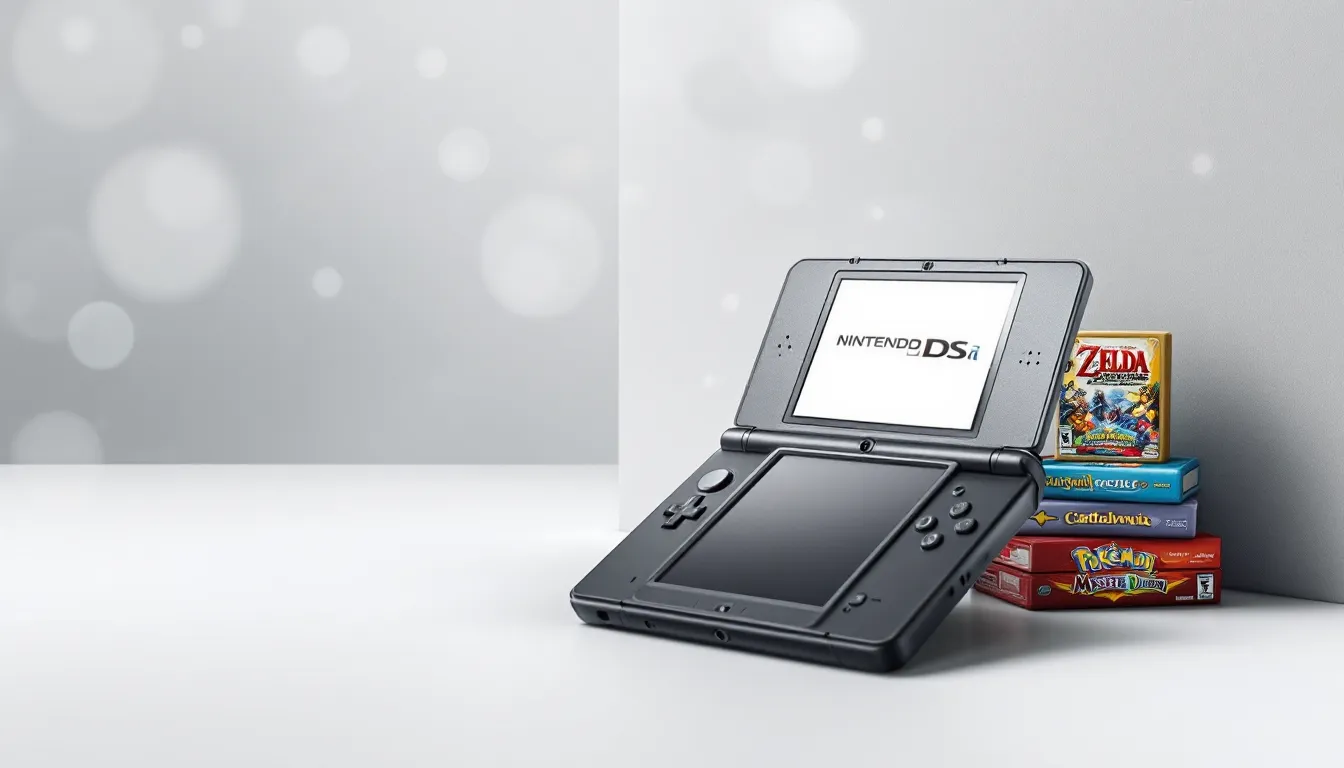
The Nintendo DSi occupied a unique space in gaming history. Released in 2008, it wasn’t just a minor hardware refresh, it represented a deliberate shift toward digital games, camera integration, and a more portable experience. While the DSi is long retired, its library remains packed with titles that defined handheld gaming for millions of players. Whether you’re hunting for nostalgia or discovering what you missed, the best Nintendo DSi games still hold up today. This guide covers the essential releases, overlooked gems, and the practical ways to revisit them in 2026.
Key Takeaways
- Nintendo DSi games remain mechanically sound and historically important, with essential titles like The Legend of Zelda: Spirit Tracks and Castlevania: Order of Ecclesia still delivering compelling gameplay experiences today.
- The DSi’s digital-first approach through DSiWare legitimized indie and experimental games on handheld systems, proving creative design could thrive outside traditional cartridge releases.
- Nintendo DSi emulation via DeSmuME and melonDS offers a cost-effective alternative, though purchasing original hardware ($150-250) with physical cartridges provides the most authentic experience.
- The best Nintendo DSi games spanned multiple genres—from action-adventure to turn-based RPGs like Pokémon Mystery Dungeon and Dragon Quest IX—offering diverse gameplay for both casual and hardcore players.
- The DSi served as a bridge between the original DS and modern handheld gaming, establishing digital distribution and backward compatibility philosophies that directly influenced the Switch’s current dominance.
- Many DSi titles like Kirby: Canvas Curse and The Legend of Zelda: Spirit Tracks have been officially re-released on Switch and 3DS, providing legal access to the platform’s most popular games.
What Made The Nintendo DSi A Gaming Milestone
The Nintendo DSi arrived during the peak of the original DS’s dominance, and it made calculated improvements that resonated with players. The dual screens remained, but the DSi added a camera, an SD card slot, and a built-in shop for downloadable content, features that, in 2008, felt genuinely forward-thinking.
Unlike the DSi XL that followed, the original DSi’s more compact design struck a balance between portability and screen real estate. The 3.25-inch screens were tight but functional, and the improved processor meant developers could push the hardware harder than before. Games released for DSi took advantage of the digital distribution model, which meant lesser-known titles could reach players without relying purely on cartridge availability.
The DSi’s impact wasn’t just technical. It proved that gamers wanted handheld systems that moved past Game Boy limitations. It was the bridge between the pragmatic design of early DS models and the eventual 3D revolution of the 3DS. For two years, the DSi was the most relevant handheld on the market, and the games reflected that window of opportunity. Developers released experimental titles, niche franchises, and bold Indies that might never have gotten greenlit on a declining platform.
What made the DSi special wasn’t the hardware, it was the permission structure it created. Publishers saw an audience that was hungry for variety, and they delivered.
Essential Nintendo DSi Games Every Fan Should Experience
The DSi library spans multiple genres, and picking essentials means identifying titles that either defined their category or innovated in ways that still matter. These are the games that justify owning DSi hardware or emulating the platform.
Action And Adventure Titles
The Legend of Zelda: Spirit Tracks stands as one of the strongest Zelda entries on any handheld. Released in 2009, it replaced Phantom Hourglass’s stylus-heavy controls with a more balanced hybrid approach, though fans remain split on its train-based dungeon design. The game justifies its place in any DSi collection, tight controls, genuine puzzle design, and a soundtrack that holds up against any 2D Zelda.
Castlevania: Order of Ecclesia brought the whip-wielding action series to its mechanical peak on the DS. Unlike Circle of the Moon, Order of Ecclesia featured a satisfying difficulty curve and a protagonist who felt distinct from Alucard. The glyph system, assigning magic and weapon powers to buttons, gave players real customization depth. For action-adventure fans, this is non-negotiable.
If you want something lighter, Kirby: Canvas Curse transforms the pink puffball into a drawing-based puzzle-platformer. It’s brief (most players finish in 2-3 hours), but the stylus controls feel intuitive in ways that most DS stylus games never achieved. The boss fights are clever and the art direction is pure Nintendo charm.
Metroid Prime Hunters deserves mention if you’re interested in FPS mechanics on handheld hardware. By today’s standards, the controls feel dated and the stylus aiming is clunky, but it proved first-person shooters were possible on portable systems, a fact that influenced handheld development for years.
Puzzle And Brain Training Games
Brain Age 2 continued the phenomenon that made the original DS a casual gaming juggernaut. While the novelty of brain training has worn off, the core activities remain engaging and the difficulty progression is thoughtful. It’s not a complex game, it’s a collection of mini-games designed to stimulate, but it’s well-executed.
Picross DS brought the nonogram puzzle format to handheld gaming at a time when puzzle games were hitting peak popularity. With hundreds of puzzles and a genuine sense of progression, it’s a low-stress, high-reward game that you could chip away at for months. If you enjoy solving logic puzzles, this is essential.
Professor Layton and the Curious Village launched a franchise that would define puzzle-adventure hybrids on the DS. The writing is charming, the voice acting (in the Nintendo DS version) adds personality, and the puzzles range from “gimmick” difficulty to genuinely brain-teasing. It’s the most story-driven puzzle experience on the platform.
Role-Playing Games Worth Playing
Pokémon Mystery Dungeon: Red Rescue Team arrived early in the DS’s life and made a case for turn-based dungeon crawling with beloved Pokémon characters. It’s surprisingly long (30+ hours for a completionist run) and the roguelike structure means each expedition feels fresh. The story beats hit harder than expected for a Pokémon spin-off.
Chrono Trigger arrived as an enhanced port of the SNES classic, and while it wasn’t exclusive to DSi, the handheld version became the definitive way to play for many years. The stylus-based menus can feel awkward, but the game’s time-travel narrative and New Game+ incentives make it endlessly replayable. If you’ve never experienced Chrono Trigger, the DSi version is legitimate, though be aware that the DS port’s load times are longer than the SNES original.
Suikoden Tierkreis is a lesser-known tactical RPG that deserves more recognition. It doesn’t carry the weight of the main Suikoden series, but it builds its own identity with satisfying turn-based combat and a story that branches based on player choices. For hardcore JRPG fans, it’s a deep cut worth exploring.
Dragon Quest IX: Sentinels of the Starry Skies shifted the mainline Dragon Quest series toward multiplayer and customization, and it found an audience in Japan and the West. It’s a grind-heavy experience, but the character creation system and cooperative play made it stand out from traditional JRPGs. If you’re willing to invest 60+ hours, the depth is there.
Exclusive DSi Titles And DSiWare Standouts
Beyond physical cartridges, the DSi introduced DSiWare, digital releases sold through the DSi Shop. Some of the platform’s most creative and niche games existed only as downloads, and many represent experimental design that publishers wouldn’t risk on cartridge releases.
Digital-Only Releases That Defined The Platform
Shantae: Risky’s Revenge launched as a DSiWare exclusive in 2010, and it became a flagship title for the digital storefront. The sprite-based animation is gorgeous, the platforming is tight, and the writing has genuine personality. Unlike its spiritual predecessor on Game Boy Color, Risky’s Revenge proved that DSiWare could host substantial, full-featured games. This title legitimized digital distribution on the platform and later inspired multiple sequels.
Art Style series games (particularly Cubello and Orbient) were minimalist puzzle experiences that took advantage of the DSiWare storefront’s lower barrier to entry. These games prioritized zen-like gameplay over narrative, and they’ve aged well because their appeal didn’t depend on cutting-edge graphics. If you’re looking for something meditative, the Art Style catalog is worth exploring.
Aura-Aura Climber remains one of the most creative physics-based platformers released on any handheld. It’s short (30-45 minutes for a first playthrough), but the control scheme, where you tap the touchscreen to create temporary platforms, feels unique even today. It’s the kind of game that could only thrive in a digital storefront where experimental design was encouraged.
Lesser-Known Gems Worth Discovering
Rhythm Heaven (called Rhythm Tengoku Gold in Japan) brought the music-game franchise to DSiWare in a polished package. If you’ve ever played Rhythm Heaven on other platforms, you know the format, but this version contains exclusive mini-games and holds up as a genuinely fun rhythm experience. The timing windows are forgiving enough for casual players but punishing enough for perfectionists.
WarioWare: Snapped. used the DSi’s camera hardware in creative ways, turning the camera into an actual game mechanic. While the novelty wore off quickly, the concept was ambitious, games recognized your hand position and gestures in real-time. It’s a perfect example of how the DSi’s hardware features enabled game design that couldn’t exist elsewhere.
Looksley’s Line-Up is an obscure visual-novel-adjacent game where you guide characters through various scenarios. It’s niche, poorly marketed, and easy to miss, but it found a dedicated audience among players who appreciated its offbeat humor and creative writing.
Picross 3D evolved the nonogram concept into three dimensions, adding a layer of spatial reasoning to the format. If you loved Picross DS, this represents a genuine evolution of the idea, and it’s surprisingly intuitive even though the added complexity. Newer entries exist (particularly on Switch and 3DS), but the original DSi version remains excellent.
How To Play Nintendo DSi Games Today
The DSi was discontinued in 2013, and the DSi Shop went offline in 2017. Revisiting these games requires either original hardware or digital alternatives.
Finding And Collecting Original Hardware
Hardware prices have stabilized around $150-250 USD for a working DSi unit in good condition, depending on color and cosmetic state. Black and Matte Black units tend to cost slightly less than rare colors like Midnight Blue or the region-exclusive Cosmos Black variant (Japan only). The DSi XL commands a premium, typically $200-300, because it’s rarer and offers larger screens.
When buying used hardware, inspect the screens for burn-in (common on older units), test the stylus slot, and verify that the SD card slot functions. Game cartridges are plentiful and typically cost $15-40 per title depending on rarity. Common titles like Pokémon Mystery Dungeon and Kirby Canvas Curse remain affordable, while region-exclusive releases or limited physical runs command higher prices.
Breakers and repair shops specializing in retro hardware can replace screens or repair button contacts if you find a bargain unit with minor issues. This route is cheaper than buying pristine hardware but requires patience and risk tolerance.
Emulation And Legal Alternatives
DSi emulation has improved significantly. Emulators like DeSmuME and melonDS support most DSi games and run on PC, Mac, and Linux. These emulators reproduce the dual-screen experience reasonably well, though button mapping on controllers requires setup. Performance varies, some demanding titles stutter, while simple 2D games run flawlessly.
Emulation exists in a legal gray area. ROM files aren’t legally available, and distributing them violates copyright law. But, dumping cartridges you own for personal use exists in a murky middle ground in some jurisdictions, it’s not explicitly legal, but enforcement is rare. If you’re risk-averse, purchasing original hardware and cartridges remains the safest option.
Nintendo’s official re-releases offer another path. Many DSi titles have been ported to Switch and 3DS, though not comprehensively. Nintendo Life has compiled guides on which games received ports and where to find them. Games like Kirby Canvas Curse (ported as Kirby: Canvas Curse on 3DS) and The Legend of Zelda: Spirit Tracks (enhanced versions exist on later systems) are more accessible through these official channels.
For DSiWare specifically, digital purchases are locked to your DSi account, so repurchasing on newer systems isn’t automatic. Some DSiWare titles, like Shantae: Risky’s Revenge, have been re-released on modern platforms (Switch, PlayStation, etc.), but others remain exclusive to the DSi system.
The practical reality: if you want the complete DSi experience, original hardware is your best bet. If budget is a concern, selective emulation or official ports for popular titles are viable workarounds. Budget $200-300 for a decent DSi unit and start with 3-4 essential cartridges. That’s a more reasonable entry point than trying to collect comprehensively.
The Legacy Of Nintendo DSi In Gaming History
The DSi was a bridge platform. It arrived after the original DS had already proven handheld dominance, and it exited before the 3DS could establish itself. Yet its two-year window produced games that influenced handheld design and digital distribution philosophy for a decade.
The DSi proved that digital storefronts could host quality software, a lesson that directly informed how Nintendo approached eShops on 3DS and Switch. The willingness to experiment, platformers built around the camera, music games, minimalist puzzles, created a design philosophy that persisted. When the Switch arrived with its emphasis on indie games and digital releases, the groundwork had been laid years earlier on the DSi.
From a technical standpoint, the DSi wasn’t revolutionary. But from a business standpoint, it proved that iteration, taking an existing successful platform and refining it, could extend a product’s lifecycle profitably. The DSi’s success directly delayed the need for a next-generation handheld, and that luxury gave Nintendo time to plan what would eventually become the 3DS.
The games themselves remain worthwhile. Chrono Trigger on the DSi introduced millions to that SNES classic. Castlevania: Order of Ecclesia refined the Metroidvania formula in ways that influenced Bloodstained and other modern titles. Pokémon Mystery Dungeon spawned multiple sequels and became a franchise pillar. These weren’t throwaway platform experiments, they were legitimate contributions to gaming history.
Casually, the DSi also normalized the idea of playing retro content on handheld systems. The Virtual Console on DSiWare offered Game Boy and NES games, setting a precedent for backward compatibility that remains important in modern gaming. Siliconera and other gaming outlets regularly cover how modern systems trace their philosophy to earlier platforms, and the DSi’s approach to digital distribution and retro content is part of that genealogy.
In 2026, the DSi is nostalgia. But it’s nostalgia worth investigating, because the games in its library remain mechanically sound, creatively ambitious, and historically important. It’s the bridge that connects the DS’s casual explosion to the Switch’s current dominance, and the games it hosted are worth experiencing for their own merit.
Conclusion
The Nintendo DSi games library is easier to dismiss than to actually explore. The hardware itself is obsolete, and the digital storefront is gone. Yet the best DSi games, whether Zelda: Spirit Tracks, Castlevania: Order of Ecclesia, or experimental DSiWare releases like Shantae: Risky’s Revenge, remain engaging, mechanically sound, and historically interesting.
If you’re serious about exploring the DSi’s catalog, the most straightforward approach is purchasing original hardware and cartridges. A used DSi and 3-4 essential games represent a modest investment with lasting returns. If you want convenience, official ports on Switch and 3DS offer legally secure access to the most popular titles.
The DSi was never meant to be a landmark console. It was a mid-cycle refresh designed to extend the DS’s life. Yet it produced games that influenced handheld design, digital distribution, and genre conventions for years afterward. In 2026, that’s worth more than nostalgia, it’s a reminder that gaming history isn’t just about the most powerful hardware or the biggest franchises. Sometimes the most interesting work happens on platforms everyone thought were already outdated.
About The Author