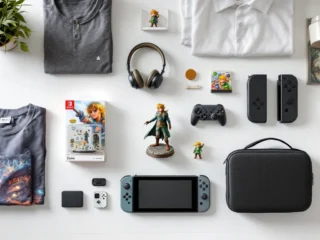
Link has been one of gaming’s most recognizable figures for over four decades, silently standing as the hero of Hyrule without uttering a single word. From his humble 8-bit beginnings in the original 1986 The Legend of Zelda to his groundbreaking adventures in Breath of the Wild and Tears of the Kingdom, Link has defined what it means to be a video game protagonist across multiple generations of Nintendo hardware. Whether you’re a veteran gamer who remembers blowing into cartridges or a newcomer discovering Link for the first time on Switch, understanding this character’s legacy is essential to appreciating modern gaming design. Link Nintendo represents not just a character but an evolution of game design philosophy itself, adaptable, resourceful, and eternally engaging.
Key Takeaways
- Link Nintendo remains gaming’s most iconic and enduring protagonist across four decades through adaptability, resourcefulness, and a design philosophy that evolves with each hardware generation while preserving core identity.
- Link’s silence, originally a technical limitation on the NES, became a strength by allowing players worldwide to project themselves onto the hero regardless of language, cultural background, or gaming experience.
- Landmark titles like A Link to the Past established adventure game design templates, Ocarina of Time pioneered 3D action mechanics with the Z-targeting system, and Breath of the Wild revolutionized open-world gaming by replacing linear progression with emergent, player-driven problem-solving.
- Link’s tools and weapons—from the Master Sword to the Sheikah Slate’s abilities and the Fuse system—are designed as problem-solving instruments rather than status symbols, encouraging creative experimentation across games.
- Link’s influence extends beyond adventure games into competitive Super Smash Bros. play, crossover titles, merchandise, and cultural institutions, establishing the character as a universally recognized symbol of video game heroism.
- Mastering Link’s games requires embracing experimentation with combat, exploration, and puzzle-solving while trusting the game’s design logic—rain prevents climbing but creates waterfalls, weapons break but encourage trying different tools, and multiple solutions exist for most challenges.
Who Is Link? The Legend Behind The Legend of Zelda
Link is the silent protagonist of the Legend of Zelda franchise, the player’s avatar in Hyrule’s timeless struggle between chaos and order. Unlike most video game heroes, Link never speaks, his character is defined entirely through actions, expressions, and the player’s imagination. This design choice, made out of technical necessity on the original Nintendo Entertainment System (NES), became Link’s greatest strength, allowing players across the globe to project themselves onto the hero regardless of language or background.
The character’s core identity centers around three elements: courage, resourcefulness, and an unwavering sense of purpose. Link isn’t a soldier following orders: he’s an ordinary person thrust into extraordinary circumstances who rises to meet them. He doesn’t possess superpowers but instead relies on his intelligence, equipment, and environmental awareness. This makes him fundamentally relatable, victories feel earned because Link succeeds through problem-solving and persistence, not because he’s inherently superhuman.
What makes Link Nintendo’s most enduring creation is his flexibility. Each game reimagines him in different contexts: a farm boy, a pirate, a wolf, a painter, and a time-traveling swordsman. The character design shifts with each era, but the essence remains intact. This adaptability has allowed Link to survive hardware transitions that eliminated other iconic characters from gaming’s early days. While many 8-bit heroes faded into obscurity, Link evolved.
Evolution of Link Across Nintendo Generations
Classic Link: From 8-Bit to 16-Bit Adventures
Link’s journey began in 1986 with the original The Legend of Zelda, where the character appeared as a small, green-clad sprite navigating a top-down overworld. The 8-bit era established Link’s core tools: the Master Sword, wooden shield, and blue candle. These weren’t just weapons, they were the foundation for puzzle design that would define the entire franchise. The original game’s dungeons required players to collect specific items to progress, introducing the “key and lock” design philosophy that persists today.
The SNES generation elevated Link’s aesthetics without fundamentally changing his mechanics. A Link to the Past (1991) became the gold standard for 2D adventure design, introducing the parallel worlds mechanic and establishing visual clarity that made complex dungeons navigable. The game’s sense of progression was unmatched, players could feel Link growing stronger as they collected heart pieces and upgraded equipment. Graphics improved from 8-bit to 16-bit, but the core experience remained focused on exploration and problem-solving.
The 3D Era: Ocarina of Time and Beyond
The Nintendo 64 marked a watershed moment for Link when Ocarina of Time launched in 1998. This game didn’t just add another dimension, it fundamentally transformed how players interacted with adventure games. For the first time, players controlled Link in a fully realized 3D space, and the Z-targeting system became the blueprint for third-person action games. Suddenly, camera control and spatial awareness became critical skills.
Ocarina of Time’s impact on game design cannot be overstated. The game proved that adventure could work at massive scale in 3D, that puzzles could exist in three-dimensional space without losing clarity, and that a silent protagonist could carry an emotionally resonant narrative. Every 3D Zelda game since has built on its foundation, refining rather than revolutionizing.
Following entries like The Wind Waker (2002) and Twilight Princess (2006) maintained the Z-targeting framework while experimenting with art direction and storytelling. Wind Waker’s cel-shading was controversial at launch but aged beautifully, while Twilight Princess delivered a darker, more serious tone. Each game maintained Link’s identity while exploring new thematic territory.
Modern Link: Breath of the Wild and Tears of the Kingdom
Breath of the Wild (2017) was a revolution, not an evolution. The game discarded the traditional dungeon-progression structure that had defined Zelda for thirty years and replaced it with emergent gameplay. Link could now tackle challenges in virtually any order, solve problems with multiple solutions, and interact with the environment in unprecedented ways. Climbing mountains, cooking meals, and breaking physics weren’t workarounds, they were the core experience.
This shift alienated some longtime fans but attracted millions of new players. Breath of the Wild proved that removing traditional structure didn’t mean removing purpose. Instead, it created a sense of discovery and ownership, players felt they were solving problems their own way, not following the designer’s intended path.
Tears of the Kingdom (2023) built on this foundation with new mechanics like Fuse and Ascend, allowing even more creative problem-solving. Link gained the ability to combine weapons and items in real-time, opening possibilities the previous game hadn’t explored. The sequel refined rather than reinvented, but those refinements created a game many consider superior to its predecessor.
Link’s Most Iconic Games and Their Impact
The Legend of Zelda: A Link to the Past
A Link to the Past (1991) stands as one of the greatest games ever made, and for good reason. Released on the SNES, it took the original Legend of Zelda’s formula and expanded it into a world that felt genuinely vast. The parallel world mechanic, shifting between the Light World and Dark World, provided narrative context for increased dungeon variety while maintaining design coherence.
The game’s genius lay in its pacing. Players weren’t overwhelmed with choices: instead, progression felt natural. Find the first sword, access the first dungeon, gain new tools, unlock new areas. This structure became the template for adventure games for decades. Every modern game that uses “progression unlocks new areas” owes a debt to A Link to the Past’s elegant design.
Its cultural impact extended beyond gaming. The game established Link’s iconic green tunic, pointed hat, and ocarina as visual shorthand for video game heroism. When most people picture Link, they picture the 16-bit sprite from this game, not the more recent 3D models. That’s longevity of character design.
Ocarina of Time: Redefining 3D Gaming
Ocarina of Time (1998) was the moment gaming changed. Released for Nintendo 64, the game proved that the jump from 2D to 3D didn’t require abandoning what made adventure games special. Complex puzzles could exist in three dimensions. Exploration could feel rewarding. Combat could be skill-based and engaging.
The Z-targeting system deserves its own paragraph. This feature, allowing players to lock onto enemies and circle them in combat, became the foundation for countless action games. From Dark Souls to Kingdom Hearts, games have been iterating on this mechanic for twenty-five years. It seems obvious now, but in 1998, it was revolutionary.
Beyond mechanics, Ocarina of Time proved that Link could carry a complex narrative. The game dealt with loss, responsibility, and the weight of destiny. Link’s journey through time wasn’t just a gameplay mechanic, it was a metaphor for growing up, returning to a changed world, and confronting your own mortality. A silent character delivered one of gaming’s most emotionally mature stories.
The game’s dungeons remain masterpieces of design. The Water Temple, even though its infamous lower-water-level puzzle, stands as a pinnacle of spatial complexity. Players had to mentally map three-dimensional spaces and understand how different elevations interconnected. Modern puzzle design has become more forgiving, but Ocarina’s dungeons set the standard for environmental complexity.
Breath of the Wild: Breaking Conventions
Breath of the Wild (2017) was the game Link needed, even if players didn’t know it. The Zelda franchise had been operating on the same design principles since 1986, linear progression through dungeons, acquiring items that unlock new areas, building toward a final confrontation with evil. It was a proven formula, but it had become predictable.
Then Nintendo released a game where Link could ignore the main quest entirely, climb any mountain, and solve puzzles with whatever items were lying around. The game didn’t force players down a specific path. Instead, it presented challenges and trusted players to figure out solutions. This approach was terrifying for traditionalists and liberating for everyone else.
The impact of Breath of the Wild extended beyond Zelda. It influenced game design industry-wide, proving that open-world games didn’t require guided tours or hand-holding tutorials. It demonstrated that environmental storytelling could replace cutscenes. It showed that destruction physics and creative problem-solving could be engaging without traditional progression metrics.
Playing Breath of the Wild feels different from any previous Zelda game because it trusts the player implicitly. You can talk to NPCs for lore, but you don’t have to. You can follow the story, but nothing prevents you from exploring instead. This player agency was revolutionary for a franchise built on designer control.
Link’s Abilities, Tools, and Signature Items
The Master Sword and Other Legendary Weapons
The Master Sword is Link’s most iconic possession, appearing in almost every game across the franchise. Described as the blade of evil’s bane, the Master Sword represents not just a weapon but Link’s commitment to protecting Hyrule. What makes the Master Sword special varies by game, in Ocarina of Time, it’s locked away until Link proves himself worthy: in Breath of the Wild, it degrades and must be repaired: in Tears of the Kingdom, it transforms into a fusion weapon with new abilities.
Beyond the Master Sword, Link has wielded countless other iconic weapons. The Biggoron’s Sword from Ocarina of Time serves as an optional upgrade requiring specific trades and quests, rewarding dedicated players with a faster blade. The Megaton Hammer provides unconventional problem-solving through devastating explosions. The Grappling Hook, Whip, and Cane of Somaria each defined their respective games’ puzzles and combat.
Breath of the Wild and Tears of the Kingdom revolutionized weapon systems by making all weapons breakable and replaceable. This design decision shifted player psychology, instead of hoarding the best sword, players experimented with whatever was available. Weapons became tools for exploration and puzzle-solving rather than status symbols.
The Fused Weapons system in Tears of the Kingdom represents the ultimate evolution of Link’s arsenal. By combining weapons with monster parts and environmental materials, Link creates custom tools. A longsword fused with a dragon fang becomes a weapon, but it also becomes an extension of Link’s problem-solving philosophy, using available resources creatively.
Essential Tools and Gadgets Across Games
Link’s tools define adventure gameplay. The blue candle from the original Legend of Zelda established the pattern, specific items unlock specific puzzles. Fire melts ice, bombs break walls, the grappling hook reaches distant platforms. This “key and lock” design has remained consistent across decades.
The Hookshot and Longshot from Ocarina of Time represented a breakthrough in vertical exploration. Suddenly, players could reach previously inaccessible areas by grappling to distant surfaces. This tool became so integral to Zelda design that subsequent games kept returning to it.
Breath of the Wild introduced the Sheikah Slate, a magical tablet that replaces traditional inventory menus with modern smartphone-like functionality. The slate grants Link abilities like Stasis (freezing objects in time), Magnesis (controlling metal), Cryonis (creating ice), and Remote Bomb (detonating explosives remotely). These tools aren’t limited to specific puzzles, they can be used anywhere, encouraging creative experimentation.
Tears of the Kingdom expanded this with the Ultrahand for manipulating objects, Fuse for combining weapons, and Ascend for passing through ceilings. Each tool opens new possibilities, but the design philosophy remains, give players tools and trust them to find solutions.
Link in Nintendo’s Broader Gaming Universe
Super Smash Bros. and Cross-Game Appearances
Link’s presence extends far beyond adventure games. Since the first Super Smash Bros. in 1999, Link has been a staple of Nintendo’s crossover fighting franchise. The character’s move set reflects his adventure game abilities, utilizing the sword, bombs, and boomerang. Each iteration of Smash Bros. has refined Link’s mechanics, with recent versions featuring Young Link and Toon Link as separate fighters.
In competitive Smash Bros. play, Link occupies a unique position. The character’s projectiles (bombs, boomerang, arrows) make him effective at range, but the character historically struggles in close quarters against faster fighters. Recent patches have adjusted Link’s speed and lag frames, making competitive Smash Bros. communities debate whether Link has finally achieved viability. According to tier lists from major competitive events, Link has climbed from mid-tier to borderline high-tier status in Super Smash Bros. Ultimate following balance adjustments.
Beyond Smash Bros., Link has appeared in unlikely crossovers. The character showed up in mobile titles, collaborated with other franchises, and appeared in spin-offs ranging from Hyrule Warriors (a musou-style action game) to Cadence of Hyrule (a roguelike rhythm-adventure hybrid). These appearances demonstrate Link’s versatility, the character can succeed in any genre because the core identity translates.
For current gaming news and reviews covering Link’s appearances across Nintendo titles, IGN provides comprehensive coverage of Nintendo releases and character analysis that appeals to both casual and competitive players.
Merchandise, Media, and Cultural Impact
Link has transcended video games to become a cultural icon. Action figures, plushies, collectible statues, and apparel featuring Link are among the best-selling video game merchandise. Nintendo’s official Legend of Zelda store regularly stocks Link figures that sell out within days. This merchandising success reflects Link’s universal recognition, someone who’s never played a Zelda game can identify Link’s silhouette.
In media adaptation, Link’s mute nature has proven both challenge and opportunity. The live-action Legend of Zelda series in development at Netflix will require decisions about how to handle Link’s character without losing what makes silence central to his appeal. Early reports suggest the series will feature Link’s internal monologue, a creative solution that maintains his essential quietness while providing narrative clarity.
Link’s cultural impact extends to music and art. Koji Kondo’s original Legend of Zelda theme remains one of gaming’s most recognizable melodies. Fan art communities create millions of Link interpretations yearly. Academic papers examine Link’s role in game design evolution. The character has achieved the rare status where serious cultural institutions recognize gaming’s most iconic hero.
For Japanese gaming news covering Legend of Zelda announcements and Nintendo developments, Siliconera provides detailed coverage of Nintendo’s official announcements and release updates.
Playing as Link: Tips and Strategies for New Gamers
Combat Mechanics and Exploration Basics
If you’re new to Breath of the Wild or Tears of the Kingdom, approach combat like exploration, experimentation is rewarded. Don’t panic about weapon durability. Early-game weapons break quickly, but finding and replacing them is part of the experience. Stick to wooden swords, rusty claymores, and loot from defeated enemies until you understand combat patterns.
Link’s combat is deliberate, not frantic. Lock onto enemies with ZL and circle to find openings. Learn to parry attacks with ZR at the right moment, parrying reflects projectiles back at enemies and creates openings for counter-attacks. Shield surfing (jumping and surfing on your shield) is useful for reaching distant areas quickly while also being stylish.
Exploration rewards patience. Climb towers and scan the terrain with your Sheikah Slate to plan routes. Glide everywhere, Link’s paraglider consumes no resources and provides unmatched verticality. Don’t rush toward quest markers. The game’s best moments come from discovering secrets while moving toward objectives.
Stamina management is critical. Your stamina wheel limits climbing, running, and swimming. Early-game Link has limited stamina, so plan routes carefully. Stamina-restoring food (cooked apples, mushrooms, and meat) becomes essential. Cook meals at campfires by combining ingredients, roasted apples restore stamina, meat restores hearts, and combinations create powerful meals.
Weather affects exploration. Rain makes climbing impossible but creates waterfalls you can ride. Snow reflects light from the sun, burning ice creatures. Wind patterns create updrafts for gliding. Understanding environmental systems transforms obstacles into opportunities.
Puzzle-Solving and Dungeon Navigation
Breath of the Wild and Tears of the Kingdom feature shrines, small dungeons containing single puzzle chambers. Shrines are essential for learning problem-solving fundamentals. Early shrines teach basic abilities, but later ones require creative thinking. If you’re stuck, consider alternative approaches. Maybe you don’t need a specific tool. Maybe you can break the puzzle’s geometry with physics. Maybe the solution involves using an enemy’s attack pattern against them.
In Tears of the Kingdom, the Fuse mechanic opens puzzle possibilities. Fusing materials to weapons or shields creates specific effects. Fusion devices require experimentation, you might discover that combining bomb flowers with an arrow creates an explosive projectile. The game rewards testing ideas, and failures teach you more than successes.
Dungeons in both games contain multiple solutions. A puzzle labeled “solve with ice” can sometimes be solved with fire or creative object manipulation. This intentional design philosophy means there’s no single correct approach. Your solution is valid if it works.
For puzzles requiring specific tools, remember that Zelda games follow logic patterns. If you need to move water, look for cracked walls or ice blocks. If you need to reach a high area, find metal objects or climbable surfaces. These patterns repeat consistently, recognizing them makes later puzzles intuitive.
Navigation relies on map knowledge. Spend time exploring before starting main dungeons. Understanding enemy positions, item locations, and environmental hazards prevents getting overwhelmed. Many players find 100% exploration completion rewarding because secrets are hidden logically, look for unusual rock formations, listen for audio cues, and remember that everything you see has purpose.
For comprehensive walkthroughs and detailed puzzle solutions, Gematsu’s gaming guides offer Japanese gaming perspectives alongside international coverage, making them valuable for understanding game design philosophy from multiple regions.
Conclusion
Link stands as gaming’s most enduring protagonist because the character embodies timeless game design principles. Across four decades, through pixel art, polygons, and photorealism, Link has remained essential to Nintendo’s ecosystem while constantly evolving. The hero’s silence isn’t a limitation, it’s the foundation that allows every player to imagine themselves as the hero of Hyrule.
From A Link to the Past’s elegant dungeons to Breath of the Wild’s revolutionary open-world design, Link has been at the center of gaming innovation. The character proves that excellent game design transcends technology, graphics, and trend cycles. A well-designed protagonist, meaningful progression, and engaging puzzles remain relevant across decades.
Whether you’re discovering Link for the first time through Tears of the Kingdom or returning to Ocarina of Time for another playthrough, understanding this character’s legacy enriches the experience. Link represents not just Nintendo’s greatest creation but gaming’s commitment to respecting player intelligence and creativity. In a medium defined by constant change, Link’s consistency stands as a reminder that great design never goes out of style.
About The Author