Nintendo Mini consoles have become a cultural phenomenon for retro gaming fans and newcomers alike. These officially licensed, shrunk-down versions of classic Nintendo hardware deliver authentic gameplay experiences in a form factor that fits on your shelf without demanding dedicated arcade cabinet space. Whether you’re chasing nostalgia or discovering 8-bit and 16-bit classics for the first time, Nintendo Mini consoles offer a legitimate way to play genuine cartridge-era games with minimal fuss. In 2026, the mini console market has matured considerably, with multiple options available across different eras of Nintendo’s legacy. This guide breaks down everything you need to know: what these consoles are, how they’ve evolved, which models are worth your money, and whether they’re the right fit for your gaming setup.
Key Takeaways
- Nintendo Mini consoles are officially licensed emulation devices that deliver authentic classic gaming on modern TVs at $60–$90, making them the most accessible entry point for retro gaming in 2026.
- The NES Mini includes 30 essential games while the SNES Mini offers 21 higher-quality titles, both with reliable wireless controllers and minimal input lag for responsive gameplay.
- Nintendo Mini consoles come with fixed pre-loaded game libraries with no official mod support, but their simplicity and lack of subscription fees make them ideal for casual gamers and families seeking plug-and-play convenience.
- While third-party retro consoles offer expandability and advanced features, Nintendo’s official minis remain the legitimate, affordable choice for anyone wanting proven emulation accuracy and wide retail availability.
- The Nintendo Switch Online subscription service provides an alternative for gamers who want modern games alongside classic titles, though mini consoles are better for those seeking affordability and dedicated retro-only gaming.
- Nintendo Mini consoles are perfect for nostalgic gamers, gift buyers, space-conscious households, and newcomers to retro gaming, but collectors wanting original cartridge-based hardware or enthusiasts seeking custom ROM support should explore other options.
What Are Nintendo Mini Consoles?
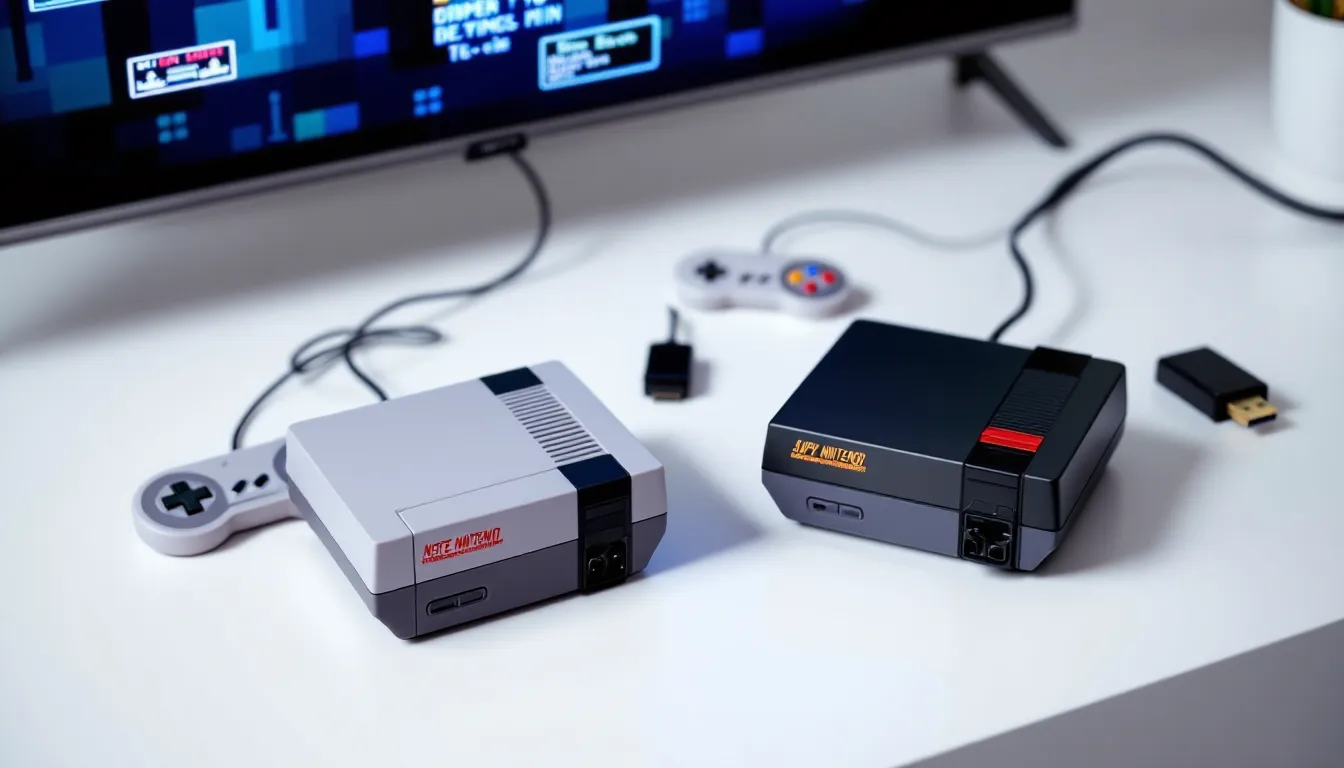
Nintendo Mini consoles are officially licensed emulation devices that reproduce classic Nintendo systems at roughly 75% of their original size. They connect to modern TVs via HDMI and come with wireless controllers that replicate the original hardware’s feel. The key point: these aren’t cartridge-based machines like the originals. Instead, they run emulated versions of classic games stored in internal flash memory, allowing Nintendo to deliver authentic gameplay without the technical hurdles of manufacturing decades-old hardware.
The NES Mini (released 2016, re-released multiple times) kicked off this trend and proved there was massive demand for accessible retro gaming. Nintendo followed up with the SNES Mini, and the company has continued refining the concept. Unlike ROM dumps you might find sketchy corners of the internet, official Nintendo Mini consoles use licensed emulation that’s been tested to match original hardware behavior, meaning fewer compatibility quirks and guaranteed legitimacy.
Think of them as museum pieces with a controller. They’re not meant to replace original hardware for collectors, but they’re the most hassle-free way to experience these games legally on a modern TV setup. You get the games, the nostalgia, and the convenience without hunting for cartridges or dealing with aging electronics.
The Evolution of Nintendo’s Retro Gaming Strategy
Nintendo’s approach to retro gaming has shifted dramatically over the last decade. Before 2015, the company treated classic games like vaulted treasure, you either owned original hardware or nothing. The Virtual Console on Wii and Wii U offered digital versions, but it was incomplete and eventually shut down, leaving fans frustrated.
The Nintendo Mini launch in 2016 changed the calculus entirely. Rather than losing licensing revenue or dealing with cartridge production logistics, Nintendo created a product that satisfied nostalgic gamers while maintaining quality control and profit margins. The console sold millions, proving that simplicity and official legitimacy mattered more than modification flexibility.
Since then, Nintendo’s strategy has branched. The company continues releasing mini consoles while simultaneously building the Nintendo Switch ecosystem to serve both modern and retro audiences. The Switch’s library includes NES and SNES games through Nintendo Switch Online subscription service, but mini consoles still fill a niche, they’re cheaper entry points for specific eras and don’t require a subscription. Recent reports on Nintendo Switch news and guides show the company is still committed to serving retro gaming audiences across multiple platforms, indicating this market remains core to Nintendo’s identity rather than a passing gimmick.
Current Nintendo Mini Models Available
Nintendo Entertainment System (NES) Mini
The NES Mini launched in 2016 and has been re-released multiple times due to sustained demand. It’s roughly the size of an actual NES cartridge and ships with 30 pre-installed games, including Super Mario Bros., The Legend of Zelda, Donkey Kong, and Metroid. The wireless controller feels authentic without exactly matching the original’s hardness, a small comfort improvement.
Key specs: HDMI output only, requires USB power, supports two controllers simultaneously. The library leans heavily on first-party Nintendo hits, so don’t expect deep cuts or third-party titles. If you’re after pure NES essentials and don’t need extensive customization, this is the entry point.
Super Nintendo Entertainment System (SNES) Mini
The SNES Mini arrived in 2017 and includes 21 games spanning SNES’s incredible library: Super Mario World, The Legend of Zelda: A Link to the Past, Final Fantasy III, Super Metroid, and fan-favorite Star Fox. The design mimics the original SNES architecture scaled down, and the controller has the original’s iconic button layout and colors.
It’s a notch up from the NES Mini in terms of game quality and variety. SNES games hit harder across genres, RPGs, action, platformers, and shmups are all represented. Like its predecessor, it requires HDMI and USB power, supports two controllers, and has strong build quality that should last years of casual play.
Nintendo Switch Lite and Switch OLED Variations
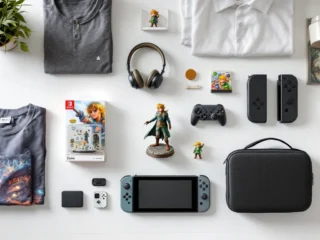
While not technically “mini consoles” in the retro sense, the Nintendo Switch Lite and recent Switch OLED models deserve mention as compact alternatives. They’re modern consoles, but they run classic NES and SNES games via the Nintendo Switch Online subscription (which costs $12/year for basic access or $50/year for the expanded tier that includes N64 and Genesis games).
The Switch Lite is fully portable, costs around $200, and delivers handheld-only gaming. The Switch OLED has a beautiful 7-inch screen, costs around $350, and supports both docked and handheld play. If you want flexibility, modern AAA titles alongside classic games, this path makes sense. If you’re after a dedicated, simple device that just plays NES/SNES games, the mini consoles are more focused and cheaper.
Game Library and Emulation Capabilities
Pre-Installed Games and Game Selection
The library is the heart of any mini console purchase. The NES Mini’s 30-game roster is solid but narrow, heavy on Mario, Zelda, and action titles, light on RPGs or obscure gems. The SNES Mini’s 21 games hit a higher bar per capita: nearly every title is a recognized classic or system seller.
Neither console allows you to delete or manage individual games: they’re pre-loaded and that’s it. This simplicity is intentional, less menu confusion for casual gamers, more streamlined experience. But if you’re after a specific game and it’s not on the roster, you’re out of luck with official functionality.
Both emulate games accurately. Frame drops are rare, input lag is minimal, and visual output is clean over HDMI. Nintendo’s emulation code is based on decades of Virtual Console experience, so compatibility is near-perfect across all pre-loaded titles.
Mod Support and Custom Game Installation
This is where things get contentious in the retro gaming community. Out of the box, official Nintendo Mini consoles don’t allow custom game installation. You get what Nintendo shipped, period.
But, the modding community has cracked both NES and SNES Mini consoles. Technically savvy users can modify the devices to add custom ROMs, install homebrew games, or swap emulators. This voids warranty and requires soldering or special tools depending on the mod method.
We won’t walk through modification guides here, that’s outside our purview, and it ventures into murky legal territory depending on your region. What matters: if you want official, supported functionality, you get a fixed library. If you want expandability and don’t mind voiding warranty, options exist through the modding community. Most casual buyers fall into the first camp and are satisfied with what ships: hardcore enthusiasts often lean toward third-party retro consoles or emulation setups that offer more flexibility out of the box.
Performance, Build Quality, and Durability
Hardware Specifications and Design
Both NES and SNES Mini consoles run custom processors optimized for emulation, they’re not powerful machines by modern standards, but they don’t need to be. Emulating 8-bit and 16-bit systems is lightweight work on contemporary hardware.
The form factor is meticulously replicated. The NES Mini looks like a tiny, perfect NES. The SNES Mini captures the original’s boxy charm with that iconic purple-gray plastic. Both feel premium for the price: the enclosure quality is solid, cooling is passive (no fan noise), and the HDMI port is reliable.
Power consumption is minimal, USB power delivery, no dedicated power brick required. You can run them off a powered USB hub or TV USB port, making them ideal for compact entertainment setups.
One design note: neither console has cartridge slots or disk drives. Some consumers initially expected to plug in original cartridges: that confusion faded after the first few releases. Everything is digital emulation, period.
Controller Options and Connectivity
Both mini consoles ship with a single wireless controller modeled after the original hardware. The NES controller is a rectangular pad with a D-pad and A/B buttons. The SNES controller adds shoulder buttons and a slightly curved grip.
The wireless connection is stable and reliable, they use proprietary 2.4GHz wireless, not Bluetooth, so compatibility with third-party controllers is limited. You can purchase additional official controllers separately ($20-30 each) or use adapters to connect original NES/SNES controllers with wireless conversion kits, though that adds cost and complexity.
Latency is low enough that even demanding action games like Contra or Star Fox play responsively. You won’t notice input lag in normal play. The controllers themselves are comfortable but not quite as satisfying as original hardware for hardcore players, the buttons have a slightly different feel, though newer revisions have improved this.
Connection is wired via HDMI for video: there’s no wireless streaming or network functionality. It’s old-school simplicity: plug in, turn on, play.
Price, Value, and Where to Buy
The NES Mini typically retails around $60–$70, while the SNES Mini sits closer to $80–$90. These prices are consistent across major retailers like Amazon, Best Buy, Target, and Nintendo’s official online store. Occasionally they dip during sales events, but Nintendo’s official channels maintain price discipline.
Think of the value proposition in terms of cost-per-hour. A single mini console can deliver hundreds of hours of gameplay if you engage with the library. Compared to subscription services or individual game purchases, the upfront cost is reasonable. You own the device outright, no recurring fees, no internet requirement (though you’ll need HDMI and power), no licensing expiration.
Where to buy: Nintendo’s official website is safest for legitimate stock, but major electronics retailers consistently carry both consoles. Be cautious of third-party sellers on marketplace platforms: counterfeit units exist, though they’re rare given how openly available the official versions are. A quick price check across Amazon, Best Buy, and your local electronics store usually surfaces the best deal within $5–$10.
One caveat: stock fluctuates. During holiday seasons, mini consoles sell out quickly. If you’re hunting for a specific model, checking inventory at multiple retailers simultaneously saves frustration. Recent gaming news coverage occasionally tracks mini console restocks and announcements, so monitoring gaming news outlets can tip you off to upcoming availability.
Comparing Nintendo Mini Consoles to Alternatives
Official Nintendo Minis vs. Third-Party Retro Consoles
Third-party manufacturers like Analogue, Retro Fighters, and others have flooded the retro gaming space with alternatives. Some offer advantages over Nintendo’s minis: others fall short.
Advantages of Nintendo Minis:
- Official Nintendo emulation code, you know the accuracy is solid.
- Legitimate, licensed product, no gray legal area.
- Low price, proven track record, wide availability.
- Authentic controller design and branding.
Advantages of Third-Party Alternatives:
- Expandability (custom ROM support, larger game libraries).
- Advanced features (save states, rewind, filter options).
- More flexible controller compatibility.
- Some target specific libraries (Genesis, Arcade, etc.) that Nintendo doesn’t offer.
The trade-off: third-party consoles cost more ($200–$500+), require more technical knowledge, and live in murkier legal/compatibility waters. They’re fantastic for enthusiasts who want total control: they’re overkill for someone who just wants to play classic Mario and Zelda.
For the average consumer, Nintendo Minis are the sweet spot, affordable, legitimate, simple, and they work exactly as advertised.
Nintendo Switch as a Portable Alternative
The Nintendo Switch (including Lite and OLED variants) offers a different angle. Via Nintendo Switch Online, you get access to classic NES and SNES games in a modern, portable console that also runs contemporary titles.
Switch advantages:
- Plays modern games (Zelda: Tears of the Kingdom, Mario Kart, etc.) alongside classics.
- Portable handheld option.
- Larger screen (especially OLED model).
- Regular library expansions as Nintendo adds more retro titles.
Switch disadvantages:
- Subscription fee required ($12–$50/year depending on tier).
- Requires internet connection for some features.
- More expensive upfront ($200–$350).
- Library of classic titles is curated by Nintendo: you don’t own the games permanently if subscription lapses.
Direct comparisons from coverage on Nintendo Life show that Switch Online’s retro game selection has expanded significantly since launch, but it’s still smaller and more expensive than owning a dedicated mini console if you’re only interested in classic games. The Switch wins if you want flexibility and modern gaming alongside retro titles. The mini console wins if you want simplicity, a fixed library, and affordability.
Who Should Buy a Nintendo Mini Console?
Casual retro gamers and nostalgia seekers: If you grew up with NES or SNES and want a simple way to revisit classics without hunting for cartridges or original hardware, a mini console is perfect. No learning curve, no maintenance, just plug and play.
Gift buyers: Minis are excellent gifts. The packaging is charming, the product is immediately satisfying, and it works out of the box. No setup knowledge required from the recipient.
Collectors who want official hardware: If you want legitimate Nintendo products without committing to original cartridges and systems, minis fill that gap. You’re supporting Nintendo directly and getting a well-made product.
Families with younger players: The game libraries are appropriate for all ages, and the controllers are intuitive. Parents appreciate the simplicity and lack of ongoing costs.
Small space dwellers: The compact form factor fits on any shelf. Unlike arcade cabinets or full retro setups, minis integrate seamlessly into modern living spaces.
You should skip a mini console if:
- You want expandability and custom ROMs. Third-party consoles are better.
- You demand the most cutting-edge emulation features (shaders, filters, save states, rewind). The Minis are accurate but feature-light.
- You’re a collector of original hardware and want authentic cartridge-based play. Original consoles or flash carts are the answer.
- You want modern games mixed in. The Switch is the better choice.
- You’re on a tight budget. In some cases, entry-level tablets or used Switch Lites offer more for the money if you’re flexible on what you play.
Conclusion
Nintendo Mini consoles represent the most accessible, legitimate path to classic gaming in 2026. The NES and SNES Minis deliver authentic emulation, iconic libraries, and plug-and-play simplicity that appeals to casual and serious retro enthusiasts alike. They’re not without limitations, fixed game libraries, no mod support out of the box, and straightforward feature sets, but those constraints also make them user-friendly and burden-free.
At $60–$90, they’re priced fairly and widely available. Whether you’re chasing nostalgia, introducing classic games to new generations, or filling a gap on your shelf, they execute their purpose with solid build quality and reliable performance.
The broader retro gaming landscape is diverse. Switch Online offers flexibility for modern players, third-party consoles unlock expandability for enthusiasts, and original hardware remains the gold standard for collectors. But if you want simplicity, legitimacy, and instant gratification, Nintendo’s official minis remain the best entry point into classic gaming. Pick one up, fire up Super Mario Bros. or Super Metroid, and remember why these games became icons in the first place.
About The Author