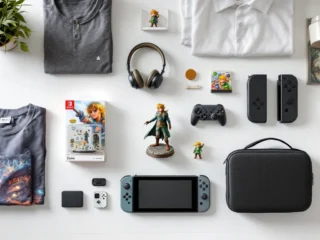
When you think about Nintendo’s dominance in the North American gaming market over the past decade, you’re looking at the handiwork of a guy who’s become as important to the company’s trajectory as any plumber in red could be. Doug Bowser, President of Nintendo of America, has quietly orchestrated one of gaming’s most impressive comebacks, transforming what could’ve been a declining brand into a cultural juggernaut. From the Switch’s launch in 2017 through 2026, Bowser’s leadership has redefined how Nintendo operates on home soil, balancing hardware innovation, game releases, community engagement, and yes, even the controversies that come with being a major player in an industry worth over $200 billion annually. Whether you’re a speedrunner chasing world records, a casual player enjoying Mario on your commute, or someone who trades Nintendo stock, understanding Bowser’s influence on the company reveals a lot about why Nintendo remains one of gaming’s most talked-about names.
Key Takeaways
- Doug Bowser, President of Nintendo of America, has orchestrated Nintendo’s dominance in the North American gaming market by balancing hardware innovation, first-party software releases, and community engagement across the Switch era.
- Nintendo’s software-driven strategy under Bowser—combining unique experiences, character-driven franchises, and consistent game releases—generated over 139 million Switch units sold worldwide without competing on raw power specs.
- Bowser diversified Nintendo’s revenue through Nintendo Switch Online subscriptions, mobile gaming expansion, and licensing partnerships, reflecting his corporate background in understanding long-term customer value.
- The Switch 2 transition strategy preserves backward compatibility and dual-market positioning, emphasizing software consistency and player evolution over revolution rather than abandoning the original console.
- While Bowser’s leadership strengthened community relationships with content creators and esports organizations, criticism persists over Nintendo Switch Online’s catalog limitations, aging online infrastructure, and $60 pricing maintained on older first-party titles.
- Bowser’s upcoming challenge through 2026 and beyond involves sustaining profitability while balancing player satisfaction during the Switch 2 transition and competing with Game Pass, mobile gaming, and cloud gaming alternatives.
Who Is Doug Bowser?
Early Career and Path to Nintendo
Before becoming the face of Nintendo in America, Doug Bowser spent decades in the tech and entertainment industries, a background that wouldn’t typically scream “gaming executive,” but one that turned out to be exactly what Nintendo needed. His career includes stints at Hewlett-Packard and Symantec, where he developed expertise in business operations, strategic planning, and organizational management. These aren’t flashy gaming credentials, but they gave Bowser a toolkit that extended far beyond understanding what makes a hit game.
When Bowser joined Nintendo in 2015 as Vice President of Sales and Marketing, the company had already proved the Wii U wasn’t going to define their legacy. He arrived during a transition period, the Switch was in development, and Nintendo needed someone who could execute a massive market push once the hardware launched. His non-gaming background actually proved valuable here: Bowser could think about Nintendo not just as a hardware manufacturer, but as a lifestyle brand and a content machine.
Role as Nintendo of America President
Bowser was promoted to President of Nintendo of America in 2019, taking the helm just as the Switch was hitting its stride and only months before a global pandemic would fundamentally reshape gaming habits. That timing, both fortunate and challenging, defined much of his tenure. As President, he oversees all Nintendo operations in North America: sales, marketing, PR, localization, customer support, and partnerships with retailers and platforms.
What separates Bowser from other gaming executives is his comfort straddling the line between corporate responsibility and gamer respect. He doesn’t speak in corporate jargon when he doesn’t need to. He shows up at Nintendo Direct presentations (though behind the scenes), and he understands that gamers can smell inauthenticity from a mile away. He’s not the face of Nintendo in the way some company presidents are, that role falls to figures like Shigeru Miyamoto or executives who appear in marketing, but he’s the architect behind nearly every business decision Nintendo makes on the American market.
Doug Bowser’s Impact on Nintendo’s Business Strategy
Growing Nintendo’s Console Market Share
When Bowser took on the Nintendo of America presidency, the Switch was already a proven success, but maintaining that momentum in a market with PlayStation 5 and Xbox Series X on the horizon was no small feat. Under his leadership, Nintendo maintained market share that would’ve been unthinkable in the Wii U era. The numbers speak: by 2024, the Switch had sold over 139 million units worldwide, with North America accounting for a massive chunk of those sales.
Bowser’s strategy wasn’t about racing for raw power specs. Instead, he doubled down on what had always been Nintendo’s strength: unique experiences and character-driven franchises. Animal Crossing: New Horizons became a cultural phenomenon partly because Bowser and his team recognized the timing, a cozy game for a lockdown world. Mario Kart 8 Deluxe became the best-selling racing game ever. The strategy was mathematically simple: strong first-party software + accessible hardware + consistent releases = market domination. But execution required coordination across development teams, publisher relations, and retail strategy, all falling under Bowser’s purview.
The subscription model, Nintendo Switch Online, was another calculated move. While gamers have plenty of criticisms about the pricing structure, Bowser’s team made the decision to pivot Nintendo’s online infrastructure into a recurring revenue stream. This diversified Nintendo’s income beyond just hardware and game sales, a shift that reflected Bowser’s corporate background in understanding lifetime customer value.
Expanding Nintendo Switch and Future Platform Success
By 2024-2025, the original Switch was aging, nearly a decade old in the market, which is ancient for game consoles. Bowser faced a critical decision: refresh or replace. The answer came in October 2024 with the Switch 2 announcement, and Bowser’s handling of that transition reveals his strategic thinking. Rather than killing the original Switch, Nintendo positioned the Switch 2 as an evolution, ensuring backward compatibility while offering a genuine leap in power and capability.
This dual-market approach is unconventional. Most console makers nuke their previous generation. But Bowser understood the American market differently: not everyone needs cutting-edge graphics. Parents buying budget devices for kids, casual gamers who just want Mario, speedrunners on a budget, they’re all still valid customers. So you have the OLED Switch for premium players, the standard Switch for the masses, and the Switch 2 for people demanding more horsepower.
Looking at 2026, Bowser’s strategy for platform success hinges on software consistency. Nintendo’s first-party release schedule, from Metroid Prime to Fire Emblem to the inevitable Zelda game, depends entirely on his ability to coordinate with development teams and manage publisher relations. The platform’s success is no longer about the hardware’s raw power compared to competing consoles. It’s about ensuring that every quarter, there’s a reason to keep playing on Nintendo hardware.
Leadership During Major Nintendo Releases and Launches
Navigating the Post-Launch Switch Era
The Switch’s launch in March 2017 was a gamble, a hybrid console that played portable and docked seemed gimmicky to skeptics. But Bowser inherited a product that was already proven viable by the time he stepped into his presidency two years later. The real test came from 2019 onward: maintaining momentum without letting the console stagnate.
Under Bowser’s leadership, Nintendo executed a series of major releases that kept the Switch relevant through its entire lifecycle. Super Smash Bros. Ultimate (2018) and Super Mario Odyssey (2017) were launch-window successes. But the wins continued, Animal Crossing: New Horizons (2020) became a pandemic phenomenon. The Legend of Zelda: Breath of the Wild’s sequel launched in 2023 and sold over 31 million copies. These weren’t accidents: each release was timed, marketed, and supported with behind-the-scenes coordination that Bowser orchestrated.
Marketing strategy under Bowser emphasized “games over hype.” Rather than massive pre-launch buildups like some publishers, Nintendo often released information, shipped games, and let word-of-mouth and gameplay carry the narrative. Animal Crossing became a cultural touchstone not because of aggressive marketing, but because it was exactly what people needed at the moment. Breath of the Wild 2 succeeded because the first game set an impossibly high bar. These aren’t guarantees, they’re results of consistent quality and strategic timing.
Preparing for Next-Generation Hardware
As of 2026, the Switch 2 launch marks the next phase of Bowser’s leadership test. The challenge of transitioning an entire user base to new hardware while maintaining the loyalty built over nearly a decade is substantial. Unlike the jump from Wii to Wii U (which tanked), Bowser and his team have the advantage of proven IP and a committed fan base.
The approach mirrors what succeeded before: backward compatibility, strong launch software, and clear communication about what the new generation offers. Nintendo Switch 2 will feature significantly improved graphics processing, a larger screen, better ergonomics, and enhanced online capabilities. But from Bowser’s perspective, these specs are secondary to answering the question every gamer has: “Why should I upgrade?”
Industry analysts and gaming media, including reports from Video Games Chronicle, have tracked how Nintendo’s messaging around Switch 2 differs from typical console launches. There’s less focus on “we’re more powerful than PlayStation/Xbox” and more emphasis on “your games work here, and new games look better.” That’s a Bowser-era priority: inclusion over exclusion, evolution over revolution.
Doug Bowser’s Approach to Gaming Communities and Fan Engagement
Building Relationships with Gamers and Content Creators
One of Bowser’s less-visible but increasingly important contributions has been reshaping how Nintendo engages with its own community. The era of Nintendo shutting down fan projects, sending cease-and-desists to ROM sites, and treating players as passive consumers didn’t end overnight, but it softened under Bowser’s watch.
ContentCreators like streamers and YouTubers who build massive audiences around Nintendo games are now courted rather than threatened. Nintendo still protects its IP fiercely (as it should), but there’s more understanding that content creators are basically unpaid marketers. A streamer with 500,000 viewers playing Mario for eight hours is doing more advertising than Nintendo could afford. Bowser’s team recognized this relationship-building as a business lever, not just a PR move.
The community engagement strategy extends to competitive gaming. Mario Kart, Super Smash Bros., and other franchises have active esports scenes that Nintendo either directly funds or tacitly supports. Bowser’s willingness to work with esports organizations, rather than controlling every aspect like Nintendo historically did, reflects a maturing of the company’s relationship with competitive gaming.
Nintendo Direct and Communications Strategy
Nintendo Direct presentations are Nintendo’s flagship communication tool, and while they’re developed by multiple teams, the strategic decisions about what to announce, when to announce it, and how frequently to host them fall under Bowser’s leadership umbrella.
The format, a 30-60 minute video presentation with no live commentary, just gameplay and announcements, is uniquely Nintendo. It strips away corporate posturing and just shows games. Under Bowser, the frequency increased from sporadic to planned, creating a rhythm that gamers could anticipate. This consistency matters. Knowing there’s usually a Direct every few months gives the community something to look forward to and gives Nintendo a predictable news cycle.
Content strategy in these Directs reflects Bowser’s understanding that gamers want specifics. Release dates. Game titles. Platform details. Publisher partnerships. Confirmation of rumors. Gamers aren’t impressed by vague promises: they want concrete information. The level of detail Nintendo provides in Direct presentations, exact release dates, gameplay footage, sometimes pricing, sets it apart from competitors who might tease things more aggressively.
When Bowser’s team announced the Switch 2, it came with a structured 18-month roadmap of first-party software. This signals confidence to the market while managing expectations realistically. Publishers and retailers know what’s coming, enabling them to plan inventory and marketing accordingly.
Challenges and Controversies Under Bowser’s Leadership
Online Service and Subscription Model Critiques
Here’s where Bowser’s leadership has taken some justified heat: Nintendo Switch Online. The service itself is affordable, $20 annually for basic, $50 for the Expansion Pack. But gamers have legitimate complaints that Bowser’s team hasn’t fully addressed.
First, the catalog. Nintendo Switch Online offers NES and SNES games, classic, sure, but hardly a compelling reason to subscribe if you grew up on those systems. Compared to PlayStation Plus or Xbox Game Pass, which bundle hundreds of modern titles, NSO feels lean. Gamers want N64 games, GameCube titles, even Wii software. Under Bowser’s leadership, Nintendo has added N64 and Sega Genesis titles to the Expansion Pack tier, but the pace of additions frustrates players who remember that Nintendo had no online play infrastructure at all before this service.
Online stability is another sore point. The Switch’s online infrastructure, built on aging technology, sometimes struggles with NAT traversal and connection consistency. Competitive Smash Bros. players have had to create workarounds for tournament play. Bowser’s team acknowledged these issues but didn’t overhaul the backend, likely a cost decision that favored margin over player satisfaction. When you’re Nintendo, maybe that tradeoff works financially, but it’s a black mark.
Second, the Expansion Pack pricing. At $50 annually (on top of the $20 base subscription), access to “premium” features like DLC packs and N64 emulation starts feeling less like value and more like nickel-and-diming. Bowser’s team didn’t invent this model, but they’ve championed it, and it’s become synonymous with Nintendo’s approach to monetization.
Game Pricing and Player Accessibility Debates
Nintendo games don’t go on sale. This isn’t a Bowser-era policy, it’s been Nintendo tradition, but Bowser’s tenure has coincided with increasing frustration as first-party Switch titles routinely stay at $60 MSRP years after launch. Breath of the Wild still costs $60 in 2026. Animal Crossing: New Horizons is still $60. Super Mario Bros. Wonder is still $60.
Comparison to competitors sharpens the critique. PlayStation and Xbox routinely discount older first-party titles, making their back catalogs more accessible to budget-conscious players. Nintendo’s strategy maintains margin per unit but potentially reduces total addressable market, players who might buy a three-year-old Mario game if it dropped to $30 but won’t pay $60.
Bowser’s philosophy (inferred from Nintendo’s actions) seems to be: “Our games don’t devalue. Quality is timeless.” There’s truth there, Breath of the Wild is still the best open-world game on Switch, so the pricing’s defensible. But it raises accessibility questions, especially for families and casual gamers who’ve been priced out of Nintendo’s ecosystem. That’s not a failure of Bowser’s leadership per se, but it’s a consequence of it.
Platform exclusivity also draws criticism. Nintendo keeps most major franchises Nintendo-exclusive. Bowser has resisted porting major titles to other platforms, which builds Switch loyalty but also frustrates players who’ve invested in multiple ecosystems. There are obvious business reasons for this, platform differentiation is Nintendo’s entire strategy, but it’s a point of tension between the company’s interests and player convenience.
Doug Bowser’s Vision for Nintendo’s Future
Mobile Gaming and Cross-Platform Integration
While Bowser’s primary focus has been the Switch, Nintendo’s mobile presence, Mario Kart Tour, Animal Crossing: Pocket Camp, Fire Emblem Heroes, represents a complementary revenue stream that he’s overseen expansion of. Mobile gaming is lower-margin than console gaming but reaches demographics (casual players, older audiences) that console-only strategies miss.
The future under Bowser’s leadership likely involves deepening mobile-console integration. Imagine a scenario where your mobile device syncs with your Switch, where progression carries across platforms, where the boundary between gaming ecosystems blurs. This isn’t unprecedented, Microsoft and Apple have both pushed this direction, but Nintendo historically kept its platforms siloed. Signs suggest Bowser’s philosophy is more open to this kind of integration, especially if it drives engagement without cannibalizing Switch sales.
Cross-platform play is another frontier. Fortnite and Call of Duty on Switch already feature cross-platform matchmaking. Nintendo’s first-party titles mostly don’t, though Splatoon 3 and Mario Kart 8 support cross-platform play with restrictions. Under Bowser, expect more titles to open up to cross-platform communities, which expands the addressable player base and keeps games fresher longer.
Sustaining Long-Term Growth in Competitive Markets
By 2026, Nintendo faces a different competitive landscape than when Bowser started. The Metaverse craze faded, VR gaming remained a niche, but cloud gaming and subscription services matured. Game Pass added more AAA titles. PlayStation 5 and Xbox Series X proved their staying power. Nintendo can’t compete on performance, and it doesn’t try, that’s not Bowser’s strategy.
Sustaining growth means doubling down on what works: unique IPs, accessible gameplay, regular first-party releases, and community engagement. Switch 2 gives Nintendo a hardware refresh cycle, which matters for momentum. But long-term sustainability hinges on software depth and the company’s ability to create new franchises or revitalize dormant ones.
Bowser’s challenge in the coming years is balancing profitability with player satisfaction. Pricing strategy, online service quality, and game availability are all levers that affect both. He’s shown willingness to compromise (adding more games to Switch Online, pricing Switch 2 competitively), but he’s also shown comfort with decisions that maximize margin at the expense of player goodwill (maintaining $60 pricing on old titles, keeping servers on aging tech).
The competitive landscape includes not just PlayStation and Xbox but also mobile gaming (where Nintendo already competes) and PC gaming (where Nintendo doesn’t, and likely won’t, directly compete). Bowser’s strategy is to own the portable console space completely, and so far, the Switch’s continued dominance suggests it’s working. Execution from 2026 onward determines whether that hold persists or whether newer competitors fragment Nintendo’s loyal base.
One thing worth noting: Nintendo Life tracks ongoing discussion about strategy shifts and business decisions, and community sentiment there provides real-time feedback on whether Bowser’s decisions are landing with the core audience. That feedback loop is something Bowser’s team actively monitors, or at least should be.
Conclusion
Doug Bowser didn’t invent Nintendo’s comeback, that credit belongs to the Switch’s brilliant design and a pipeline of incredible games. But he’s been the executive who scaled it, protected it, and positioned it for longevity. His background outside gaming brought a business discipline to Nintendo that the company arguably needed, balanced with enough respect for gamer culture to avoid coming across as tone-deaf.
His tenure has been defined by three core moves: maintaining software-driven strategy, expanding revenue streams (subscriptions, mobile, licensing), and building a more engaged community relationship. Not every decision has been popular, online service quality, game pricing, and the pace of new content have all drawn criticism. But the numbers validate his direction. Nintendo remains profitable, the Switch generation lasted longer than any modern console generation, and the Switch 2 launches from a position of strength rather than desperation.
As gaming heads deeper into 2026 and beyond, Bowser’s real test becomes managing the transition to the next generation without losing the casual audiences that made the Switch a phenomenon. That’s the challenge that defines his presidency heading forward.
About The Author