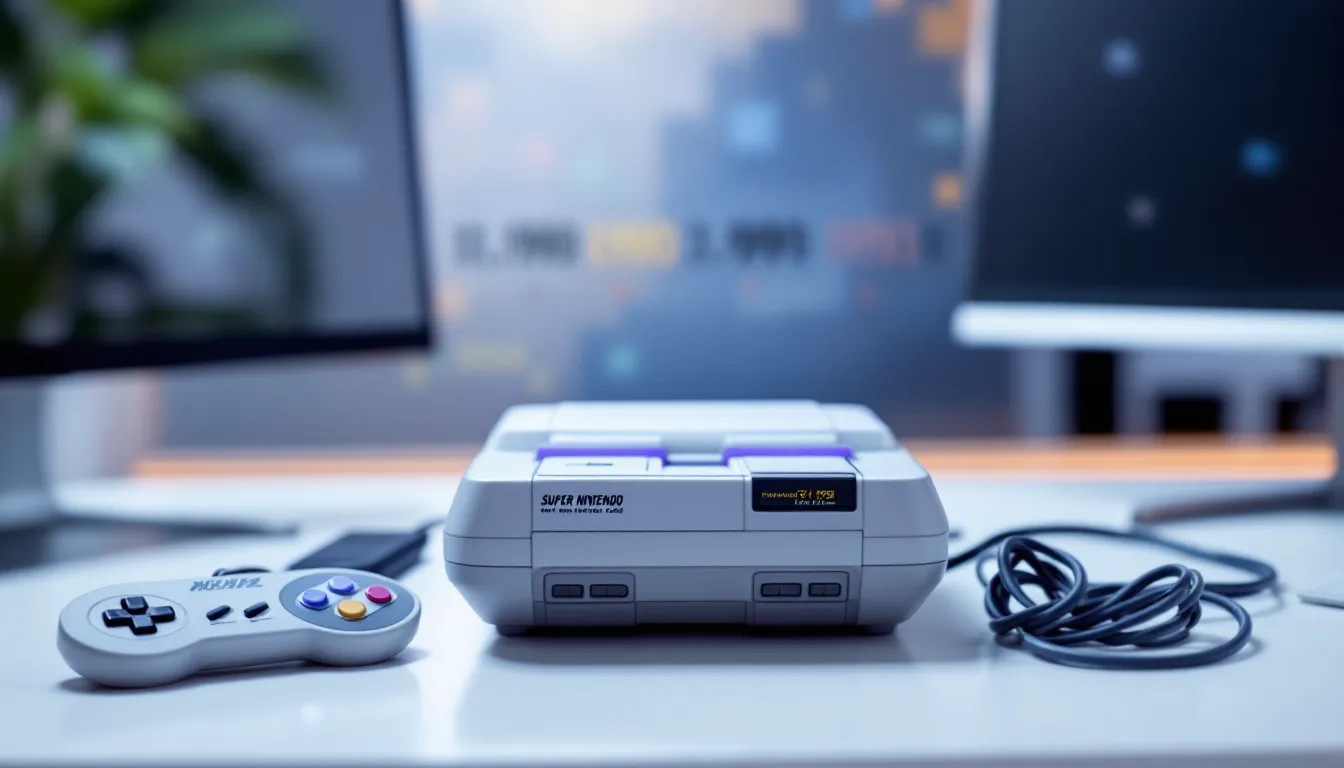
The Super Nintendo Entertainment System (SNES) wasn’t just another console, it was the hammer that drove the final nail into the coffin of the 8-bit era and ushered in a golden age of 16-bit gaming. But before it became the legendary system that defined an entire generation, it had to actually arrive on store shelves, and that happened at different times depending on where you lived. Whether you’re a collector trying to pinpoint historical accuracy, a speedrunner researching the timeline, or just curious about how the Super Nintendo release date impacted the gaming landscape, knowing the specific launch windows across Japan, North America, and Europe tells a fascinating story about how Nintendo conquered the world. The SNES didn’t launch everywhere at once, Japan got it first, followed by North America, with other regions playing catch-up. This staggered global rollout wasn’t just a logistical necessity: it fundamentally shaped how the console’s legacy developed and why different regions have such distinct memories of those early years.
Key Takeaways
- The Super Nintendo release date varied globally: Japan’s Super Famicom launched November 21, 1990, North America followed on April 23, 1991, and Europe arrived on April 29, 1992, establishing the SNES as a staggered but strategic worldwide rollout.
- The SNES revolutionized gaming with 16-bit processing power, advanced graphics (256 simultaneous colors vs. NES’s 56), Mode 7 effects, and an 8-channel stereo sound processor that enabled visually and sonically superior experiences impossible on 8-bit hardware.
- Launch titles like Super Mario World, The Legend of Zelda: A Link to the Past, F-Zero, and SimCity proved the SNES could deliver transformative, genre-defining experiences across multiple gaming categories, establishing clear dominance over Sega’s Genesis.
- Nintendo’s aggressive marketing strategy, secure third-party partnerships with developers like Capcom and Square, and strong first-party franchises created a software library that became the template for console success for decades to come.
- Today, the SNES legacy endures through emulation projects, Nintendo’s official re-releases like the 2017 SNES Classic Edition, and Switch Online subscription access, keeping classic games like Chrono Trigger and Super Metroid accessible to new generations of gamers.
When The Super Nintendo First Launched
Japan’s November 1990 Launch
Japan got the Super Nintendo first on November 21, 1990, specifically branded as the Super Famicom (SFC). This wasn’t accidental timing. Nintendo strategically released the console during the crucial holiday shopping season in Japan, and retailers couldn’t keep them in stock. The launch lineup in Japan included F-Zero, Super Mario Bros. 4 (known internationally as Super Mario World), and Aleste II, giving Japanese gamers an instant reason to upgrade from their Famicom systems.
The Super Famicom launch price in Japan was ¥27,800 (approximately $200 USD at the time), and Nintendo’s strategy worked flawlessly. Within its first month, the console had captured the Japanese gaming market’s attention completely. According to Gematsu, which tracks Japanese gaming announcements, the Super Famicom’s launch created an immediate hardware shortage that lasted through the end of the year. Parents were hunting down these consoles for the holidays, and Nintendo couldn’t manufacture them fast enough. This scarcity actually worked in Nintendo’s favor, it amplified the prestige factor and made the system feel like the must-have item of the season.
North America’s April 1991 Release
North American gamers had to wait about five months longer. The SNES officially hit North American shelves on April 23, 1991, with a price point of $199.99. Nintendo’s American division used that half-year window strategically, observing how the Japanese market responded, refining manufacturing, and ramping up advertising for the North American audience.
When the SNES finally launched in North America, Nintendo had learned important lessons from the Super Famicom’s success. The North American launch lineup was stronger and more diverse, featuring Super Mario World, F-Zero, The Legend of Zelda: A Link to the Past, Gradius III, Castlevania IV, and SimCity. This was a powerhouse of launch titles that made it impossible for gamers to use the “not enough games at launch” excuse. The timing also worked well, spring meant the system could build momentum through summer and capitalize on the upcoming holiday season of 1991.
The SNES launch in North America was backed by one of the most aggressive marketing campaigns Nintendo had ever mounted. Television commercials, magazine spreads, and in-store displays were everywhere. Unlike the frenzied scarcity in Japan, Nintendo had manufactured sufficient stock for the North American market to avoid shortages, which actually helped accelerate adoption by making the system accessible.
Europe And Other Regions’ Later Arrivals
European gamers faced the longest wait of all. The SNES (called the Super Nintendo in Europe and Australia) didn’t launch until 1992, a full 16 months after the Japanese release. The European launch occurred on April 29, 1992, but different European countries got the console on slightly different dates, which created its own complications for retailers and importers. Some regions like the UK and Germany had slightly earlier access than others.
This European delay wasn’t just about manufacturing. Nintendo had to establish more robust distribution networks in Europe, account for different regulatory environments across the continent, and ensure region-locked cartridges would work properly with European television standards (the SNES-PAL system ran at 50Hz instead of 60Hz, which had technical implications). The European launch price was £249, substantially higher than North America when adjusted for purchasing power, partially reflecting the infrastructure and localization investment required.
Australia and other regions followed European release patterns, with the Australian launch in August 1992. Meanwhile, South Korea and other Asian markets saw even later releases or relied on imports, creating a fragmented international landscape. This geographic fragmentation meant that the SNES’s cultural moment didn’t hit simultaneously worldwide, but when it did arrive in each region, it arrived as a proven, refined product with an established library of quality games.
The Pre-Launch Hype And Anticipation
Why Gamers Were Excited For The SNES
By 1990-1991, the NES was getting long in the tooth. Yes, it had revitalized the home console market and delivered massive franchises like Super Mario Bros., Metroid, and Castlevania, but the technology was pushing a decade old. Meanwhile, competitors like the Sega Genesis had already launched in 1988 with flashy 16-bit graphics and aggressive marketing that labeled the Genesis as “cooler” than Nintendo’s aging hardware.
Gamers knew the SNES was coming, and the anticipation was built on three foundational pillars. First, the hardware specs were genuinely impressive: a 16-bit processor, 128KB of RAM, 64KB of video RAM, and graphics capabilities that made the NES look like ancient history. Second, Nintendo had already shown what the hardware could do through arcade ports and early footage, games looked fundamentally different from anything on the NES. Third, there was the psychological factor: everyone had NES fatigue. Gamers wanted new hardware, new experiences, and something to compete with the Genesis’s cultural cachet.
The hype was especially intense because of what Nintendo had already proven with Super Mario Bros. and Zelda. If those franchises could come to 16-bit, what would they look like? That question burned in gamers’ minds for months leading up to launch. Magazines like Nintendo Power and Game Informer hyped upcoming titles relentlessly, with detailed screenshots and feature articles that built anticipation to a fever pitch.
Nintendo’s Marketing Strategy Before Release
Nintendo’s pre-launch marketing was methodical and genius. In North America, Nintendo launched an extensive advertising campaign called “Game Over? Let’s Play” that positioned the SNES as the inevitable evolution of gaming. Television commercials featured vibrant graphics, impressive processing speed, and the implicit message that Genesis owners were about to be left behind. The tagline communicated confidence, this wasn’t a console announcing itself: it was declaring victory before the competition could even respond.
Nintendo also deployed a critical strategy: securing exclusive and early third-party support. By the time the SNES launched, developers like Capcom, Konami, and Square were committed to major titles. Nintendo leveraged relationships with these studios to create a software lineup that made the Genesis’s first-year offerings look sparse by comparison. The company essentially made a bet that quality software at launch would overcome any perceived hardware advantages rivals might claim.
In Japan, the marketing approach was different but equally calculated. Nintendo positioned the Super Famicom as a prestige item, the evolution of Nintendo’s dominance. Japanese arcade gaming culture was massive, and many SNES games were sophisticated arcade ports. Nintendo emphasized technical superiority and the promise of bringing authentic arcade experiences home, something the Famicom couldn’t do as effectively.
Nintendo also strategically controlled information. The company didn’t reveal all its launch titles at once: instead, it parceled out announcements to maintain media coverage and consumer interest for months. Each new announcement reset the hype cycle, ensuring that gaming media continued covering the SNES in the lead-up to release. This orchestrated information drip-feed proved far more effective than dumping everything at once would have been.
What Made The SNES Revolutionary For Its Time
Advanced Graphics And Processing Power
When the SNES launched, its technical specifications weren’t just better than the NES, they represented a generational leap. The 16-bit processor running at 3.58 MHz (faster than the NES’s 1.79 MHz) meant games could handle significantly more complex logic, physics, and AI. More importantly, the expanded VRAM and ROM cartridge capacity allowed developers to craft visually distinctive, colorful worlds that would have been impossible on 8-bit hardware.
But raw specs don’t tell the full story. What mattered to gamers was what they could see on screen. The SNES could display 256 colors simultaneously (versus the NES’s 56), supported larger sprites, handled mode-7 scaling effects that created pseudo-3D visuals, and pushed much higher draw distances. Games like F-Zero leveraged these capabilities to create the illusion of scaling and rotation, effects that blew people’s minds at the time. Super Mario World used layered backgrounds and Mode 7-like effects that made the Mushroom Kingdom feel genuinely new, even though being a familiar franchise.
The sound chip was also a massive upgrade. The SNES’s Sony SPC700 8-bit sound processor could handle 8 channels of stereo audio with vastly superior quality to the NES’s beep-boop aesthetic. Composers like Yoko Shimomura, Koji Kondo, and Nobuo Uematsu could craft intricate, emotionally resonant soundtracks that enhanced gameplay in ways the NES never could. The difference between Super Mario Bros.’ simple theme and Super Mario World’s dynamic, energetic soundtrack exemplified this leap.
Iconic Launch Titles That Changed Gaming
The SNES launch library fundamentally proved that the 16-bit generation could deliver not just incremental improvements but transformative gaming experiences. Super Mario World is the most obvious example, it wasn’t just “Mario on new hardware.” It introduced Yoshi, new level design philosophy, fluid animation that made Mario feel heavier and more physical than before, and an overworld map system that encouraged exploration. It set the template for what platformers could be in the 16-bit era.
The Legend of Zelda: A Link to the Past launched in Japan with the Super Famicom and in North America on the SNES launch day. This game didn’t exist because Nintendo was leveraging an existing franchise, it existed because the SNES gave designers the technical capabilities to expand everything they’d learned from the original Zelda. The dual-world mechanic (Light World and Dark World), the expanded dungeon designs, the improvements to combat and exploration, and the gorgeous art direction all depended on 16-bit processing power. A Link to the Past basically defined what console Zelda games would become for the next two decades.
F-Zero was equally revolutionary. This launch title created an entire new genre, the futuristic racing game with aggressive speed, tight controls, and a sense of velocity that matched the SNES’s technical capabilities. The Mode 7 scaling effects made tracks feel like they were genuinely racing across curved surfaces. F-Zero proved that the SNES could handle genres completely different from the NES’s catalog.
SimCity completed the picture. This wasn’t an action game, it was a complex city-building simulation that required the SNES’s processing power to simulate and display detailed city systems. Its presence in the launch lineup signaled that SNES could attract serious, strategy-focused gamers alongside action enthusiasts. The Verge has documented how these launch titles established the SNES’s identity as a versatile platform capable of delivering premium experiences across every genre.
These weren’t just good games on good hardware, they were foundational titles that defined what a next-generation console could accomplish. Every one of them looked, sounded, and played in ways that were simply impossible on the NES.
The Competition And Market Response
How Sega And Other Competitors Reacted
Sega’s Genesis had been on the market since 1988, and by 1990-1991, Sega was riding high on the success of games like Sonic the Hedgehog and Altered Beast. The Genesis had a commanding first-mover advantage, and Sega’s marketing, especially in North America, aggressively positioned the Genesis as the cool alternative to Nintendo’s “kiddie” image. Sega’s slogan “Genesis does what Nintendon’t” was specifically designed to capitalize on brand perception while the SNES was still vaporware in most regions.
When the SNES actually launched, Sega’s response was complicated. The Genesis had already established its software library and a hardcore audience that identified with Sonic and sports games. Rather than panicking, Sega doubled down on its strengths, pushing more aggressive Sonic titles, sports games, and arcade ports. But, the SNES’s software lineup at launch was demonstrably stronger, and the quality disparity became obvious quickly. Games like Sonic 2 were fun, but they didn’t match Super Mario World’s design sophistication or Zelda’s depth.
Sega did maintain market share in North America for several years, the Genesis vs. SNES debate was genuinely contentious through the mid-1990s, with different regions preferring different systems. But Nintendo’s long-term strategy of building an unmatched software library, maintaining strong third-party relationships, and leveraging franchises like Mario, Zelda, and Donkey Kong proved more durable than Sega’s speed-focused positioning. By 1993-1994, the SNES had overtaken the Genesis in the hardware wars, and the gap only widened as the years went on.
Other competitors barely registered. The TurboGrafx-16 had already peaked, Commodore 64 and other home computers were declining, and nothing else in the console space could compete with either the Genesis or SNES. The real victory wasn’t SNES versus Genesis, it was Nintendo versus the rest of the industry, and the SNES cemented that dominance.
Early Sales Numbers And Consumer Reception
The SNES’s sales trajectory validated everything Nintendo had planned. In Japan, the Super Famicom sold approximately 2 million units in its first year, establishing it as an instant market leader. The North American SNES launched in April 1991 and sold roughly 1.3 million units by the end of that year. To put this in perspective, the Genesis had sold about 3 million units in North America by the time the SNES arrived, but the SNES rapidly closed that gap and eventually surpassed it.
Consumer reception was overwhelmingly positive. Magazines and enthusiast media praised the SNES’s technical superiority, software quality, and Nintendo’s marketing execution. While some Genesis loyalists remained vocal about their preference for Sonic, the broader market verdict was decisive: the SNES was the superior platform. This wasn’t a close call like the console wars of later generations, the SNES established clear dominance in software quality, hardware capability, and third-party support.
Retailers also responded positively. The initial stock concerns in North America proved unfounded, Nintendo had manufactured sufficient quantities to meet demand without the shortages that plagued the Super Famicom in Japan. This accessibility meant that by mid-1992, the SNES had established itself as the mainstream choice for console gaming. The Genesis remained competitive, especially in specific demographics and regions, but the trajectory was set: the SNES would define the 16-bit era, much as the NES had defined 8-bit gaming.
By 1992, third-party publishers’ confidence in the SNES was complete. Capcom, Konami, Square, Enix, and virtually every significant developer were committing major titles to the platform. This software pipeline ensured that the SNES’s early success would compound. Game libraries grow, and the SNES library grew faster and with higher average quality than the Genesis’s, which sealed the market’s preference.
The SNES Legacy And Long-Term Impact On Gaming
Cultural Significance And Influence On The Industry
The SNES wasn’t just a commercial success, it became a cultural institution in a way that few gaming devices ever achieve. In Japan, the Super Famicom shaped an entire generation’s gaming experience and became intrinsically tied to 1990s nostalgia. In North America, the SNES defined gaming for millions of children and adolescents who grew up with it. The system’s cultural penetration was so complete that “16-bit” became synonymous with “quality” in gaming discourse for years afterward.
The SNES proved that Nintendo’s dominance wasn’t temporary. While the Atari 2600 had owned the late 1970s and the NES had revitalized gaming after the 1983 crash, the SNES demonstrated that Nintendo could lead through an entire console generation and then some. This legitimized Nintendo as a permanent, institutional force in gaming, not a flash-in-the-pan company riding a temporary wave. That perception shifted the entire industry’s expectations about who could own gaming hardware markets.
From a franchise perspective, the SNES cemented Mario, Zelda, and Donkey Kong as permanent pillars of gaming culture. These franchises were important on the NES, but they became untouchable on the SNES. Games like Super Mario World, A Link to the Past, and Donkey Kong Country weren’t just sequels, they were genre-defining experiences that influenced how designers approached platformers, adventure games, and action-exploration design for decades. The ripple effects are still visible in modern game design.
The SNES also democratized complex game design. Games like Chrono Trigger, Final Fantasy VI, and Earthbound proved that home consoles could deliver storytelling and mechanical complexity that rivaled or exceeded arcade and computer games. This shifted perception of what “home console games” could be. Previously, the console market was associated with simple action games and ports of arcade titles. The SNES elevated console gaming to a medium capable of sophisticated narrative, world-building, and mechanical depth.
How The SNES Shaped Modern Console Gaming
The SNES’s architectural decisions and design philosophy established patterns that console gaming follows to this day. The cartridge format (even though its eventual obsolescence as CD-based systems emerged) created a legal and commercial precedent for how licensing, third-party support, and publisher relationships should work. Nintendo’s iron control over SNES licensing became the model, not just for future Nintendo systems, but for industry-wide approaches to platform governance.
The SNES’s controller design remains influential. The SNES gamepad, with its shoulder buttons and symmetrical layout, established ergonomic and control standards that evolved into modern controller designs. When you pick up a modern controller and use shoulder buttons intuitively, you’re using a design philosophy that originated with the SNES. The addition of the Mode 7 capability influenced how consoles approached technical specifications, developers wanted systems that could do specific, visually impressive things, not just generic processing power.
From a business perspective, the SNES model of secure third-party partnerships, strong first-party franchises, and strategic pricing set the template for console success. The playbook that led to the SNES’s dominance was followed (successfully) by the Nintendo 64, GameCube, Wii, and Switch. When you look at why the Switch is currently dominating the console market, you’re looking at a system using fundamental strategies that the SNES pioneered 30+ years ago.
The SNES also established the rhythm of console cycles. Launch with strong hardware, launch with quality software, build third-party relationships, release major franchises in a planned cadence, maintain relevance for 5-7 years, then transition to the next generation. This cycle has been the industry standard since the SNES proved it worked. Modern consoles still follow this pattern because the SNES demonstrated it was the optimal path to market dominance.
Perhaps most importantly, the SNES proved that gaming’s future was in home consoles, not arcades or computers (even though strong PC and arcade markets). Arcade gaming remained significant, but the SNES represented the moment when home console gaming became culturally dominant, commercially dominant, and technically capable enough to drive innovation. That shift shaped everything that came afterward.
Nostalgia And The SNES Revival Today
Classic Games And Modern Emulation
Today, the SNES occupies a strange position in gaming culture, simultaneously revered as a classics library and readily accessible through modern technology that didn’t exist when the original console launched. The SNES library includes some of the most acclaimed games ever made: Super Mario World, A Link to the Past, Chrono Trigger, Final Fantasy VI, Super Metroid, Mega Man X, Donkey Kong Country. These games haven’t aged in terms of gameplay quality or design sophistication. They’re genuinely worth playing, not just as nostalgia vehicles but as legitimate masterpieces.
Modern emulation has made these games absurdly accessible. Projects like SNES9x, higan, and others let players experience SNES games on PC, mobile, and even web browsers with perfect accuracy. Enthusiasts have spent decades reverse-engineering the SNES hardware to create emulators that recreate the original experience, complete with exact timing, palette accuracy, and sound fidelity. The result is that anyone with a computer can experience the SNES library with virtually zero barrier to entry.
This accessibility has created a phenomenon: younger gamers who weren’t alive when the SNES launched are discovering these games and finding them genuinely excellent. Speedrunners have embraced SNES games, check out the communities around Super Metroid, A Link to the Past, and Mega Man X speedruns. These games’ tight controls, responsive mechanics, and imaginative level design hold up better than many modern games. The speedrunning community continuously discovers new optimization strategies and route optimizations, proving that SNES games have mechanical depth that remains undiscovered even 30+ years after launch.
The emulation phenomenon is ethically complicated, copyright concerns and piracy implications mean it exists in a gray area. But culturally, it’s democratized access to gaming history in ways that no legitimate distribution channel could have achieved. A teenager in 2026 can play Chrono Trigger, arguably one of the best JRPGs ever made, completely free, on the same system they use to browse the internet. That’s fundamentally changed how gaming history is preserved and shared.
Nintendo’s Official Re-Releases And Collections
Nintendo has recognized the SNES revival and monetized it strategically. The Super Nintendo Entertainment System: Super NES Classic Edition, released in 2017, was a miniaturized, modernized version of the original hardware that came pre-loaded with 21 canonical SNES games. It sold millions of units and proved that nostalgia demand for SNES content was genuine and substantial. The console could be connected to modern televisions, included wireless controllers that felt authentic but added modern ergonomics, and offered a legal, official way to experience the SNES library.
Beyond the hardware recreation, Nintendo has been strategically re-releasing SNES games on the Switch through its Nintendo Switch Online subscription service. The Switch Online library includes dozens of SNES titles available to subscribers, creating a recurring revenue model around access to classic games. Players can experience these games with modern features like save states, controller customization, and display options that weren’t available on original hardware.
Nintendo has also released direct ports and remakes. Super Mario World is available on Switch, A Link to the Past was remastered as A Link Between Worlds on 3DS (and later ported to Switch), and various collections like Nintendo Switch Online + Expansion Pack bundle significant portions of the SNES catalog. These aren’t just emulation, they’re thoughtful preservation efforts that maintain game quality while adding modern accessibility features.
Games like Sims 4 Nintendo Switch demonstrate how legacy platforms continue influencing game design, with developers targeting the Switch hardware with the same philosophy Nintendo used for the SNES. The continuity of design philosophy across three decades shows just how fundamental the SNES was to establishing templates that remain relevant. Ramblingsofagamer has covered how modern Switch releases maintain SNES-era design principles around accessibility and gameplay clarity.
Nintendo’s approach to SNES preservation suggests institutional awareness that these games are culturally significant. Rather than letting them fade into obscure emulation circles, Nintendo is actively maintaining canonical, official versions of the library for new audiences. The Super Nintendo release date of 1990-1991 marked the beginning of a 35+ year legacy that’s still generating revenue, influencing game design, and defining what “classic gaming” means.
Conclusion
The Super Nintendo’s staggered global launch, beginning with Japan’s November 1990 release and concluding with various regional arrivals through 1992, wasn’t just a logistical sequence of dates. It marked the moment when gaming transitioned from a novelty industry to a permanent cultural force. The SNES arrived at the exact moment when hardware technology could finally deliver on the creative ambitions that designers had been imagining, and the software library that launched alongside it proved that home consoles could offer experiences rivaling or exceeding anything available elsewhere.
Thirty-five years later, the SNES remains the standard against which console success is measured. Its design philosophy, business model, and franchise strategy established templates that Nintendo and the industry still follow. The games remain playable, engaging, and mechanically sophisticated. The hardware has been honored through official re-releases and preservation efforts that demonstrate the console’s enduring cultural significance.
For gamers today, understanding the Super Nintendo release date means understanding the moment when the industry you know now solidified into its essential form. Every console decision made after the SNES was responding to lessons the SNES taught. Every franchise continuing today benefited from the SNES’s establishment of console gaming as the dominant medium. The specific launch dates scattered across 1990-1992 weren’t historical minutiae, they marked the beginning of everything gaming became after.
About The Author